







US President Donald Trump’s latest tariff proposal has put India’s manufacturing ambitions under fresh scrutiny, with industries ranging from steel and solar equipment to pharmaceuticals and electronics
potentially facing greater trade uncertainty. The proposed duties could affect Indian exporters’ competitiveness in the American market, but the implications go beyond trade. At stake is India’s ambition to emerge as a global manufacturing hub.
On November 25, the Office of the United States Trade Representative (USTR), led by Jamieson Greer, announced findings from its Section 301 investigation into “structural excess capacity” and production in manufacturing sectors. India was among 14 economies scrutinised over policies and practices that the US believes distort global trade and disadvantage American producers.
Read More: ‘No Structural Excess Capacity’: India Pushes Back Against Trump Admin’s 25% Tariff Proposal
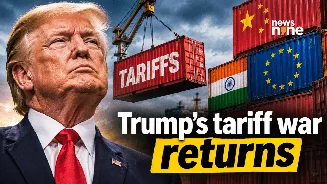
The Trump administration has proposed additional tariffs of up to 25 per cent on Indian goods, subject to specified exemptions. It has also indicated that the rate could be adjusted to 17 per cent if India reaches a reciprocal trade agreement addressing the concerns raised in the investigation.
India has rejected the allegation of structural excess capacity, arguing that its manufacturing expansion is driven by domestic demand and its development priorities.
But which Indian industries could be in the firing line if this tariff comes into effect?
Steel: Clash Over Manufacturing Capacity
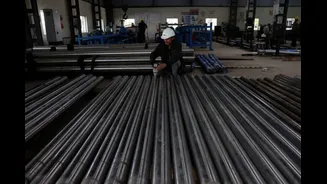
Steel is among the prominent sectors flagged by the Trump administration. The US has questioned India’s industrial expansion policies and government support, arguing that they encourage production capacity that could disadvantage American manufacturers. India’s steel industry has grown on the back of infrastructure development, construction and rising domestic demand. Steel is also essential to automobiles, engineering goods, railways, defence and renewable energy.
Higher tariffs could make Indian steel and steel-based products more expensive for American buyers, potentially pushing them towards alternative suppliers. Exporters could be forced to absorb some of the additional cost or look for markets elsewhere.
The sector also faces an existing layer of protectionism. Steel imports are already subject to separate US duties under Section 232. The actual additional burden will therefore depend on how the proposed measures interact with existing tariffs and the final product coverage.
Solar: India’s Clean Energy Push
India has been trying to build a domestic solar manufacturing ecosystem and reduce dependence on imported equipment. The Production Linked Incentive (PLI) scheme for high-efficiency solar photovoltaic modules is central to this effort. The government’s objective is to encourage domestic production across the solar supply chain, from cells to modules, while positioning India as a competitive global supplier.
The US, however, has questioned industrial support and policies that it believes encourage excess capacity and distort competition. The solar sector is particularly sensitive to such measures because buyers compare suppliers largely on price.
If additional duties are imposed, Indian solar manufacturers could find it harder to compete in the American market. This could also complicate India’s efforts to attract global investment and become an alternative manufacturing destination as countries diversify supply chains away from China.
Pharmaceuticals And Medical Devices
The pharmaceutical industry presents a more complicated challenge for the US. India is one of the world’s largest suppliers of generic medicines and has an established presence in the American market. According to the India Brand Equity Foundation (IBEF), India’s pharmaceutical exports to the US stood at approximately $9.47 billion in FY26.
For Indian drugmakers, America is a crucial market. Higher import duties could increase costs for American buyers and make Indian medicines less competitive against products from other countries. Companies may have to absorb some of the additional expense, renegotiate contracts or reconsider pricing.
However, the US also depends on international suppliers for affordable generic medicines. Any substantial increase in import costs could eventually affect American healthcare buyers.
Medical devices could face similar challenges as India attempts to expand domestic production and reduce import dependence in this segment.
Electronics and ICT
Electronics could be among the most closely watched sectors in the dispute. India has made significant progress in mobile phone manufacturing, supported by government incentives, foreign investment and companies looking to diversify production beyond China.
The scale of this opportunity is evident in India’s exports. IBEF data puts electronic goods exports to the US at $24.41 billion in FY26, making electronics India’s largest export category to the American market.
The USTR has specifically raised concerns about India’s information and communications technology (ICT) sector, including manufacturing expansion and dependence on imported inputs.
This creates a challenge for India. While the country is trying to establish itself as an alternative to China, its electronics manufacturing ecosystem remains connected to international supply chains, particularly for components.
Higher tariffs could make Indian-made electronics more expensive for American importers, potentially affecting orders and future investment decisions. The impact could extend to mobile phones, components, telecommunications equipment and other ICT products, depending on the final tariff coverage.
Engineering Goods And MSMEs
The proposed tariffs are not limited to the four sectors specifically highlighted in the USTR’s India assessment. Other export-oriented industries, including engineering goods, chemicals, textiles, garments, gems and jewellery, could also face uncertainty if their products fall within the final tariff coverage.
Engineering goods exports to the US stood at $19.61 billion in FY26, according to IBEF. Smaller manufacturers and micro, small and medium enterprises (MSMEs) could be particularly vulnerable. Unlike large corporations, they often have limited financial flexibility to absorb higher duties or negotiate new terms with overseas buyers.
If American importers shift to suppliers from countries offering more competitive prices, Indian exporters could see orders shrink. That could eventually affect production, investment and employment.
Are The Tariffs Final?
The proposed tariffs have not yet become a final, implemented measure. The USTR has opened the process for public comments, with submissions due by January 5, 2027, and a public hearing scheduled to begin on January 25.
India’s Ministry of Commerce and Industry pushed back against the central allegation on November 25, saying the Department of Commerce had maintained that “India does not have structural excess capacity in any sector”.
The government also reiterated that India and the US are negotiating a Bilateral Trade Agreement and that trade concerns should be addressed through constructive engagement.
India wants to expand manufacturing, attract global investment and strengthen its position in international supply chains. The Trump administration, meanwhile, wants to protect American producers and challenge policies it considers unfair. How the two countries resolve this disagreement could determine whether the latest tariff threat becomes another obstacle in bilateral trade relations or an opportunity to negotiate a broader agreement.