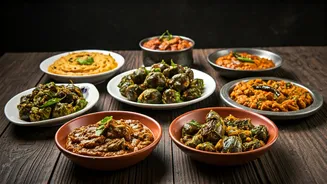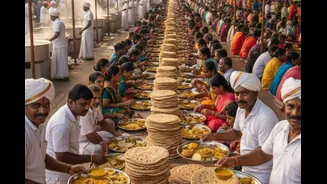

Long before the first chant rises in Koppala of Karnataka, the kitchens are already awake. Giant vessels steam through the night. Hands move in practiced rhythm, rolling jowar rotis by the thousands, flipping
holige on hot griddles, stirring madli in vessels large enough to feed entire villages. By the time dawn breaks, food meant for lakhs is already prepared.
This is how the Gavisiddeshwara Jatre or fair truly begins. Not with the chariot, not with the crowd, but with dasoha (free meal service). Every year, the Gavisiddeshwara Mutt prepares food on a scale that turns nourishment into an act of devotion. There are no tokens, no questions, no conditions. Anyone who arrives will eat.
A Town Drawn by Faith, Fed by Service
As news spreads that the jatre has begun, Koppala starts filling up. Devotees arrive from across North Karnataka and from neighbouring Maharashtra and Andhra Pradesh. Some walk for miles, some arrive in overcrowded buses, others on tractors and two-wheelers, carrying families, offerings and quiet anticipation.
Often referred to as the Kumbh Mela of South India, the jatre transforms the town into a moving crowd. Authorities estimate that more than 5 lakh devotees are expected to take part in the Maharathotsava, the chariot festival that anchors the day.
Yet for many pilgrims, the first stop is not the chariot route but the food lines, where volunteers serve meals continuously from early morning until late into the night.
The Maharathotsava Takes Over the Streets
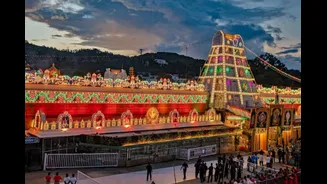
As the sun climbs higher, attention shifts to the towering wooden chariot. The Maharathotsava sees the massive chariot pulled through Koppala’s main streets, its wheels rolling slowly as ropes stretch across a sea of people.
Devotees offer bananas and uttatti, dried dates, to the chariot as it moves. The ritual is believed to bring prosperity, health and fulfilment of wishes. For some, touching the rope is the culmination of months of prayer. For others, it is tradition passed down through generations.
When the ratha begins to move, the town seems to pause and surge at once. Streets disappear under crowds, balconies fill with onlookers and chants echo through narrow lanes.
Dasoha as the Heart of the Jatre
Even as the chariot moves, the kitchens do not stop. The Gavisiddeshwara Mutt is known across the state for its commitment to dasoha, and the jatre is its most visible expression.
Thousands of volunteers work in shifts, many having travelled only to serve. The food is simple, nourishing and plentiful. Everyone eats the same meal, pilgrims, police personnel, volunteers, sanitation workers and travellers who arrive without a plan.
For devotees, this shared meal is not charity. It is equality, a reminder that faith here is inseparable from service.
Faith With a Message Beyond Ritual
Each year, the jatre also carries a social message. This time, the focus is on environmental protection and water conservation. Through announcements and discourses, devotees are urged to plant trees, conserve water and protect natural resources.
Under the guidance of Sri Gavisiddeshwara Swamiji, the message connects belief with responsibility, reminding pilgrims that devotion does not end at ritual but extends into daily life.
Holding the Crowd Together
Managing a gathering of this scale requires careful coordination. More than 2,000 police personnel have been deployed across Koppal, supported by CCTV surveillance, crowd-control barricades and temporary medical camps.
Ambulances and first-aid centres are stationed along key routes, while volunteers guide elderly devotees through the densest sections of the crowd. Traffic diversions are in place, but within the town, movement follows an unspoken rhythm shaped by decades of repetition.
When the Town Becomes the Festival
As night falls, the crowds thin but the kitchens keep going. Plates are washed, fires are fed again and those arriving late are still welcomed with a meal.
The Gavisiddeshwara Jatre is not just a religious event. It is where faith feeds bodies, where service sustains belief and where an entire town becomes a shared space of devotion.
When the last chariot wheel stops and the crowds finally drift away, Koppal will return to its quieter days. But for those who ate, pulled the rope or simply stood in the crowd, the memory will remain of a place where faith arrived first as food.