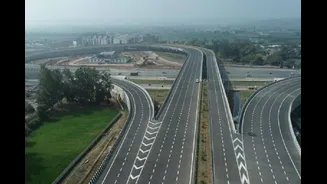








The government is set to shorten the planned Chennai–Surat National Highway, which spans across six lanes. Originally planned under the Bharatmala Pariyojana to be 1,271 km long, the expressway will now
be downsized to a 900 km stretch.
The Union Ministry of Road Transport and Highways has also announced a change in the route, with the highway now set to run from Chennai to Nashik instead of going all the way up to Surat. The authorities explained that the change was necessitated due to the major constraints experienced in buying land between Surat and Nashik.
Chennai–Surat National Expressway Update
Prolonged delays have also been faced in acquiring environmental approvals for the expressway. Initially, the expressway was set to exceed 1,200 km and connect Surat to Chennai. The estimated cost of the project was about Rs 50,000 crore. With the new plans seeing the stretch end in Nashik, the road will be over 300 km shorter.
The original route would’ve passed through cities such as Surat, Nashik, Ahmednagar, Solapur, Kalaburagi, Kurnool, Kadapa and Tirupati. It would’ve established an interstate link, connecting Gujarat, Maharashtra, Telangana and Tamil Nadu.
According to the revised plan, Maharashtra State Road Development Corporation (MSRDC) will be developing a new greenfield expressway, spanning Bharvir Khurd on the Samruddhi Expressway to Tawa village on NH-48 – the Mumbai-Ahmedabad Highway. This road is intended to provide the same traffic mobility which the earlier Surat–Nashik stretch of the Chennai–Surat Expressway was meant for.
Goal: To Improve Long-Distance Travel
Originally, the project for the expressway was split into two parts. The authorities had aimed to bridge the 513 km stretch from Surat to Solapur and build another 707 km stretch to connect Solapur to Chennai.
Even though the route has been shortened, the goal remains the same: to improve long-distance travel and support interstate mobility. Travellers in the region will soon get to operate on an advanced six-lane and access-controlled expressway, with vehicles running at a maximum speed of up to 120 kmph. Once operational, the expressway will bolster the connectivity between central and southern India.