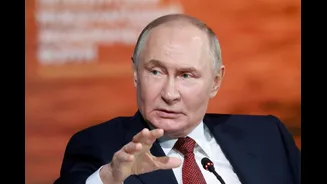





Russian President Vladimir Putin has used the occasion of Nowruz, the Iranian new year, to publicly reaffirm Moscow’s support for Tehran, amid mounting questions over how committed Russia really is to backing
Iran during its current crisis.
In a message released by the Kremlin on Saturday, Putin extended Nowruz greetings to Iran’s Supreme Leader Ayatollah Mojtaba Khamenei and President Masoud Pezeshkian. He wished the Iranian people strength in enduring what he described as “harsh trials” and stressed that, in these difficult times, Russia “remains a loyal friend and reliable partner of Tehran,” according to the Kremlin statement.
The declaration of solidarity comes as debate intensifies over the extent of Moscow’s practical support. Some Iranian sources claim that, despite the rhetoric, they have received little concrete assistance from Russia during what many regard as Iran’s most serious crisis since the U.S.-backed Shah was overthrown in the 1979 revolution.
Russia has accused recent U.S. and Israeli attacks on Iran of pushing the wider Middle East to the brink and fuelling a major global energy crisis. Putin has also condemned the killing of Iranian Supreme Leader Ayatollah Ali Khamenei, calling it a “cynical” murder.
Politico reported that Moscow had proposed a quid pro quo to Washington: Russia would stop sharing intelligence with Iran if the United States ceased providing Ukraine with intelligence on Russia. Washington reportedly rejected the offer, while the Kremlin has dismissed the report as fake.
Moscow has previously lost a significant ally in Latin America after the United States toppled Venezuelan leader Nicolas Maduro. Nonetheless, Russia has benefited from the spike in oil prices triggered by U.S. and Israeli strikes on Iran, which remains a strategic partner for the Kremlin.
Despite the close partnership, the published strategic agreement between Russia and Iran does not contain a mutual defence clause. Moscow has repeatedly maintained that it does not want Iran to acquire a nuclear weapon, warning that such a development could spark a nuclear arms race across the Middle East.