
A detailed Election Commission–backed evaluation in Karnataka has thrown a spanner into Rahul Gandhi’s “vote chori” campaign, indicating high voter turnout and strong public trust in Electronic Voting
Machines (EVMs) during the 2024 Lok Sabha elections.
To assess how effectively voter awareness efforts worked during the polls, the Election Commission entrusted the Karnataka Monitoring & Evaluation Authority (KMEA) with evaluating the outcomes of the Systematic Voters’ Education and Electoral Participation (SVEEP) programme. The study, titled ‘Lok Sabha Elections 2024: Evaluation of Endline Survey of Knowledge, Attitude and Practice (KAP) of Citizens’, was commissioned by Karnataka Chief Electoral Officer V. Anbukumar.
The survey covered 5,100 respondents across 102 Assembly constituencies in the Bengaluru, Belagavi, Kalaburagi and Mysuru divisions, forming one of the most extensive post-election assessments conducted in the state.
The findings highlight substantial voter participation and widespread confidence in the electoral process and EVMs. According to the report, 95.75 per cent of respondents said they had voted, while 83.61 per cent expressed confidence in the electoral system and in EVMs.
Awareness of the voter list was high at 85.31 per cent, although understanding of online registration, home voting and grievance-redressal mechanisms remained limited.
Notably, 83.61 per cent of respondents said they believed EVMs were trustworthy. “A large majority of respondents across all divisions trust that EVMs provide accurate results,” the study noted.
SVEEP, the Election Commission’s flagship voter education initiative launched in 2009, aims to improve electoral awareness and participation, particularly among first-time voters, women, youth, persons with disabilities and marginalised groups. Karnataka, which has been proactive in rolling out the programme, saw turnout rise from 68.81 per cent in 2019 to 71.98 per cent in 2024.
The KAP survey, supplemented by in-depth interviews, focus group discussions and booth-level case studies, found that voter participation was exceptionally high. EPIC possession was nearly universal at 99.02 per cent. Yet gaps remained in awareness about online registration, home voting, grievance redressal and updating voter details. Only 30.39 per cent of respondents knew the correct date of National Voters’ Day.
Despite concerns over inducements and the influence of money and muscle power, especially in parts of the Kalaburagi division, rural voters largely perceived the election process as fair, attributing this to strong engagement by Booth Level Officers (BLOs). Urban youth, however, displayed apathy and scepticism, citing elite dominance and lack of transparency.
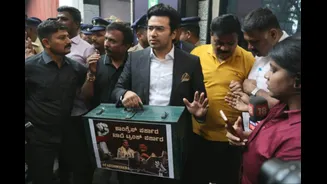
Importantly, the survey found that trust in EVMs was highest in Kalaburagi, the very region where allegations of “vote chori” from Aland first emerged and later became central to Rahul Gandhi’s campaign narrative.
SVEEP participation levels were moderate. Posters and hoardings were the most visible tools, while door-to-door outreach and BLO-led campaigns proved the most effective in driving voter engagement. By contrast, Electoral Literacy Clubs and digital platforms had limited reach, especially among women and SC, ST and tribal communities.
The survey’s second phase reinforced these findings. Only 18.37 per cent of respondents accessed election-related websites or apps, underscoring low digital engagement. BLO visits remained the primary source of voter enrolment and awareness, cited by 47.21 per cent of respondents.
While recognition of the importance of voting was high, concerns regarding inducements persisted. These were often underreported due to fear of retaliation and low confidence in grievance redressal mechanisms.
Among persons with disabilities (PwDs), awareness of special outreach campaigns and postal ballot provisions was relatively strong, but infrastructural shortcomings were significant barriers. The absence of separate queues, lack of accessible facilities and transport challenges were among the most commonly reported issues, with women with disabilities facing additional hurdles.
Qualitative insights indicated that although voter awareness of electoral procedures has improved, understanding of voter rights and services remains uneven — particularly among women, first-time voters, SC, ST, tribal and transgender communities. Information access varied sharply: youth predominantly relied on digital platforms, while rural and older voters depended on BLOs and traditional media.
Overall, the findings suggest that while Karnataka has made substantial progress in improving voter awareness and participation, challenges remain in inclusion, last-mile outreach and sustained voter education. At the same time, the high turnout and strong trust indicators present a notable counterpoint to narratives questioning the credibility of the electoral process.