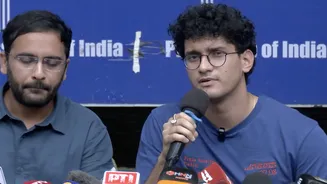





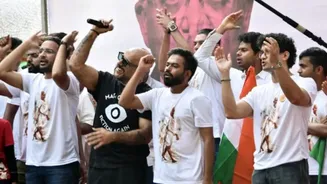

All India Students’ Association (AISA) president Neha Bora on Sunday inadvertently tricked the Delhi Police through a dramatic case of mistaken identity, involving a lookalike doppelgänger, to protest
against Chief Election Commissioner (CEC) Gyanesh Kumar. Was it a strategy or a coincidence? The tale of two Nehas, explained.
THE LOOKALIKE CONFUSION
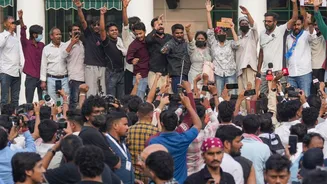
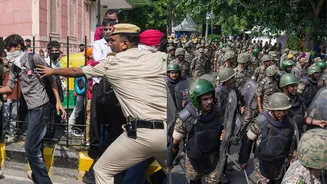
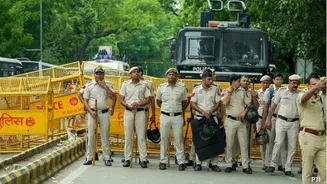
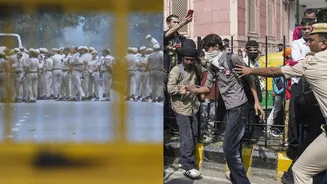
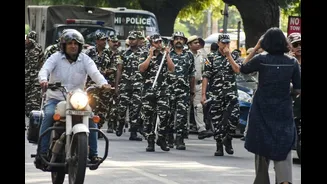
Bora had posted a video message online calling for protesters to gather at RK Ashram Marg Metro station at 2:30 PM. Anticipating her arrival, a massive deployment of Delhi Police, paramilitary forces, and media crews waited at the station.
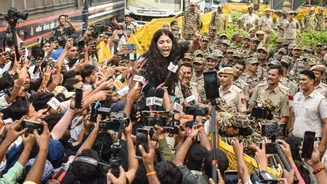
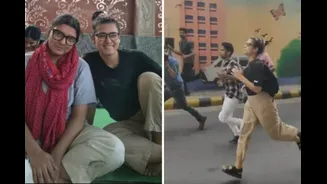
When afemale supporter wearing a face mask, black-rimmed glasses, a t-shirt, and a scarf appeared at the scene, the authorities and media immediately mistook her for the AISA chief. While security personnel and news cameras spent critical minutes rushing over, chasing, and detaining this woman, the mix-up gave the actual student leader the window she needed to bypass the primary police lines undetected.
THE REAL PROTEST IN CONNAUGHT PLACE
While the police were occupied at the metro station, the real Neha Bora sprinted her way into Connaught Place (CP) with a group of supporters, successfully crossing the initial layers of barricades. The trick was exposed when Bora posted an update on social media stating, “We have crossed the barricades and reached CP”.
‘COINCIDENCE, NOT STRATEGY’
As social media erupted with claims that Bora had masterminded a clever guerilla tactic using a body double to outsmart the police, Bora later clarified the situation. She posted a photo alongside her lookalike on X (formerly Twitter) with the caption: “The tale of the two Nehas. Not strategy, just coincidence.”.
WAS NEHA BORA DETAINED?
Despite the distraction allowing her to successfully execute a brief march through Connaught Place, the Delhi Police eventually caught up with Bora, detaining her later that afternoon.
Following her detention, Bora posted a video from inside a security vehicle. She claimed that the police were using multi-cell detention buses with barely any room to breathe and accused the forces of heavy-handedness.
Bora, along with hundreds of other student activists and political figures detained during the massive Sunday crackdown across the capital, was released later that evening. This marked her second detention in 24 hours, as she had also been picked up by police on Saturday at Dilli Haat.
WHO IS NEHA BORA?
Neha Bora is a 29-year-old student activist, PhD research scholar, and the national president of the All India Students’ Association (AISA), a left-wing student organization. She has quickly emerged as one of the most prominent faces of Gen Z and youth unrest in India, mobilizing large-scale student demonstrations that have directly challenged the establishment.
Her rise as the “face of youngsters’ ire” is the result of her transition from campus theatre to high-profile street activism, solidified by her leadership during two major waves of national student protests in 2026.
Born in Uttarakhand into an army officer’s family, Neha lived across various Indian cities before moving to New Delhi for higher education. She graduated from Delhi University, completed her master’s degree at Ambedkar University Delhi, and is currently pursuing a PhD in Theatre and Performance Studies at Jawaharlal Nehru University’s (JNU) School of Arts and Aesthetics.
Bora credits her early involvement in college theatre groups with shaping her political consciousness. She notes that performing helped her learn to empathize with different socioeconomic realities and use art to raise structural, political questions. Her political activism initially began during the 2019–2020 anti-CAA student movements, where she witnessed her classmates actively leading street-level political demonstrations.
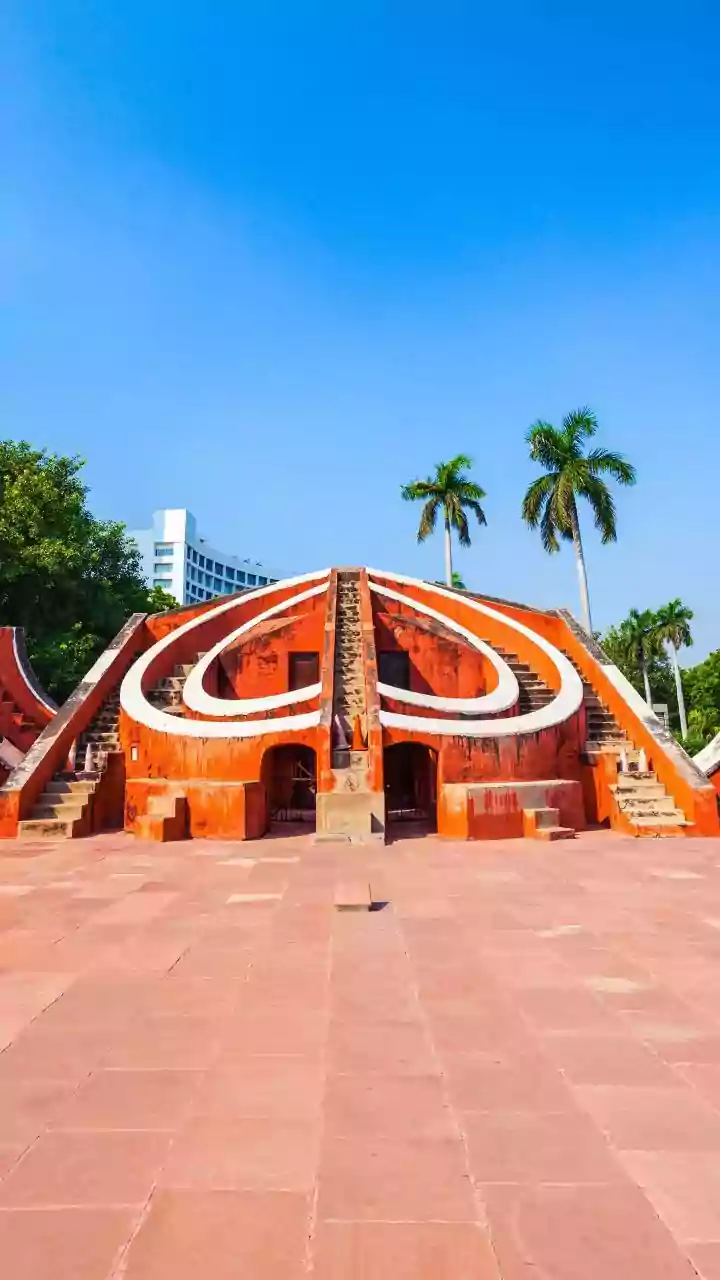
Bora first captured national attention during massive student agitations in June and July 2026 regarding systemic examination leaks and testing irregularities (such as the NEET scandals). At Jantar Mantar, she joined a highly publicized hunger strike alongside educationist Sonam Wangchuk. After Wangchuk and other senior leaders were hospitalized due to failing health, Bora famously refused to back down. Despite losing 8 kg and eventually requiring hospitalization herself, she continued to record defiant video updates from her hospital bed, vowing to return to the streets.
During her 23-day fast, her sharp speeches at Jantar Mantar, combined with her savvy use of satire, humor, and pop culture references on social media, resonated with a broader Gen Z audience.
Her status as a symbol of youth resilience was further solidified on August 7, 2026, during a student march in Ranchi, Jharkhand. While protesting recruitment exam irregularities, an assailant threw ink at her face. Bora immediately turned the attack into a symbol of defiance, stating that the incident would not intimidate her, which further endeared her to frustrated job-seekers and students nationwide.
By October 2026, Bora became a key figure alongside the youth-led “Cockroach” movement, demanding the resignation of Chief Election Commissioner Gyanesh Kumar over disputed electoral roll revisions.