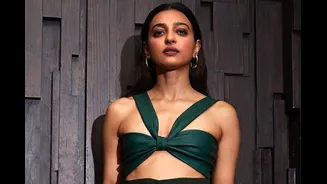





Radhika Apte marked her foray into south cinema with Telugu-Hindi film, Rakta Charitra. She then followed it up with Vetri Selvan, Kabali and Lion, among others. Her last south outing was Chithiram Pesuthadi
2. It released in 2019, six years after she filmed it. Speaking exclusively to News18, Radhika now reveals what kept her away from south cinema all these years.
Talking about how it also stemmed from a clash of sensibilities, she tells us, “I could be wrong but in my perception, north Indian actresses were cast down south because they were fairer. I’m not fair. I wonder, why they wouldn’t cast south Indian actresses in south Indian films and get north Indian actresses instead! And here, they want foreigners. We’ve a tendency to do that.”
Radhika adds, “I didn’t want to promote that. Women down south are absolutely beautiful, talented and amazing, who know the language really well. They’re excellent performers. I think they should get cast in south films rather than people coming from Bombay, who can’t speak a word in that language and get their voices dubbed by others. I wasn’t very much in favour of all that.”
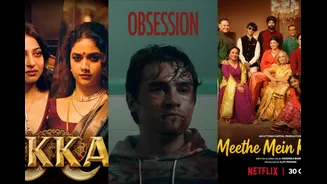
While she may give returning to the south film industries a thought basis one condition, she feels language may eventually come in the way. “If there’s a part that has to be performed by a particular actress because of a certain reason, then I understand. But then, language also became a big barrier for me,” remarks the actor, who’s awaiting the release of Netflix’s Akka.
Elaborating further, Radhika says, “There was a point when I didn’t believe so and I thought I could perform in any language. I went on to do films across seven different languages. You don’t want to just think of your lines. If you forget your lines and want to do something of the situation, you need to know the language first. Since I didn’t speak those languages, I figured I couldn’t do justice to those films.”
Years ago, Radhika had described Telugu cinema as ‘deeply patriarchal and male-dominated’ and how she felt like a third person. She also criticised how female characters were portrayed, stating their roles often reflected the idea that ‘my man is god’. She added that she had no female colleagues, manager or agent to support her and recalled lewd jokes about women being made on set.
However, in hindsight, she now chooses to focus on the better aspects of film sets down south. “I did my last south film ten years back. And what I recollect is that things were a bit more informal there. A lot of things happened out of dosti. They were very soft and kind. They would tell me, ‘You’re like family now.’ They treated you as though you were their sister,” she says.
“But that would mean that I would also have to do things out of favour. That would become a problem. But it was also nice because you felt you could go and chat with them,” adds the Andhadhun and Badlapur actor.