


When we think of vegetables, familiar names like spinach, cabbage, okra, or peas usually come to mind. But in the rural pockets of Rajasthan’s Nagaur district, there is a lesser-known herb that quietly
finds its way onto plates while most urban dwellers dismiss it as just wild grass.
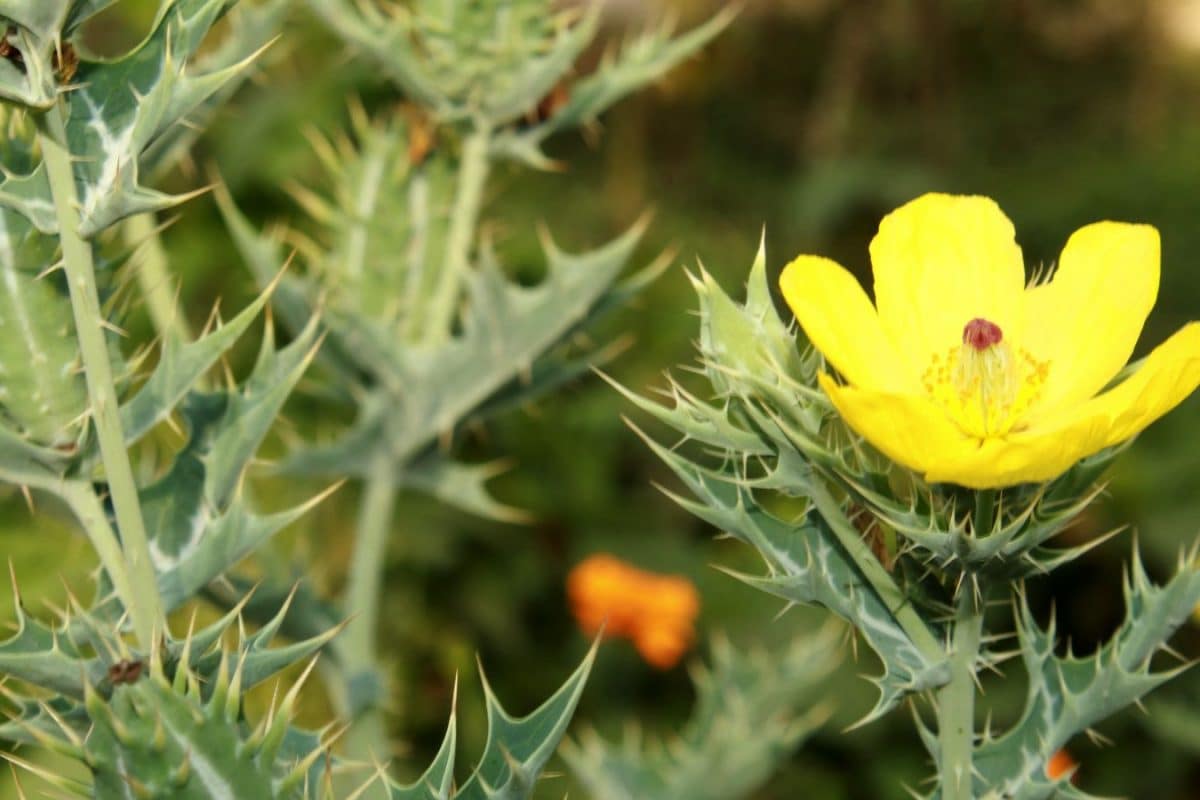
Satyanashi, or Mexican prickly poppy, is a wild plant celebrated in villages for its distinct taste and medicinal value. For generations, it has been a part of local diets, with its tender leaves, flowers, and soft stems turned into a simple yet flavourful dish.
Interestingly, its taste is often compared to mustard greens (sarson ka saag), making it both comforting and unique.
Not Just Cooking, It Is Craft
Preparing Satyanashi is not as straightforward as your everyday sabzi; it requires patience and skill. The plant has tiny thorns, which makes the cleaning process crucial.
Only the top portion of the plant is used—tender leaves, flowers, and soft stems. The stems are carefully peeled to remove thorns and then chopped into small pieces.
But the most important step comes next: cleaning. The chopped parts are soaked in warm salted water for 10 to 15 minutes. This process not only softens any remaining thorny texture but also reduces the plant’s natural bitterness, enhancing its flavour.
How It Is Cooked
The cooking process is simple yet rooted in traditional flavours. Mustard oil is first heated in a pan until it begins to smoke. Then comes the tempering—cumin seeds, asafoetida, finely chopped garlic, and green chillies are added and sautéed until golden.
Once the aroma builds, the prepared Satyanashi leaves and stems are added. Basic spices like turmeric, coriander powder, and salt are mixed in, and the dish is cooked on a low flame with a lid on.
In about 10 to 15 minutes, when the stems turn tender, a pinch of garam masala is added, and the flame is turned off, leaving behind a rustic, earthy dish.
In rural Rajasthan, this humble dish is often served with bajra roti or hot parathas—a combination that reflects both simplicity and nourishment.