






As the spotlight turns to Hollywood for this year’s Academy Awards, another kind of star quietly takes center stage: the destinations that bring these stories to life. Beyond the red carpet and golden
statuettes, award-winning films have long doubled as cinematic postcards, capturing landscapes, cities, and hidden corners of the United States in ways that linger far beyond the final scene.
Now, travelers are following the script.
Welcome to the era of set-jetting, where film lovers swap streaming queues for boarding passes, seeking out the real-world locations behind their favorite Oscar-winning and nominated films. From sun-drenched California coastlines to moss-draped Southern squares and the vast stillness of the American Southwest, these places offer something rare: the chance to step directly into the frame.
“The United States has long been the epicenter of ‘movie magic,’ with landscapes and cities that bring the world’s most memorable stories to life,” said Fred Dixon, president and CEO, Brand USA. “We’re seeing that inspiration translate into travel. Nearly 40% of travelers interested in visiting the U.S. want to see locations featured in movies or television, and one in five recent visitors say films influenced their trip planning. Awards season shines a global spotlight on these destinations and inspires travelers to experience them firsthand.”
The West: Where Dreams and Camera Rolls Begin
In Los Angeles, cinema and landscape exist in a kind of effortless harmony. It’s here that Barbie painted its most exuberant moments, not in Barbieland, but along the very real stretch of the Venice Beach Boardwalk. Rollerblades, neon hues, and Pacific Ocean breezes collide in a setting that feels as playful off-screen as it does on it. Nearby, Santa Monica and Long Beach extend that same sunlit energy, while Downtown and Century City reveal a more urban rhythm.
The city’s dreamlike quality finds its most lyrical expression in La La Land, where love and ambition unfold across sweeping freeway overpasses and the iconic terraces of the Griffith Observatory. Stand there at dusk, the Hollywood Sign glowing faintly in the distance, and it’s easy to see why filmmakers and dreamers, keep returning.
Further east, the landscape shifts dramatically. At Monument Valley Navajo Tribal Park, the towering sandstone buttes seen in Nomadland rise from the desert floor with quiet grandeur. The stillness here is profound, almost cinematic in itself. Guided tours led by Navajo experts offer not just access, but perspective, revealing the cultural depth behind one of America’s most recognizable vistas.
The South: Stories Rooted in History and Soul
In Savannah, time seems to slow beneath a canopy of Spanish moss. It’s here, in Chippewa Square, that Forrest Gump delivered one of cinema’s most enduring monologues. The bench may now live in a museum, but the square retains its quiet magic, inviting visitors to linger a little longer than planned.
History takes on a different weight in Richmond, where Lincoln recreated the turbulence of the Civil War era with remarkable authenticity. Walking its preserved streets today feels less like sightseeing and more like stepping into a living archive.
In Northern Kentucky, the road-trip spirit of Rain Man unfolds across unassuming yet deeply evocative locations from local eateries like Pompilio’s to quiet cemeteries that anchor the film’s emotional journey. And in Austin, Boyhood captures something rarer still: the poetry of everyday life. Here, the story isn’t just in landmarks, but in neighborhoods, parks, and the gentle curve of trails around Lady Bird Lake.
The Midwest: Where Architecture Meets Atmosphere
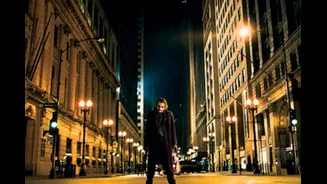
Few cities transform as convincingly on screen as Chicago. In The Dark Knight, its steel-and-glass corridors become Gotham City, most memorably along Lower Wacker Drive, where chaos unfolds at full throttle. Yet just beyond the city, a softer image emerges in Winnetka, where Home Alone turned a quiet suburban home into a holiday icon.
Beyond the urban, the Midwest reveals a gentler beauty. The covered bridges that define The Bridges of Madison County evoke a slower, more reflective America, one best experienced along winding country roads, where time feels deliciously unhurried.
The Northeast: Icons, Energy, and Enduring Frames
In Philadelphia, cinema’s most triumphant underdog moment plays on a loop. The steps of the Philadelphia Museum of Art, immortalized in Rocky remain a pilgrimage site for visitors who can’t resist recreating that final, victorious run.
Meanwhile, New York City continues to play itself, restless, electric, endlessly cinematic. In West Side Story, its streets pulse with music and movement, from Lincoln Center’s grand stages to the lived-in charm of the Upper West Side.
Hollywood and Beyond
Of course, it all circles back to Los Angeles, where the Academy Awards have unfolded for nearly a century, from the storied halls of the Hollywood Roosevelt Hotel to the glittering stage of the Dolby Theatre. Yet the true magic of American cinema lies far beyond any single stage.
Because for more than a century, filmmakers have turned to the United States for landscapes that elevate storytelling from sweeping national parks and historic towns to world-famous city skylines. And increasingly, those same places are inspiring a new kind of traveler.
One who doesn’t just watch the story but steps inside it.