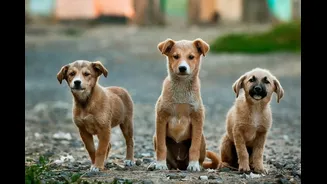

On an ordinary morning in Mysuru, Karnataka, a quiet but unusual moment unfolded. Amid a local adoption drive organised by the Mysuru City Corporation, 2 street dogs found new families, not from the neighbourhood
or even the city, but from Germany. What began as a civic experiment in animal welfare quickly turned into a story of cross-border compassion, drawing attention to how Indian street dogs are being seen and valued beyond India.
German Tourists Step Forward at Adoption Drive
The adoption drive, organised by the Mysuru City Corporation in collaboration with the Department of Animal Husbandry, brought 20 street dogs to a public venue near the Town Hall. Among the visitors were 2 German tourists, Phenia and Arena, who were in Mysuru as part of their travels. Instead of merely observing the event, they chose to adopt 2 street dogs on the spot.
Their decision surprised officials and onlookers alike. While local adoption of street dogs is still growing slowly, international visitors stepping forward added an unexpected dimension to the initiative. The tourists expressed happiness about adopting Indian street dogs and indicated plans to take them back to Germany after completing the required procedures.
Indian Street Dogs, Global Appeal
Indian street dogs are often viewed locally through the lens of fear, nuisance, or public safety concerns. However, animal welfare groups have long argued that these dogs are resilient, intelligent, and highly adaptable. The German tourists’ interest reinforced that argument in a powerful way. To them, the dogs were not “strays” but potential companions.
Officials noted that such moments challenge common stereotypes. Street dogs, when vaccinated, sterilised, and cared for, can adapt well to home environments, including international settings. While taking dogs abroad involves strict protocols such as vaccinations, microchipping, health certification, and airline approvals, the willingness to go through that effort speaks volumes about changing attitudes.
Officials Lead, But the Spotlight Shifts
The event itself was inaugurated by Mysuru City Corporation Commissioner Sheikh Tanveer Asif, who fed the dogs to mark the launch. MCC officials Pratima and Anand also adopted 1 dog each, signalling administrative confidence in the programme. However, it was the German adoption that became the most talked-about moment of the day.
Out of the 20 dogs brought to the venue, 5 were adopted immediately. While local adoptions are significant in their own right, the international adoptions gave the drive wider visibility and sparked conversations beyond Mysuru about how Indian cities handle street dogs.
More Than a One-Day Gesture
The Mysuru City Corporation clarified that the adoption drive was not a one-off event. A permanent adoption mechanism has now been opened for citizens who wish to adopt street dogs. Officials believe that adoption, combined with sterilisation and vaccination, can gradually reduce the number of unowned dogs on the streets.
The German adoptions, while symbolic, have also helped highlight adoption as a viable solution rather than just an emotional gesture. When international visitors show trust in the system, it adds credibility to the city’s animal welfare efforts.
What This Means for Karnataka Cities
Mysuru’s experience raises an important question for other Karnataka cities, including Bengaluru, which continues to grapple with street dog-related concerns. If adoption drives are conducted transparently, with health checks and post-adoption support, they could encourage more residents to consider adopting street dogs instead of buying pets.
The sight of Mysuru’s street dogs finding homes thousands of kilometres away may also push local residents to rethink their own perceptions. If these dogs are deemed worthy of homes abroad, perhaps they deserve the same acceptance closer to home.
A Small Event With a Big Message
While only 2 dogs crossed borders that day, the message travelled far. Mysuru’s streets briefly connected with German homes, reminding the city that solutions to urban problems sometimes arrive in the most unexpected ways. Adoption, empathy, and shared responsibility may not end the street dog issue overnight, but they have given it a new, hopeful narrative.