

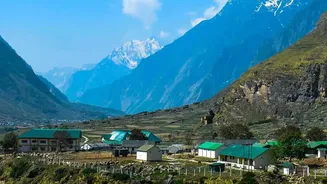
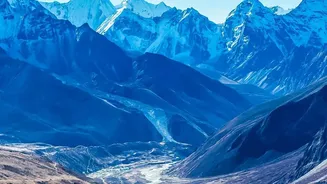
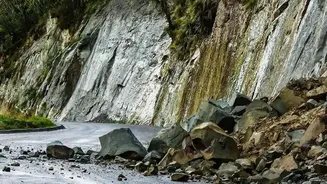
The devastating floods that swept through Nepal last week, killing more than 1,000 people and leaving thousands missing, are the latest in a growing pattern of climate-linked disasters hitting the fragile
Himalayan region with alarming frequency.
From glacial collapses and flash floods to landslides and avalanches, communities across the Himalayas are facing increasingly complex and cascading disasters as rising temperatures accelerate the melting of glaciers and destabilise mountain ecosystems.
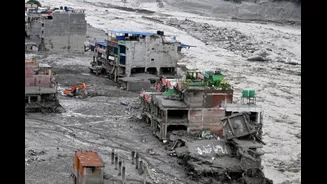
The August 26 disaster in Nepal and neighbouring China was triggered when a massive collapse of bedrock and glacier ice sent debris and water surging through multiple Himalayan rivers. While scientists say it is too early to directly attribute the catastrophe to climate change, experts warn that rising global temperatures are increasing the likelihood of such extreme events.
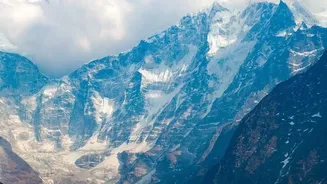
The Himalayas are warming faster than many other parts of the world, setting off a dangerous chain reaction. As glaciers retreat and high-altitude ice melts, mountain slopes become increasingly unstable, raising the risk of rockslides, avalanches and sudden floods.
“Climate change has been playing a large role in the Himalayas, causing these kinds of complex disasters which have really impacted downstream communities and investments,” Saswata Sanyal, a disaster risk resilience expert at the Kathmandu-based International Centre for Integrated Mountain Development, told AFP.
When One Disaster Triggers Another
Experts say the Himalayan region is increasingly witnessing cascading disasters, where one hazard triggers another.
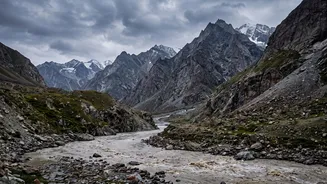
Warmer temperatures melt glacier ice and can weaken mountain slopes. An avalanche or landslide can block a river, creating a temporary dam that may suddenly burst and unleash a devastating flash flood downstream. Heavy rainfall after an initial disaster can further compound the destruction.
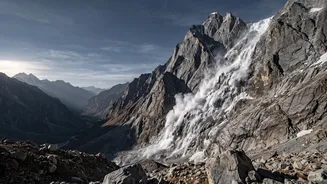
The August 26 catastrophe was an example of how quickly such cascading events can unfold. Satellite imagery indicated that a huge mass of bedrock and glacial ice plunged into a valley, sending a wall of water, mud and debris several stories high through communities kilometres downstream.
The region has witnessed several such disasters in recent years, including the 2013 Kedarnath floods in India, the 2021 Chamoli disaster, and the 2023 South Lhonak glacial lake outburst flood. Together with recurring landslides and flash floods, these disasters have killed thousands and caused massive economic losses.
People in Nepal were still recovering from last year’s floods when the latest disaster struck. “And before they could fully adapt, the next one came,” Sanyal told AFP.
Melting Glaciers, Thawing Ground And Rising Risks
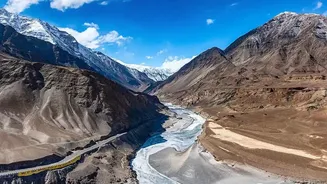
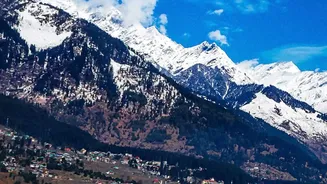
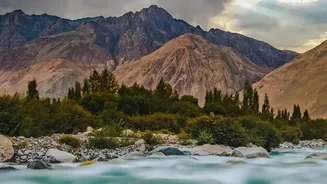
The Himalayas, spanning Afghanistan, Pakistan, India, Nepal, Bhutan, Bangladesh, Myanmar and China, contains the world’s largest concentration of ice outside the polar regions. Rivers originating in the region support nearly two billion people.
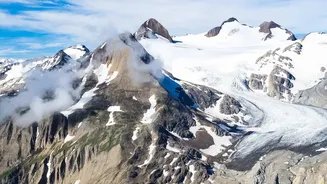
Glacier ice loss in the Himalayas has accelerated sharply since 2000. Another growing threat is thawing permafrost, ground that has remained frozen for prolonged periods, which can weaken mountain slopes and increase the likelihood of catastrophic collapses.
For many communities, the increasing frequency of disasters raises a more fundamental question: can they continue rebuilding in the same places?
“The adaptation threshold has been crossed in some areas,” Nepali climate policy expert and UN climate negotiator Manjeet Dhakal told AFP.
Unlike an earthquake, where a damaged house can be rebuilt and belongings may sometimes be recovered, a catastrophic flood can erase the land itself, along with roads, water systems, schools and electricity infrastructure.
Experts warn that some communities may eventually have to relocate rather than rebuild, with climate risks increasingly becoming a key factor in future settlement and infrastructure planning.
Are Himalayan Communities Prepared?
Experts say the impact of future disasters can be reduced through stricter land-use regulations, stronger assessments before infrastructure projects are approved, better cross-border monitoring and more effective early-warning systems.
However, warnings alone may not be enough.
Around 670,000 people received text alerts ahead of the August 26 floods, but experts say some visitors and migrant workers could not understand messages in Nepali, while others underestimated the threat. In some locations, river-monitoring systems were themselves overwhelmed or washed away.
Sanyal said early-warning systems must go beyond simply alerting people about an impending disaster and clearly communicate what actions they should take. He also called for infrastructure planning that accounts for multiple hazards and greater use of Indigenous knowledge in disaster preparedness.
The latest catastrophe has also reignited questions of climate justice. Nepal has contributed less than 0.1% of the greenhouse gas emissions driving global warming but is among the countries increasingly exposed to its consequences.
As Himalayan glaciers continue to retreat and mountain ecosystems become more unstable, experts warn that the question may no longer be whether another disaster will strike, but how soon, and whether communities will have enough time to recover before the next one does.