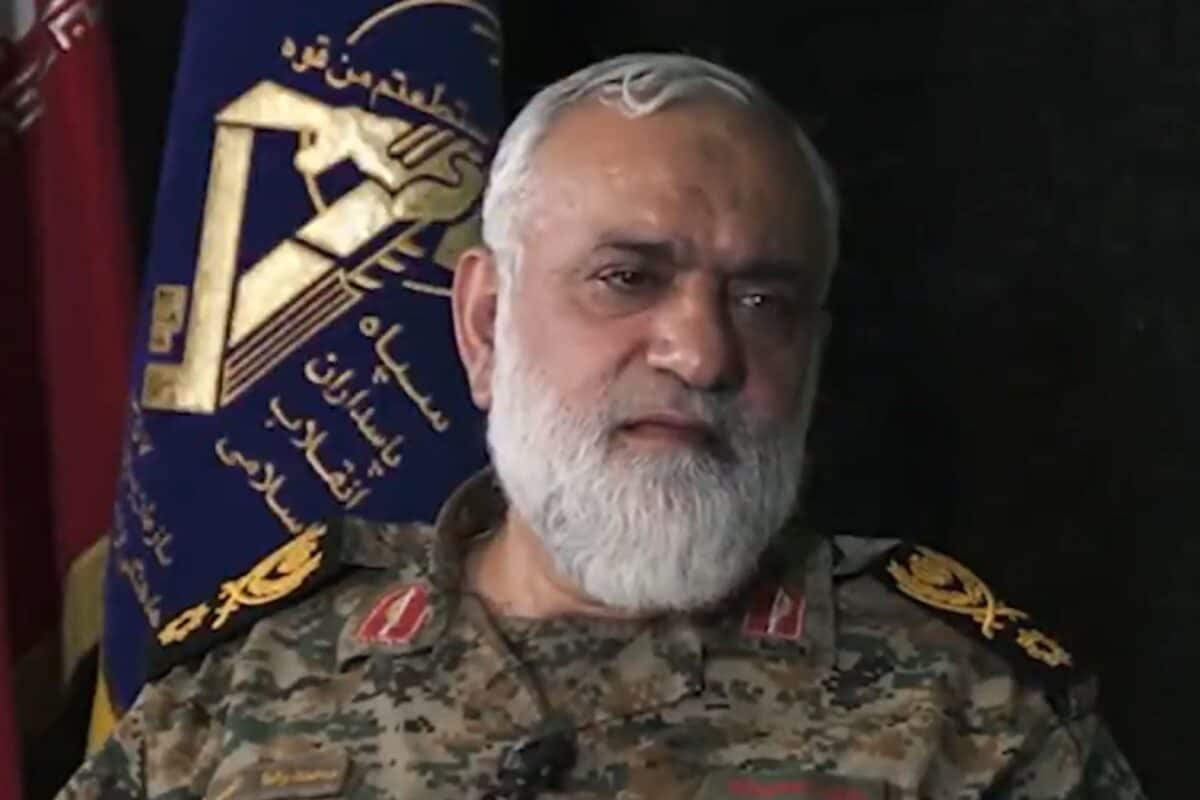








A senior adviser to the commander of Iran’s Islamic Revolutionary Guard Corps (IRGC) has said Tehran could seek to prolong the war until US President Donald Trump leaves office, arguing that a drawn-out
conflict could weaken its adversaries and discourage future attacks on Iran.
Mohammad Reza Naghdi made the remarks during an interview with PBS NewsHour on Tuesday. He was asked directly whether Iran’s strategy was to extend the conflict and wait for Trump to leave office.
“One way is to prolong this war until we get to the next term of the presidency and cause attrition, so that if anyone else wants to attack Iran, they will know there is a cost,” Naghdi said during the interview.
He said Iran’s goal was to build enough military deterrence to ensure that its adversaries would think twice before launching another attack.
“We have to attain deterrence so that the enemy never dares to attack us, so we can live with security,” he said.
In a candid admission, he also said that the five months of fighting the United States also gave them the experience they previously lacked.
“The longer this war lasts, the more experience we gain. We had never seen a real war to gain real experience to learn how to fight with America. In these five months, we have learned how,” he said.
Iran Defends Attacks On Ships
Naghdi also defended Iranian attacks on non-military vessels attempting to pass through the Strait of Hormuz.
Asked why Iranian forces had targeted civilian ships at least twice this week, he said Tehran needed to control shipping routes during wartime. He argued that vessels leaving areas controlled by Iran could potentially be carrying supplies for its adversaries.
“When we are at war, vessels need to pass through a region we can control,” Naghdi said. “When they leave an area that we control, it could be that they’re transporting supplies for the enemy.”
Asked whether attacking civilian vessels violated international law, Naghdi maintained that Iran could control shipping routes it considered threatening during a war.
“When you’re in a state of war, any thoroughfare deemed to be a threat, we can control it,” he said.
The remarks came as commercial shipping through the Strait of Hormuz has dropped sharply amid the conflict and attacks on vessels in the strategically important waterway.
Reason For Khamenei’s Absence
Naghdi was also questioned about the absence of Iran’s Supreme Leader Mojtaba Khamenei from public view during the conflict. He attributed the absence to security concerns.
“Naturally, it is due to security,” Naghdi said when asked whether Khamenei was staying out of public view for security reasons. “Certainly, there is no other reason.”
When asked whether he had personally seen Khamenei, Naghdi declined to answer.
“Let’s leave this matter alone,” he said.
Meanwhile, Washington has been trying to get Iran to the negotiating table and agree on a deal to let ships pass through the Strait of Hormuz, the closure of which has put the economies of the major nations under strain. The White House urged Tehran to reach an agreement.
“It would be wise for Iran to agree to a deal,” the White House said in a statement cited by PBS, adding: “Otherwise they know what will happen,” the Americans threatened.