






Iran’s frozen overseas assets have emerged as a central flashpoint as the United States and Iran prepare for a second round of talks to sustain their ongoing ceasefire, with Tehran insisting that access
to blocked funds must be part of any meaningful diplomatic progress, according to a report by Al Jazeera.
The issue has gained prominence ahead of the expected resumption of negotiations before the ceasefire deadline of April 22.
FROZEN ASSETS AT CENTRE OF CEASEFIRE NEGOTIATIONS
As diplomatic engagement between Washington and Tehran gathers pace, Iran’s access to billions of dollars held abroad has become a major sticking point.
According to the report, Iranian officials have emphasised that releasing at least part of these funds is essential to building confidence between the two sides and ensuring progress in negotiations.
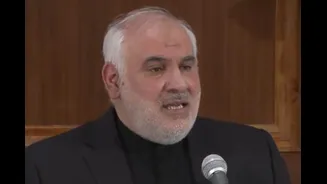
Ahead of the first round of ceasefire discussions held in Islamabad on April 10, Iran’s parliament speaker Mohammad Bagher Ghalibaf said on X that the release of Iranian funds frozen in foreign banks should precede negotiations.
Reports initially suggested that the United States might consider easing restrictions on some of these assets, but Washington later clarified that no such decision had been taken and that the funds remain inaccessible.
With talks expected to resume in the coming days, the question of frozen assets is likely to resurface as both sides seek to extend the ceasefire beyond April 22.
SCALE OF FUNDS ESTIMATED ABOVE $100BN
The report says that the precise amount of Iranian assets blocked overseas is unclear, but official Iranian estimates and expert assessments place the figure at more than $100bn.
Analysts note that the amount represents roughly three times Iran’s annual earnings from hydrocarbon exports, underscoring its importance to the country’s economic stability.
Frederic Schneider, a nonresident senior fellow at the Middle East Council on Global Affairs, told Al Jazeera that the funds represent a significant financial resource for a country that has been under sanctions for decades.
However, he noted that even if the United States agreed to release the assets, there may be conditions attached regarding how the funds can be used.
The report also cited former US Treasury Secretary Jacob Lew, who told Congress in 2016 that Iran might not be able to fully access all frozen assets even if sanctions were lifted, as a portion of the funds is already committed to existing financial obligations, including investments and loan repayments.
Currently, Tehran is pushing for the release of at least $6bn as a confidence-building step in the ongoing negotiations.
WHAT FROZEN ASSETS MEAN
Frozen assets refer to financial holdings such as funds, securities or property that are restricted by governments, courts or financial institutions, typically as part of sanctions or regulatory actions.
These measures prevent the owner from accessing, transferring or selling the assets.
Countries often justify such restrictions by citing concerns related to alleged violations of international law, money laundering or national security threats.
Critics, however, argue that asset freezes are sometimes selectively applied, particularly against states seen as geopolitical rivals of Western powers.
According to the report, countries including Russia, North Korea, Venezuela, Cuba and Libya have also faced asset freezes imposed by foreign governments.
ORIGINS OF SANCTIONS DATE BACK TO 1979
The report mentioned that the first major freeze of Iranian assets took place in November 1979, after Iranian students seized the US embassy in Tehran and held American citizens hostage.
Then, Jimmy Carter described Iran as posing an extraordinary threat to US national security and ordered restrictions on Iranian funds.
At the time, Iran’s liquid assets were estimated at less than $6bn, including approximately $1.3bn in US Treasury securities held at the Federal Reserve Bank of New York.
Many of those funds were later released under the 1981 Algiers Accords, which secured the release of 52 American hostages.
Relations between the two countries remained strained, particularly over Iran’s nuclear programme.
While Tehran maintains that its uranium enrichment activities are intended for civilian energy purposes, the United States and Israel have repeatedly accused Iran of attempting to develop nuclear weapons capability.
In 2015, Iran signed the Joint Comprehensive Plan of Action (JCPOA) with world powers, agreeing to limit its nuclear activities in exchange for sanctions relief, which allowed access to some overseas assets.
However, in 2018, the United States withdrew from the agreement and reinstated sanctions, once again restricting Iran’s access to foreign-held revenues.
According to Al Jazeera, a prisoner swap agreement in 2023 allowed Iran access to $6bn in oil revenues that had been frozen in South Korea.
The funds were transferred to Qatar under a monitored arrangement, but were later restricted again after the United States imposed fresh sanctions following Iran’s missile and drone attack on Israel.
WHERE IRAN’S FUNDS ARE HELD
Iran’s frozen assets are distributed across several countries, making access dependent on multiple jurisdictions.
The report mentioned that China holds at least $20bn in Iranian funds, while India holds approximately $7bn.
Iraq is believed to hold about $6bn, and Qatar holds another $6bn that was transferred from South Korea.
Japan is estimated to hold roughly $1.5bn in Iranian funds, while Luxembourg holds approximately $1.6bn. The United States directly holds close to $2bn in Iranian assets.
WHY ACCESS TO FUNDS IS CRUCIAL FOR IRAN
Iran’s economy has been under sustained pressure due to sanctions that have limited oil exports, reduced foreign investment and slowed industrial growth.
According to Al Jazeera, inflation and currency depreciation have contributed to widespread economic hardship and public protests in recent years.
Experts cited by the report say access to frozen funds could provide Tehran with much-needed liquidity, enabling investment in key sectors such as oil production, electricity infrastructure and water systems.
The funds could also help finance post-war reconstruction and stabilise the country’s currency.
Analysts told Al Jazeera that any US decision to release Iranian assets would also carry diplomatic significance, signalling a possible shift in Washington’s economic pressure strategy and potentially opening the door to broader international engagement with Iran.
However, uncertainty remains over whether any agreement will lead to sustained financial relief, with negotiations expected to continue amid lingering tensions between the two countries.