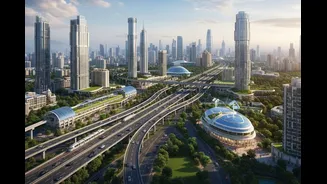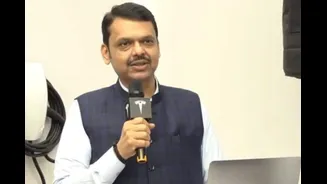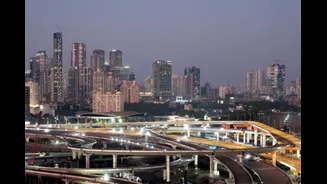

Maharashtra is set to get its first Innovation City, a major project aimed at making the state a hub for global innovation. The announcement was made by Chief Minister Devendra Fadnavis through a video
shared on the official CMO social media handle. The plan was first introduced to more than 400 international investors at the World Economic Forum in Davos, Switzerland. The location for the city has now been finalised and construction is expected to begin within six to eight months.
The city will focus on technology, research and startups, which will attract talent and investment from around the world. Officials say the project will not only boost Maharashtra’s economy but also strengthen its position among global networks.
CM Devendra Fadnavis announces Maharashtra’s dream project, the ‘Innovation City’, a landmark collaboration with the Tata Group. Rising near the Navi Mumbai International Airport, this future-ready hub will place Maharashtra at the heart of AI, semiconductors and GCC.
As… pic.twitter.com/YDiMNGyW9l
— CMO Maharashtra (@CMOMaharashtra) January 21, 2026
What Is Innovation City?
The Innovation City will focus on advanced technologies like high-performance computing, artificial intelligence, humanoid robots, AI-driven automation, human-computer interaction, algorithms, network security and cryptography. It will also work on next-generation renewable energy solutions to address climate change.
The project will bring together research, startups, industries and educational institutions to create solutions that can benefit the world. The city aims to make Mumbai a leading centre for various innovations, with a special focus on AI, semiconductors and Global Capability Centres (GCCs).
Where Will Innovation City Be Located And When Will It Be Built?
After the announcement in Davos, Devendra Fadnavis told ANI that the city will be India’s first innovation hub and that the location has been decided. He added that it will take over six to eight months before construction begins. While the exact site was not revealed, the city is expected to be near the Navi Mumbai International Airport (NMIA).
Who Are The Key Investors In The Project?
Devendra Fadnavis revealed that Tata Sons has agreed to invest $11 billion (Rs 1 lakh crore) in building the Innovation City, along with a major data centre and other infrastructure. He said the project has already attracted strong interest from international investors as well.
He said, “I discussed this idea with the chairman of TATA Sons and sought his support. I am delighted that, nearly a year later, we have officially announced this innovation city in Davos before 400-450 international investors.”
What Are The Project Details?
The Innovation City will cover over 100 acres of land in Navi Mumbai near the Navi Mumbai International Airport and the Atal Setu Bridge. The project is designed to provide ready-to-use infrastructure and facilities specifically for startups, artificial intelligence, semiconductors and Global Capability Centres (GCCs).
What Are The Key Components Of Innovation City?
The proposed city will focus on several key technology areas, including AI application layers, model development, semiconductors, data centres and energy infrastructure. It will feature advanced data centres with modern cooling systems, such as Direct to Chip Liquid Cooling and plans include a 100 MW green, AI-ready campus nearby. A dedicated GCC Park will be developed to host Global Capability Centres, which will attract international companies.
Although no official plans have confirmed residential areas within the city, the project will primarily focus on building spaces for businesses, research and technology development.
What Are The Indirect Impacts Of Innovation City?
The Innovation City is expected to have a strong impact on the surrounding areas and real estate. Tech hubs, data centres and GCCs will boost local employment, while property prices in Navi Mumbai have already risen due to the newly launched airport and ongoing infrastructure development. Improved connectivity through the Navi Mumbai International Airport and metro lines will attract more investments, hotels and premium residential projects.
Who Will Benefit Locally From Innovation City?
The development of Innovation City is expected to benefit local businesses in nearby areas like Dronagiri, Ulwe and Panvel. The hospitality and food sector will also see increased customers, while retail stores and grocery shops selling essentials, electronics and work-related items are expected to experience higher demand.
Auto rickshaws, cabs and small delivery providers will also benefit from the workers and visitors. During construction phases, suppliers of building materials and labour contractors will see more business and once it becomes operational, co-working spaces and incubators will create demand for office-related services like maintenance, printing and other support facilities.