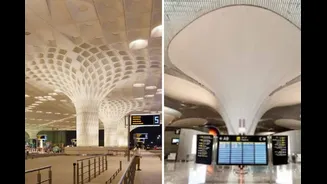

Mumbai is all set to get its second airport, the Navi Mumbai International Airport (NMIA) on December 25. Built at an initial cost of Rs 19,650 crore, the first phase will have a capacity to handle 20
million passengers annually, with plans to scale up to 90 million passengers over time, easing capacity constraints at Mumbai’s existing airport and supporting long-term growth in the region’s air traffic. The NMIA will deploy a digital-first passenger communication system anchored by free high-speed Wi-Fi. Passengers connecting to the airport’s Wi-Fi network will receive real-time updates through the Adani OneApp, which will function as a virtual assistant, guiding travellers across key touchpoints at the terminal. The Wi-Fi-enabled app will deliver flight status alerts, boarding gate information, schedules and other operational notifications directly to passengers’ mobile phones. The initiative aims to reduce reliance on physical information counters and static display boards while providing personalised, timely updates. Adani OneApp will also offer information on food and beverage outlets, retail stores, lounges and other terminal facilities, allowing passengers to better plan their time at the airport. NMIAL will provide free Wi-Fi speeds of up to 10 Mbps across the terminal.
ALSO READ | Navi Mumbai Airport Has ‘Dress Rehearsals’ Before 1st Flight On December 25: What Does It Entail?
The NMIA, after the Chhatrapati Shivaji Maharaj International Airport (CSMIA), will bring respite to passengers. Here are 10 reasons why.
1. Two Airports means more capacity
Mumbai’s current airport (CSMIA) is one of India’s busiest single-city hubs and often runs near full capacity. The NMIA’s opening creates a dual-airport system, increasing overall flight capacity and easing congestion. Extra slots at the NMIA can lead to more flights and airlines, increasing competition and potentially reducing fares — good news for travellers.
2. Location and accessibility
The CSMIA is right in the heart of Mumbai, Andheri-Santacruz area, making it convenient for many city residents. The NMIA is in Ulwe near Panvel, connected via the Mumbai Trans Harbour Link (MTHL) and other major road and rail links, offering better access for people in Navi Mumbai, Raigad, and even from Pune.
3. Purpose of the new airport
The NMIA is designed as a greenfield airport built from scratch, meaning it avoids many design constraints of old airports and integrates modern technology, sustainability, and passenger-friendly systems from the start.
4. Capacity differences
The CSMIA currently handles tens of millions of passengers annually and is near saturation. The NMIA’s Phase 1 will begin with capacity for about 20 million passengers per year, eventually scaling to 90+ million with additional terminals and runways.
5. Runways and operations
The CSMIA has two runways but can operate only one at a time due to space constraints. NMIA is planned with two parallel runways capable of simultaneous use, significantly increasing future throughput and reducing airborne holding delays. NMIA’s modern facilities and digital systems mean shorter queues, smoother processing, and enhanced customer experience.
6. Passenger experience and tech
The NMIA is being marketed as an “anxiety-free” and highly digital airport, with features like biometric checks, online baggage drop, automated systems, real-time updates, and greater automation under initiatives like Digi Yatra.
At #NaviMumbaiAirport, DigiYatra will make every step smoother and more time-efficient from Day One.#NMIA #DigiYatra #Airport pic.twitter.com/04KbRztYw7
— Navi Mumbai International Airport (@navimumairport) December 6, 2025
7. Types of flights
Initially, NMIA is expected to handle a mix of domestic flights and point-to-point services, with potential international routes phased in. CS MIA will continue as a major international and premium long-haul hub. Over time, airlines may choose which airport best suits their network and cost structures.
8. Cargo handling
The NMIA has plans for modern automated cargo facilitiesintegrated with logistics infrastructure, potentially easing freight flows and supporting Maharashtra’s industrial and agricultural export sectors.
9. Decongestion and delays
With two airports, flight delays caused by runway limits and airspace congestion at CSMIA are expected to decrease. This means better on-time performance, especially during peak hours or adverse weather conditions. Splitting flights across two airports will reduce congestion and delays, especially at peak times, making travel more predictable.
ALSO READ | Navi Mumbai Airport Travel Gets Smoother Ahead Of Dec 25 Ops: 2 New Stations & Other Ways To Reach
10. Connectivity beyond air travel
The NMIA will eventually be part of a multimodal transport network including suburban rail, metro lines, highway links, and even proposed water taxis, making it a broader mobility hub for the region. Passengers from Navi Mumbai, Raigad, and parts of Pune/South Maharashtra will get easier access to international and domestic flights without crossing the whole city. Both airports together can support future growth, more international routes, better cargo operations, and greater economic links for business travellers and exporters.
With PTI, agency inputs