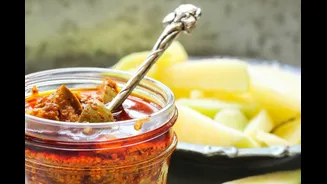







Nothing says summer quite like the bold, tangy aroma of mango pickle wafting through the kitchen. But behind every perfect jar lies one crucial choice: the right raw mango.
Faced with varieties like Ramkela
and Rajapuri, it’s easy to feel unsure. Each has its own appeal, from flavour to size. This guide breaks it down for you, so you can pick the ideal mango and make a pickle that stays fresh, firm, and delicious over time.
Ramkela vs Rajapuri: Which Mango Should You Pick?
If you love the classic North Indian-style spicy pickle that lasts long, Ramkela mangoes are your best bet. These are medium-sized and round, but their real strength lies inside. Even after adding salt and spices, the flesh doesn’t soften quickly, helping the pickle pieces stay intact for a long time.
In North India, Ramkela is popularly known as achari aam. It’s also called gola aam or achari gola, and in Uttar Pradesh, you may hear it referred to as desi achari.
On the other hand, Rajapuri mangoes are a favourite in Gujarat and Maharashtra. These are large—sometimes weighing over half a kilo each—with more pulp and a smaller seed.
If you prefer chunky pickle pieces that absorb spices well, Rajapuri is a great choice. However, it is slightly less tangy compared to Ramkela.
Other Popular Mango Varieties for Pickles
Ladwa: Widely popular in Bihar and Bengal, this round-shaped mango is known for its strong tanginess—perfect for bold-flavoured pickles.
Sundari (Totapuri): Common in South India and also called collector aam, it’s mostly used for murabba or mango shakes. Its beak-like shape gives it the name Totapuri, though it can also be used raw.
Karela aam: Found in parts of Uttar Pradesh, this small, hard, and very sour mango is often used whole for making pickles.
How To Choose The Perfect Raw Mango
Getting the right mango makes all the difference. Here’s what to check before buying:
Look at the colour and shine: Always pick mangoes that are deep green. If you notice any yellow patches or light spots, it means the mango has started ripening, and such mangoes can spoil your pickle faster.
Check the firmness: Hold the mango and press it gently. It should feel hard like a stone. If it feels even slightly soft or spongy, avoid it—soft mangoes tend to dissolve and turn the pickle mushy.
Look for the milky sap: Check the stem area. If you see a sticky white sap oozing out, it’s a good sign—the mango is freshly plucked.