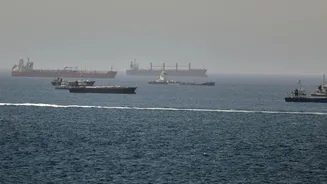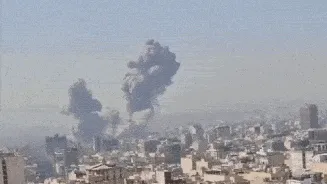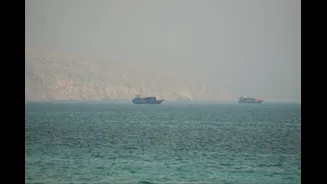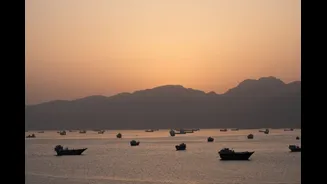







The conflict between Iran and the United States escalated sharply late on Saturday after Tehran declared the Strait of Hormuz closed once again following an incident involving a commercial vessel. Hours
later, the United States launched a fresh round of military strikes against Iran, raising fresh doubts over the fragile ceasefire agreement reached last month.
Iran said it considers the strategic waterway closed after a vessel using what it described as an “unauthorised route” was struck by warning shots while passing through the strait. The escalation came despite ongoing diplomatic efforts to preserve the interim agreement that had ended weeks of hostilities.
US launches third round of strikes
Shortly after Iran’s announcement, the US Central Command said American forces had begun a third round of strikes against Iranian targets.
“The United States is imposing a heavy cost by continuing to degrade Iran’s ability to attack civilian mariners and commercial ships freely transiting the strait,” the military said.
Iran made a poor choice. Now they pay. https://t.co/8m4fEfgrXv
— Pete Hegseth (@PeteHegseth) July 11, 2026
The US also said a Cyprus-flagged container ship struck by Iran suffered “significant engineroom damage” and that one civilian crew member remained missing.
Senior US officials had earlier said negotiations to strengthen last month’s ceasefire could not move forward unless the Strait of Hormuz remained secure. They had also expected Iran to publicly reaffirm that ships would be allowed to pass safely through the waterway.
Iran says waterway closed again
Instead, the Islamic Revolutionary Guard Corps said it had fired warning shots at what it described as a “violating ship”. Iran later announced that the Strait of Hormuz would remain closed until further notice.
The announcement followed talks on Saturday between the foreign ministers of Iran and Oman on the future of the strategic waterway after days of attacks on commercial ships and retaliatory US strikes.
Oman later said both countries had agreed to continue discussions on the Strait of Hormuz at both the technical and political levels. Iranian Foreign Minister Abbas Araghchi said he discussed “appropriate mechanisms for ensuring the safe passage of ships” during the meeting with his Omani counterpart.
Mojtaba vows revenge
Iran’s new Supreme Leader Mojtaba Khamenei also issued his first public statement since the funeral of his father, Ayatollah Ali Khamenei.
In remarks carried by Iranian state television, he vowed that Iran would avenge his father’s killing during the opening strikes of the war on February 28. Such revenge “is the will of our nation and must certainly be carried out,” he said.
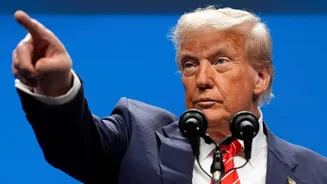
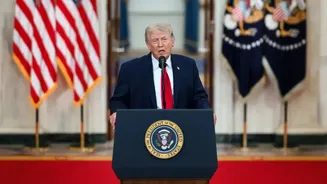
His statement came only hours after US President Donald Trump warned of further military action. Trump wrote on social media that a thousand missiles were “locked and loaded” and aimed at Iran, with thousands more ready to follow if Tehran acted on threats against him.
The US President said he was responding to threats to “assassinate, or attempt to assassinate” him. During Ayatollah Ali Khamenei’s funeral, mourners carried posters and banners calling for the killing of Trump and Israeli Prime Minister Benjamin Netanyahu.
Trump has declared the ceasefire with Iran “over” but said negotiations would continue.
Dispute over shipping and sanctions
The Strait of Hormuz has long been regarded internationally as an international waterway.
Iran, however, insists it should control the passage and be allowed to charge ships using it, a position it adopted after the war began. The United States has advised commercial vessels to use a southern route through Oman’s territorial waters.
Before the conflict, around one-fifth of the world’s traded oil and natural gas passed through the Strait of Hormuz. Iran’s control over the route during the war triggered a global energy crisis, although oil prices have since retreated from wartime highs of 120 dollars a barrel.
Araghchi also accused Washington of violating the interim agreement by ending waivers that allowed Iran to sell crude oil on the international market in US dollars. “Reality check: There can only be mutual compliance,” he wrote on X.
West Asia on edge
US officials, speaking anonymously on Friday, said recent American strikes resumed after what they described as a rogue faction of Iranian hardliners attempted to undermine the ceasefire.
Iran has maintained that its leadership remains united under the new supreme leader.
After the latest US strikes concluded on Thursday, more attacks reportedly hit Iran. Israel did not claim responsibility, leading to questions over whether Gulf Arab states carried out the strikes to deter further Iranian attacks after Tehran targeted Bahrain, Jordan, Kuwait and Qatar earlier this week.
According to Iranian Health Ministry spokesperson Hossein Kermanpour, the strikes over the past two days killed at least 17 people and injured 115 others.