




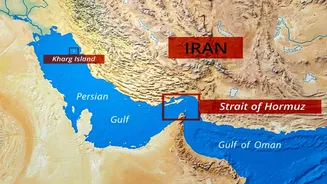

The conflict between Iran and Israel has sent shockwaves through the global aviation industry, forcing major carriers and budget airlines alike to abandon once-lucrative routes and pivot toward safer,
high-demand markets like India.
Since the outbreak of the war in late February 2026, air travel has entered its most volatile period since the pandemic. With jet fuel prices doubling to over $200 per barrel and critical flight corridors narrowed by airspace closures, airlines are choosing between skyrocketing surcharges and grounding fleets entirely.
British Airways: Pivoting From The Gulf To India
British Airways (BA) has announced a permanent shift in its global network, citing regional instability and a desire to deploy aircraft where demand is more predictable. The airline is permanently dropping its service to Jeddah, Saudi Arabia, as of April 24, 2026.
While the Middle East is seeing cuts, India is emerging as a primary beneficiary of the freed-up capacity. BA is redeploying its long-haul aircraft to bolster its Indian network:
- Bengaluru: Upgrading to twice-daily flights from June 2026.
- Delhi & Mumbai: Increasing frequencies and deploying larger aircraft (like the Airbus A350-1000) to meet surging demand.
- Nairobi: Also seeing a capacity boost as BA diversifies its summer schedule.
By contrast, flagship Middle Eastern routes are being streamlined. Services to Dubai, Doha, and Tel Aviv are being reduced to just one daily flight from July 1, as travellers increasingly look for alternatives to Middle Eastern hubs.
South Korean Airlines Struggle Amid Fuel Price Hikes
While full-service carriers like BA can pivot, low-cost carriers (LCCs) are facing a “binary outcome”: absorb unsustainable costs or ground planes. In South Korea, the situation has turned critical:
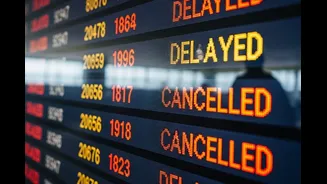
T’way Air: The airline has entered “emergency management,” suspending flights between Bangkok and Daegu until mid-July and drastically reducing its Incheon-Suvarnabhumi daily service to just twice weekly. Most notably, T’way is furloughing cabin crew without pay for May and June—the first such move in the industry since the height of COVID-19.
Air Busan: The carrier has cancelled multiple flights between Bangkok and Busan through May, citing the fuel price shock.
Fuel Surcharges: Passengers are feeling the pinch directly; T’way has increased its fuel surcharge by 50% (from 1,900 to 2,850 baht), while Air Busan raised its fee to 2,700 baht.
According to Eurocontrol, which oversees European air traffic management, airlines have added an average of approximately 206,000 kilometers in detour flights per day since the outbreak of the Middle East war on February 28, a report in Asia Business Daily says. As a result, about 1,150 flights per day are affected, and the additional fuel consumption alone now exceeds 602 tons daily.