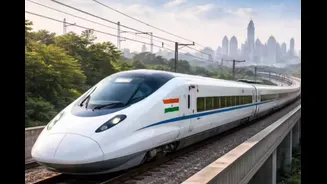







India’s ambition to join the global high-speed rail network is moving from blueprint to execution. The country’s first indigenous bullet train is expected to roll out by 2027, marking a significant milestone
in the evolution of Indian Railways.
While the Mumbai–Ahmedabad High-Speed Rail (MAHSR) corridor built with Japanese Shinkansen technology, remains India’s first operational bullet train project, the upcoming swadeshi version signals a strategic shift towards homegrown innovation.
A Made-in-India High-Speed Vision
The indigenous bullet train is being developed by Indian Railways in collaboration with BEML. Unlike imported systems, this train will be:
Designed and manufactured in India
Tailored for Indian climate and terrain
More cost-efficient compared to global counterparts
The move aligns with the government’s broader Make in India push, reducing dependency on foreign technology while building domestic capability.
Speed, Technology and Design
The upcoming train is expected to:
Reach speeds of 250–280 km/h
Feature advanced aerodynamics for stability
Include modern passenger amenities comparable to global high-speed trains
Be optimised for energy efficiency and safety
While slightly slower than Japan’s Shinkansen (which can exceed 300 km/h), the focus here is on practical speed with cost efficiency, a model better suited to Indian infrastructure.
Where Will It Run?
The indigenous train is expected to complement existing and upcoming high-speed corridors, especially:
The Mumbai–Ahmedabad route
Future planned corridors across India
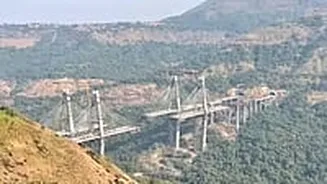
The MAHSR project itself is progressing, with significant construction already underway, particularly in Gujarat.
Bullet Train vs Vande Bharat: What’s the Difference?
India already has semi-high-speed trains like Vande Bharat Express, which run at speeds of up to 180 km/h.
However, true bullet trains:
Operate on dedicated high-speed tracks
Achieve significantly higher speeds
Use more advanced safety and signalling systems
In simple terms:
Vande Bharat = fast train
Bullet train = high-speed rail ecosystem
Why This Matters
India’s entry into indigenous high-speed rail is about more than just faster travel. It represents:
Technological self-reliance
Infrastructure modernisation
Reduced travel time between major economic hubs
It also positions India alongside countries like Japan, China, and France in the global high-speed rail landscape.
The Bigger Picture
The 2027 rollout isn’t just about a train, it’s about confidence in Indian engineering.
If executed well, the swadeshi bullet train could redefine how India travels, making long-distance journeys faster, smoother, and far more efficient.
And perhaps more importantly, it signals a shift from importing innovation to building it at home.