





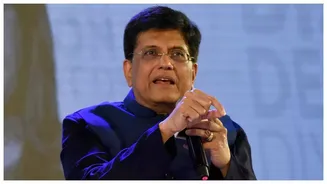


Union Commerce and Industry Minister Piyush Goyal on Thursday said India and the United States have already negotiated a trade agreement but New Delhi will bring it into force only after Washington finds
a legal mechanism to ensure Indian exports enjoy a tariff advantage over competing economies.
Speaking at the India Global Forum’s UK-India Week 2026: Capital Frontiers in London, Goyal said the proposed agreement had originally been negotiated when reciprocal tariffs imposed under the US’ International Emergency Economic Powers Act (IEEPA) placed India under a 50 per cent tariff regime.
“The whole deal was centred around that competitive advantage we got with that 18 per cent over our neighbours and competing countries. We were lower than all our neighbouring countries and all our ASEAN countries other than Singapore. That is why the deal was attractive for us,” he said.
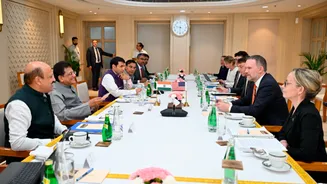
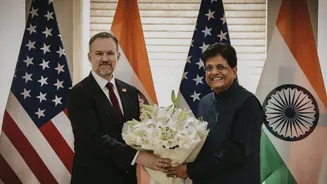
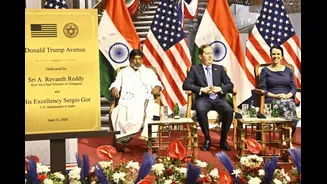
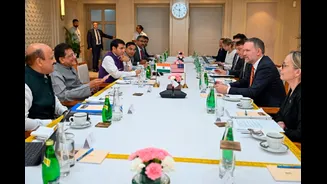
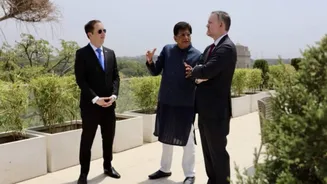
His remarks come two days after US Trade Representative Jamieson Greer concluded a visit to New Delhi, where he held talks with Goyal and senior commerce ministry officials to give final shape to the framework of the first phase of the proposed bilateral trade agreement. The discussions followed chief negotiator-level meetings earlier this month and came amid optimism from both sides that the deal was nearing completion.
However, Goyal noted that subsequent legal developments in the United States have altered the landscape.
“With the Supreme Court striking down the tariffs and the 10 per cent which expires on July 24, we obviously have to have some reason to be able to enter into force that agreement we have already agreed upon,” he said.
According to the minister, India is seeking assurances that its exports will continue to enjoy a tariff advantage over countries with similar manufacturing capabilities and cost structures.
“We have to ensure that we get a competitive advantage over what is being paid by countries in the same stage of development or same cost structures as India has, whether it is Vietnam, Thailand, Philippines, Indonesia, China, Malaysia, apart from Bangladesh, Sri Lanka and all our neighbours,” Goyal said.
He stressed that the agreement would only come into force once the United States identifies an appropriate legal framework to preserve that advantage.
“Until that framework of getting that competitive advantage can be finalised, we can’t enter into force a US deal. That’s broadly the discussions on how the US will find the appropriate tools and legal backing to give us that competitive advantage over our competition. The day that happens, the deal is on,” Goyal said.
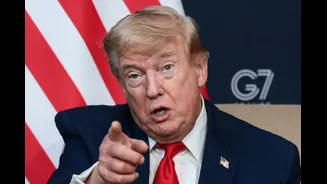
US President Donald Trump had said earlier this month that Washington and New Delhi were “very close” to finalising the agreement, while Goyal had previously indicated that both countries were working to close the remaining issues for the first phase of the pact.
The framework for the agreement, announced in February, had envisaged lowering US tariffs on Indian goods to 18 per cent from 50 per cent, giving India an edge over competing exporters. However, subsequent changes to the US tariff regime prompted both sides to revisit the framework.
The existing framework also allows either country to modify its commitments if there is a change in the agreed tariff structure, making the evolving US tariff landscape central to the final implementation of the agreement.
The United States was India’s second-largest trading partner in 2025-26. India’s exports to the US stood at USD 87.3 billion during the fiscal, while imports were valued at USD 52.9 billion.