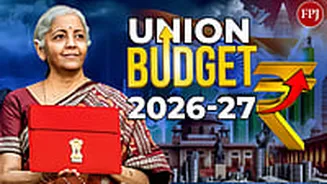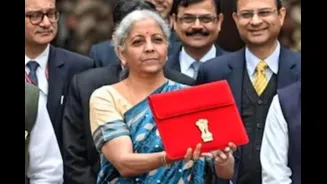








Budget 2026 Expectations: As Finance Minister Nirmala Sitharaman prepares to present the Union Budget 2026-27 on February 1, industry expectations are pouring in, including personal income tax relief to boost
consumption, a sharper push for artificial intelligence, and higher capital expenditure to sustain growth and job creation.
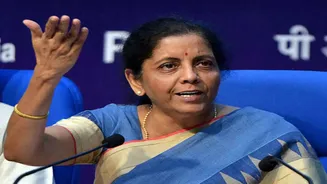
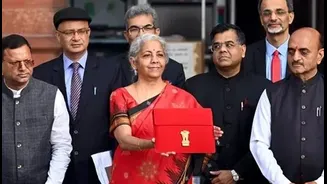
Sitharaman is set to create history on Sunday by becoming the first woman finance minister to present nine consecutive Union Budgets. Ahead of the exercise, voices from sectors such as infrastructure, real estate, MSMEs, healthcare, education and technology are calling for targeted policy interventions amid global uncertainty and slowing private investment.
Infrastructure & Real Estate
India’s real estate sector is seeking structural reforms, including the grant of ‘industry’ status, a simplified single-window clearance mechanism and faster digitisation of land records. On the infrastructure side, industry leaders are urging a sharp increase in capital expenditure in the upcoming Budget to support growth, employment and competitiveness.
Pradeep Aggarwal, founder and chairman of Signature Global (India) Ltd, said the real estate sector currently contributes around 7 per cent to India’s GDP and supports more than 200 allied industries. Granting industry status, he said, would improve access to institutional funding and enhance the sector’s role in employment generation. “With adequate policy support, real estate has the potential to contribute up to 15 per cent to India’s GDP by 2047,” Aggarwal said.
Brokerage Axis Securities expects the Budget to consider raising the interest payment deduction limit under Section 24 from Rs 2 lakh to Rs 5 lakh, along with a possible revisit of tax holidays for affordable housing developers.
Income Tax
After last year’s move to make annual income up to Rs 12 lakh tax-free under the new tax regime, expectations are building around further relief for individuals in the Union Budget 2026-27.
Earlier, sources told News18 that two people-centric proposals are under discussion. The first is a deduction of up to Rs 2 lakh on home loan interest under the new tax regime, a benefit currently available only in the old regime. The second proposal being considered is allowing a deduction of up to Rs 50,000 for medical insurance premiums, providing relief amid rising healthcare costs.
Taxpayers are also expecting the standard deduction under the new tax regime to be raised to Rs 1 lakh from the current Rs 75,000.
Healthcare & Pharma
Budget provisions around artificial intelligence are expected to place a strong emphasis on healthcare. The government is exploring support for AI-led diagnostic tools that can aid early disease detection, including the use of machine-learning models to analyse X-rays and other medical imaging.
The objective is to bridge gaps in doctor availability, particularly in rural and underserved regions, while lowering diagnostic costs.
Satish Reddy, chairman of Dr Reddy’s Laboratories, said that as the pharmaceutical industry shifts from volume-led expansion to value-driven growth, closer alignment between science, policy and industry will be critical to advancing innovation. With the sector expected to play a key role in achieving the goal of becoming a $500 billion industry by 2047, Reddy said the focus should be on creating a structured funding framework to deepen R&D and enable the development of complex, high-value therapies.
The MedTech industry has echoed similar expectations, particularly around tax rationalisation and strengthening domestic manufacturing capabilities.
MSMEs
Micro, small and medium enterprises are looking to the Budget for targeted support for manufacturing, improved access to finance and measures to manage trade-related uncertainties.
Akash Jain, CEO of AKME Fintrade Limited, said that despite a deepening credit ecosystem, MSMEs continue to face a significant shortfall in access to formal credit. “The total addressable credit gap is estimated at nearly Rs 30 lakh crore, accounting for close to 24 per cent of total debt demand. Strengthening the credit ecosystem is critical to bridging this gap,” he said.
Jain added that measures such as enhanced refinance windows, partial credit guarantees and easier access to long-term funds could significantly improve credit flow to MSMEs and retail borrowers. He also flagged the need for GST rationalisation on financial services and greater clarity on TDS provisions to reduce operational friction.
Mahesh Krishnamoorthy, managing director of Core Integra, said 2025 had been a turbulent year due to geopolitical tensions, tariffs and currency volatility, impacting business sentiment and job markets. Given the uncertain global environment, he said the Budget may remain conservative while continuing to support manufacturing and MSMEs.
Education
Education stakeholders are seeking focused investment in strengthening India’s higher education ecosystem to curb the growing outflow of students to foreign universities.
Prof. V. Ramgopal Rao, group vice-chancellor of BITS Pilani, said that merely expanding capacity would not address the challenge. With rapid changes in job roles and skill requirements, education leaders are calling for stronger alignment between academia and industry. Fr. Nelson A. D’Silva, S.J., acting director of XLRI Delhi-NCR, said higher education must remain responsive to real-world needs.
Technology
The technology industry is seeking a stronger policy push for artificial intelligence, along with broader support to enable collaboration and adoption across sectors.
“We hope to see continued support for AI research and development through grants, incentives and policy measures that encourage enterprises to adopt AI and automation, strengthen efficiencies and enable data-driven decision-making,” said Srividya Kannan, founder and CEO of Avaali.
Capital Markets
Equity investors are increasingly focused on post-tax returns as higher levies on trades and capital gains continue to eat into profits. With the Union Budget 2026 approaching, market participants are watching whether the government will reconsider securities transaction tax (STT) and capital gains tax or keep the current structure unchanged.
Agrochemical Industry
Kalyan Goswami, director general of the Agro Chem Federation of India, said the Budget should consider reducing import duty on pesticides from 10 per cent to 5 per cent to ensure farmers benefit from newer technologies.
“Lower import duties would help ensure that farmers receive the full benefit of better and more efficient crop protection solutions,” Goswami said.