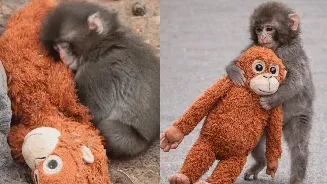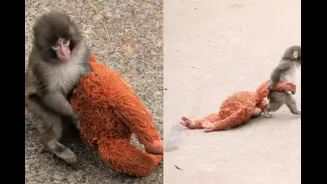







In a corner of the internet usually reserved for chaotic memes and AI debates, a tiny, wide-eyed hero has emerged to remind us what it means to be human. His name is Punch, a seven-month-old Japanese macaque
at the Ichikawa City Zoo, and he is currently the most famous resident of the digital world.
But why has a small monkey dragging an IKEA stuffed orangutan across a “Monkey Mountain” in Japan triggered a global emotional wave? It isn’t just because he’s cute; it’s because Punch is living out a story we all recognise: the struggle to belong.
The Story Of “Ora-Mama”
Punch’s life began with a heartbreak. Born during a scorching July heatwave to a first-time mother, he was abandoned shortly after birth, a rare but documented occurrence when environmental stress hits a troop. Left without the physical “clinging” contact vital for a macaque’s development, his zookeepers stepped in with a surrogate: a long-limbed, plush orangutan from IKEA.
Since then, the toy (affectionately dubbed “Ora-mama” by fans) has become his shield, his bed, and his constant companion. Viral videos show Punch dragging the oversized plushie behind him as he navigates the complex social hierarchies of his troop. We’ve watched him get “bullied” by elder macaques, only to see him retreat and bury his face in the orange fur of his toy.
More Than Just A Video
According to experts, our obsession with Punch goes deeper than simple “aww” factor. We aren’t just spectators; we are participants in his recovery.
“If you really think about it, people aren’t just watching Baby Punch — they’re emotionally accompanying him,” explains Dr. Shorouq Motwani, Consultant in Child & Adolescent Psychiatry at Narayana Health SRCC Children’s Hospital, Mumbai. “I’ve noticed how people pause while scrolling at night, or forward the video on family WhatsApp groups saying, ‘This made me feel something.’ That reaction is very human.”
Dr. Motwani suggests that Punch activates a “deep caregiving instinct” that most of us don’t even realise is there. “We begin to see emotions that feel familiar — loneliness, hope, the need to belong. In our fast, stressful lives, such moments become emotional breathing spaces. We collectively root for him, almost as if his healing reassures our own.”
The “Punch” Effect
The impact of this tiny macaque is reaching far beyond social media. Sales of the Djungelskog orangutan toy have spiked globally. IKEA Japan even donated dozens of the toys to the zoo, declaring on social media, “We’re ALL Punch’s family now.”
From the hashtag #HangInTherePunch to fan art and even mentions on The Late Show with Stephen Colbert, Punch has become a universal symbol of resilience. Plus recent updates from the zoo show that Punch is finally making progress. He has been spotted receiving his first grooming sessions from other macaques and even hugging a real troop member instead of just his plushie.
Why We Can’t Look Away
Punch reminds us of the “blanket” or “teddy bear” we once couldn’t live without—the objects that made our own hard days feel softer. In a world that often feels cold and “wiry” (much like the famous Harry Harlow monkey experiments of the 1950s), Punch chooses the soft option every time.
We care because, as Dr. Motwani puts it, “Somewhere, we see a little bit of ourselves and our timeless need to nurture, connect, and feel safe again.”
So, the next time you find yourself three minutes deep into a video of a baby macaque clutching a stuffed toy, and hear someone telling you to stop watching it, don’t feel guilty about the “doomscrolling.” You’re not just watching a monkey; you’re taking an emotional breather with a little friend who is teaching the world how to be brave.