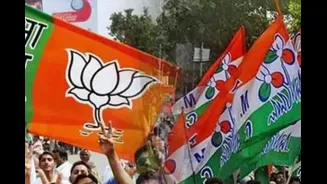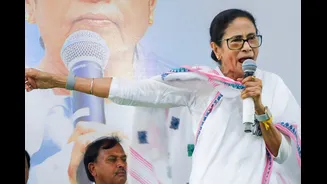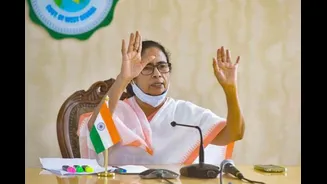






As West Bengal heads toward the 2026 Assembly elections, the urban–rural divide that shaped the 2021 verdict is once again in focus, influencing how political parties plan their campaigns.
In 2021, Mamata
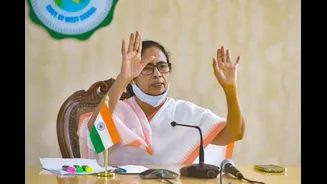
Banerjee-led All India Trinamool Congress (TMC) secured a decisive victory, while the Bharatiya Janata Party (BJP) emerged as the principal opposition. However, the results revealed a sharply split electoral map rather than a uniform statewide trend.
How Bengal Voted In 2021?
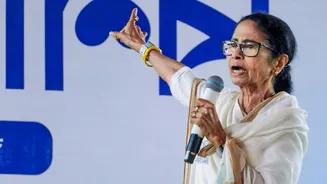
The TMC secured victory in 215 of 294 seats in the 2021 elections, returning to power for a third consecutive term. Mamata Banerjee became the Chief Minister for a record third time.
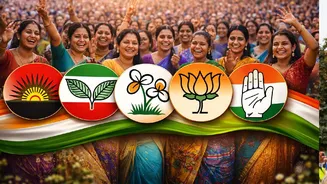
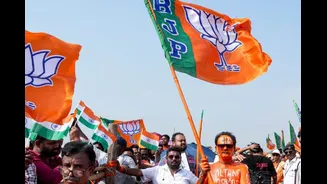
BJP won 77 seats, up from three seats in 2016. BJP recorded 37.97% vote share in 2021 polls, a significant rise from 10.17% in 2016 State Assembly elections.
In 2016, while Congress registered a vote share of 12.25%, CPI and CPI(M) had 1.45% and 19.75% vote shares. None of the three parties succeeded in registering a victory in a single seat in the state in 2021.
Urban Vs Rural Voter Trend
In 2021, urban and metropolitan regions—particularly Kolkata and surrounding areas—largely favoured the TMC. Urban dominance rested on several long-built advantages. The Trinamool Congress had dense municipal and ward-level networks, plus a sustained organisational footprint. Welfare schemes had high visibility in poorer city neighbourhoods. Minority voters consolidated behind the party in many urban pockets, while opposition votes sometimes fragmented across several contenders.
Kolkata, in particular, acted as the anchor of this dominance, shaping the broader political mood across city-based constituencies.
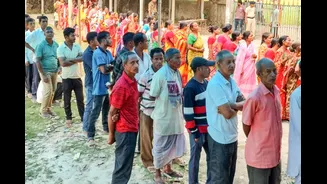
In contrast, the BJP’s gains were concentrated in rural and peripheral belts. Regions such as North Bengal, Junglemahal, and several border districts turned into competitive battlegrounds, with the party benefiting from identity-based mobilisation, local anti-incumbency, and weaker grassroots structures of its rivals. Districts like Cooch Behar and Jalpaiguri highlighted this rural shift, where contests were often tightly fought.
Between these two poles, semi-urban and peri-urban constituencies emerged as crucial swing zones. These areas—marked by industrial townships and expanding suburbs—saw direct contests between TMC and BJP, with outcomes often determining the final margins in closely fought seats.
Despite winning 77 seats in 2021, its best-ever performance in the state, the BJP fell short of challenging the TMC’s dominance. A key factor was its inability to break into the dense urban clusters of Kolkata, Howrah, and parts of North 24 Parganas, where the TMC maintained a stronghold.
What Will Happen In 2026?
As parties prepare for 2026, this divide remains central to their strategies. The TMC aims to retain its urban base while maintaining welfare outreach, whereas the BJP faces the challenge of expanding beyond rural strongholds into cities and suburban belts.