


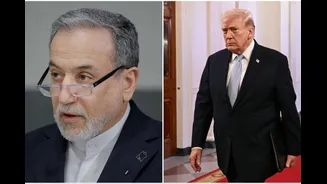
US President Donald Trump may have hit pause on the military strikes against Iran in the ongoing West Asia conflict, but if there’s one war where his “adversary” seems to be gaining the edge, it’s on social
media.
On the internet, where perception, and not firepower, decides the winner, Iran has leaned into humour, satire, and viral content to seize control of the narrative. From meme warfare to sarcastic diplomatic posts, Iranian officials and state-linked accounts have turned social media into a tool to shape perceptions, even as the ground reality remains far more complex.
What Is Iran Doing Differently?
Unlike traditional wartime messaging, which involves alerts and flexing muscle at the enemy, Iran’s digital strategy has leaned heavily on memes and pop culture references, sarcastic jabs at the US leadership, and short, viral videos and animations.
According to NDTV, Iranian accounts have flooded platforms with animated clips, humour, and niche internet references in a stark departure from formal state communication.
Similarly, WION reported that even official Iranian embassy handles have been “roasting” the US online, using humour to amplify their messaging.
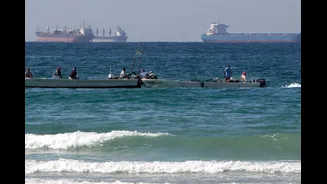
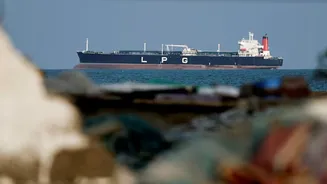
Sample this: When US energy secretary Chris Wright triggered confusion across global energy markets after claiming the United States Navy had escorted an oil tanker through the Strait of Hormuz in early March, it sparked a propaganda exchange with Iranian officials.
Iran’s online playbook is a classic example of producing shareable content that makes US, and Trump, look like they are losing the information war.
The Strait of Hormuz will be controlled by me and the Ayatollah😎😁 pic.twitter.com/IxIgo1Pn6S
— Iran Embassy SA (@IraninSA) March 23, 2026
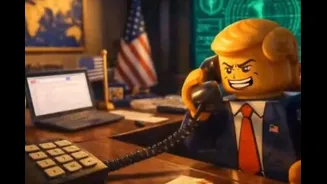
Not just official, diplomatic mocking, but Iran has used Lego and cartoon warfare to gain the edge over America—at least on social media. AI-generated videos show Lego-style versions of global leaders, including Donald Trump, acting out war scenarios. These clips simplify conflict into digestible, almost playful narratives. According to India Today, some videos even feature Teletubbies-style characters, Manga-inspired animations, and narratives where Iran emerges victorious or resilient.
For instance, a viral clip shows Lego versions of Trump and Israel’s Benjamin Netanyahu looking at a file labelled “Epstein files,” before launching attacks. The video then depicts a US missile strike hitting a school to which an Iranian officer (in Lego form) reacts emotionally. This is followed by Iranian retaliation against US and Israeli targets.
In separate clips, “Lego Trump” is shown panicking or sweating as Iran disrupts shipping in the Strait of Hormuz. Some versions depict Iran attacking tankers and laying mines while Trump appears helpless or overwhelmed.
NEW:
🇮🇷🇺🇸 Iran posts Lego Trump sweating as Navy attacks tankers and warships, deploys mines in Hormuz — Tasnim pic.twitter.com/QETGa29nnf
— Megatron (@Megatron_ron) March 23, 2026
One of the most talked-about clips uses a children’s TV parody format where Trump is shown as a Teletubbies-style character, kneeling and pleading for help. European leaders (also depicted as similar characters) respond with: “No, no, no”. As Trump exits the room, the characters burst into laughter, mocking US isolation.
Yet another viral example is Iran depicting itself as the “Lord of the Strait” (Hormuz). The video shows Iran controlling global shipping routes where Chinese vessels move freely while others are blocked, leaving Trump confused. The video reinforces a key narrative: Iran controls escalation and the US is reacting, not leading.
The Strait of Hormuz will be controlled by me and the Ayatollah😎😁 pic.twitter.com/IxIgo1Pn6S
— Iran Embassy SA (@IraninSA) March 23, 2026
In a more dramatic AI-generated video, a US strike appears to kill Iran’s Supreme Leader Ayatollah Ali Khamenei. As Trump celebrates, a figure suddenly rises from the rubble. He is later identified as Mojtaba Khamenei, Iran’s new Supreme Leader and Khamenei’s son, as missiles fill the skyline.
Iran has also not shied away from dark humour. An Iranian-linked account joked about a “diplomatic delegation” led by a missile (Khorramshahr-4), the punchline being that the “delegation” was actually a ballistic missile.
What Does It Help Achieve?
Experts cited by The Guardian say the meme war reflects a broader shift where conflict is being packaged like entertainment, flattening its complexity.
Why the pushback works is because it speaks the language of the internet. The memes are fast, relatable, and highly shareable.
According to The Crimson, younger audiences increasingly engage with war content through humour and viral formats, not official briefings.
It also helps because it created the illusion of control. Iran’s messaging consistently frames the US as reactive and Iran as confident. Even if the battlefield reality is mixed, the perception of control becomes the story.
Most importantly, it turns propaganda into entertainment. Instead of speeches and press briefings, Iran is using cartoons, AI avatars, and meme culture, making propaganda feel like content, not messaging.
According to The Guardian, Iran has mobilised existing online networks, used AI and coordinated campaigns, and flooded platforms with pro-Iran narratives and anti-US messaging.
So, Is Iran Actually Winning?
Not necessarily. As reported by Al Jazeera, Iranian officials themselves have said wars are not won on social media.
At the end of the day, the battlefield reality still depends on military capability, strategic outcomes, and geopolitics.
While several users have applauded Iran’s social media strategy, calling its meme game “unmatched right now” and noting that “memes are the new soft power”, critics warn that the war is being trivialised into content and AI-generated videos risk misinformation and manipulation.
Despite the criticism, Iran knows that for now, even without a decisive military victory, it has managed to look confident, control the conversation, and dominate the digital space. And in today’s hyper-connected world, that perception can be almost as powerful as reality.