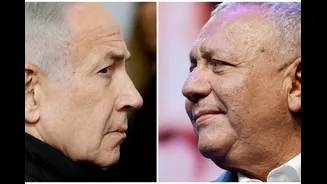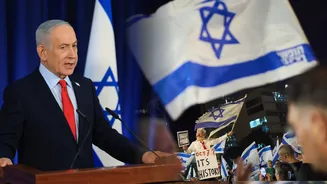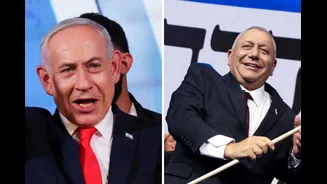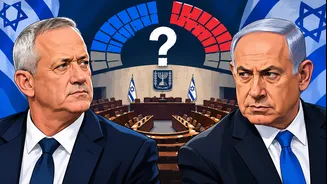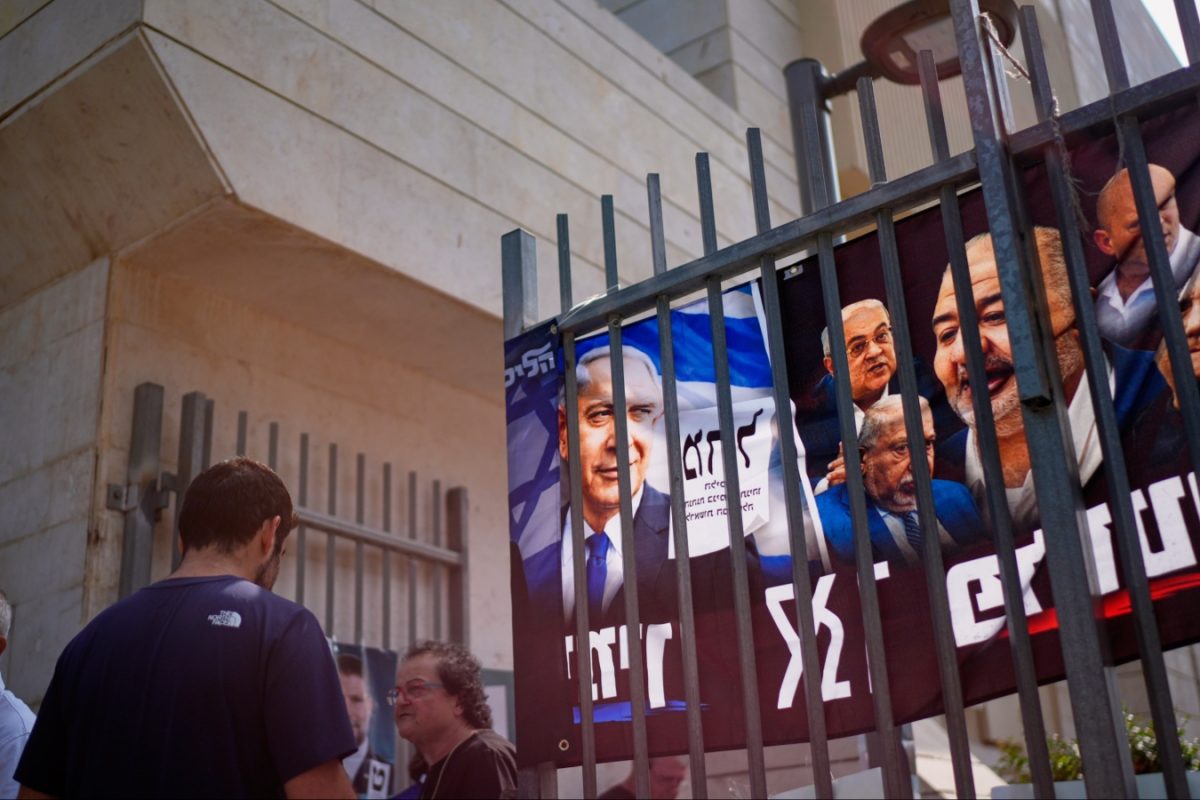





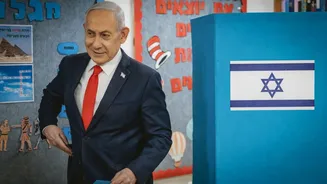
Israel is headed for weeks of political uncertainty after the final election results confirmed that neither Prime Minister Benjamin Netanyahu’s bloc nor the main opposition camp led by former military
chief Gadi Eisenkot secured a majority in parliament.
With the country’s Arab-led parties winning a historic 19 seats, coalition negotiations are expected to be complicated, with both sides facing difficult political compromises to reach the numbers required to form the next government.
The results announced early Friday showed Netanyahu’s bloc winning 53 seats in the 120-member Knesset, while the main opposition bloc secured 48 seats. Arab-led parties won the remaining 19 seats, putting them in a potentially decisive position in determining who governs Israel.
A government needs the support of at least 61 lawmakers in the Knesset. However, the political divisions between the parties, particularly over whether to work with Arab-led factions and whether opposition leaders should join hands with Netanyahu, have made government formation a difficult task.
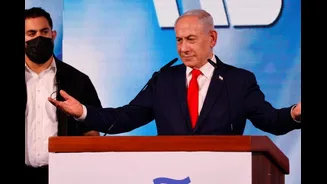
Netanyahu, Israel’s longest-serving Prime Minister, continues to remain in office while negotiations take place.
The country now faces four possible political scenarios – an opposition coalition backed by Arab-led parties, a unity government involving Netanyahu and Eisenkot, attempts to poach lawmakers from rival camps, or fresh elections if no side manages to secure a majority.
1. Eisenkot Could Join Hands With Arab-Led Parties
One of the most straightforward possibilities on paper is for Eisenkot and his opposition allies to form a coalition with Arab-led parties. Together, the groups could command a 67-seat majority, comfortably crossing the 61-seat threshold required to form a government.
Even if Arab-led parties do not formally join the government, they could provide crucial parliamentary backing to a minority government led by Eisenkot.
However, this arrangement carries considerable political risks for Eisenkot and his Jewish allies. Arab-led parties secured 19 seats in what the AP described as a historic showing, but their participation in government remains a sensitive issue in Israeli politics.
Only once has an Arab party joined a governing coalition, in 2021, and that government lasted around 18 months.
Netanyahu has already opposed such an arrangement, claiming that forming a coalition with Arab parties is forbidden and portraying any such partnership as a betrayal of Israel’s Jewish identity and a national security threat. This could make it particularly difficult for right-leaning members of Eisenkot’s camp to support the arrangement.
2. Netanyahu And Eisenkot Could Form A Unity Government
Another possibility is a unity government involving Netanyahu and Eisenkot, along with their respective allies.
Such an arrangement could also command a 67-seat majority. It would potentially leave Arab-led parties, as well as ultranationalist and ultra-Orthodox Jewish factions, in the opposition.
A unity government could focus on pressing domestic issues, including military exemptions for ultra-Orthodox Jews and efforts to strengthen Israel’s economy.
However, the biggest obstacle is the political history between the two camps. Eisenkot and his allies had campaigned against Netanyahu and vowed not to join a government led by him.
They have blamed the prime minister for security failures surrounding the October 7, 2023, Hamas-led attack, accused him of undermining democratic institutions and highlighted his ongoing corruption trial.
An official inquiry into the October 7 attack is also a central demand of opposition voters, something a Netanyahu-led government is unlikely to approve.
For Netanyahu, such an arrangement would also require him to abandon far-right and ultra-Orthodox allies who have stood by him through multiple wars and political crises. Both sides would therefore have to make significant compromises, potentially angering their respective supporters.
3. Netanyahu Could Try To Poach Opposition Leaders
If a broader unity arrangement fails, Netanyahu could attempt to break the opposition’s numbers by persuading some of its members to switch sides.
His potential targets could include former allies Naftali Bennett and Avigdor Lieberman, both of whom support nationalist policies, including expanding settlements in the occupied West Bank. Their political positions could make an alliance with Arab-led parties particularly difficult.
However, both leaders have had longstanding personal and political disagreements with Netanyahu and had previously vowed not to partner with him.
They are also strongly opposed to the military exemptions sought by Netanyahu’s ultra-Orthodox allies, one of the major sticking points in coalition negotiations.
Eisenkot, meanwhile, has fewer opportunities to attract defectors from Netanyahu’s camp, given the longstanding loyalty of Likud and its far-right and ultra-Orthodox allies to the prime minister.
Whether Netanyahu can persuade opposition figures to abandon their earlier commitments could therefore become an important factor in the coming negotiations.
4. Israel Could Head For Fresh Elections
If neither Netanyahu nor Eisenkot manages to assemble a coalition with at least 61 seats, Israel could be forced to hold another election, likely early next year.
Until then, Netanyahu’s government would continue functioning in a caretaker capacity.
Fresh elections could prove particularly challenging for the opposition, which entered the latest polls with considerable momentum but failed to translate it into a parliamentary majority. Tens of thousands of Israelis had flown in from abroad to vote, and it remains uncertain whether they would make another such journey for a fresh election.
Netanyahu, on the other hand, could use the additional time to strengthen his political position. Smaller right-wing parties that failed to cross the threshold for entering parliament effectively wasted votes that could have otherwise benefited his camp. In another election, these parties might not contest the polls, or their supporters could shift towards larger far-right parties.
Israel has experienced prolonged political deadlock before. Following a similar stalemate in 2019, the country held five elections over three-and-a-half years.
What Happens Next?
The election results still need to be certified and submitted to President Isaac Herzog next Wednesday.
Herzog will then task a political leader with forming the next government. This could be Netanyahu, whose party received the most votes, or another candidate considered better placed to secure the support of different political factions.
The new Knesset is expected to be sworn in on November 10. Even before a government is formed, Eisenkot’s bloc could potentially join forces with Arab-led parties to elect a new Knesset speaker, giving them control over the parliamentary agenda and the ability to advance legislation.
Herzog has said he will do everything in his power to prevent another election.
For now, the balance of power rests with parties that neither Netanyahu nor Eisenkot can afford to ignore.
The coming weeks of negotiations will determine whether Israel gets a new opposition-led government, a controversial unity arrangement, a reshuffled Netanyahu coalition or another election.