
From gas leaks to massacre memorials, young Indians are travelling into uncomfortable historical places, turning holidays into acts of remembrance, and meaning-seeking beyond leisure.
For younger generations,
travel is no longer confined to relaxation or luxury. For India’s Gen Zs and millennials, travel has become a form of inquiry. A growing number of Indian travellers are choosing destinations that unsettle rather than soothe.
The curious travellers are walking through unresolved questions, silence, and loss. In a post-pandemic world defined by uncertainty, the generation is increasingly turning to dark tourism to confront history, process emotions, and search for meaning beyond conventional sightseeing.
A Growing Indian Appetite For Dark Travel
Unlike beaches and aesthetic staycations, young travellers are seeking depth within it. This evolving mindset has brought dark tourism, also known as grief tourism or thanatourism, into sharper focus.
Globally, sites such as Auschwitz in Poland, Hiroshima’s Peace Memorial in Japan, and Chernobyl in Ukraine have long attracted visitors seeking historical context and moral reckoning.
In India, a country layered with colonial trauma, industrial disasters, and social upheavals, dark tourism is now finding a distinct audience, particularly among younger travellers.
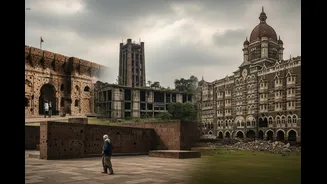
Indians have been visiting the sites of tragedy and conflict not out of morbid curiosity, but to understand and process emotions. Places like Jallianwala Bagh in Amritsar, the Union Carbide plant site linked to the Bhopal Gas Tragedy, the Cellular Jail in the Andaman Islands, and Partition museums across North India have witnessed renewed interest.
Travel professionals and cultural researchers note that younger travellers are driving this shift. Unlike traditional sightseeing, dark tourism experiences demand time, emotional presence and attention.
Visitors often spend hours listening to survivor accounts and standing in silence, an act that contrasts sharply with fast-paced, Instagram-driven travel.
What Draws Young Indians To Dark Tourism?
Gen Z and millennials travel differently. Raised in a digital world saturated with information, they are more exposed to conversations around mental health, climate change, social justice, and historical accountability. Dark tourism aligns naturally with these interests.
Many young travellers are motivated by a desire to understand untold stories and explore places that provoke thought rather than admiration. Visiting a massacre memorial or disaster site offers a visceral connection to history that textbooks often fail to provide.
India’s Dark Tourism Scenario
India’s history makes it a natural destination for dark tourism. As the country’s past is marked by partition, industrial negligence, colonial violence, and political resistance, these stories continue to shape its present.
Jallianwala Bagh, where British troops opened fire on unarmed civilians in 1919, remains one of India’s most powerful memorials. For many young visitors, walking through the narrow entrance and standing by the Martyrs’ Well is a reminder of the cost of freedom.
Cellular Jail in the Andaman Islands, once a colonial prison for Indian freedom fighters, attracts visitors interested in resistance narratives and psychological endurance.
Even natural mysteries like Roopkund Lake, known for its skeletal remains, are approached less as curiosities and more as sites that raise questions about migration, climate, and survival.
The Bhopal Gas Tragedy, one of the world’s worst industrial disasters, has gained renewed attention as environmental awareness grows. The abandoned Union Carbide plant and nearby memorials draw travellers seeking to understand corporate accountability and long-term human suffering.
Seeking Meaning In A Post-Pandemic World
The COVID-19 pandemic has altered how people perceive life and purpose. For many young Indians, it dismantled the illusion of permanence and control. Travel, in its aftermath, became less about indulgence and more about grounding experiences. Dark tourism satisfies this shift by offering moments of stillness and reflection.
What Studies Say
Academic research increasingly supports the idea that dark tourism offers deeply memorable experiences. A December 2025 study published in Nature titled “Are dark tourism experiences memorable? Examining mindfulness and memorable tourism experiences in dark tourism” explored how visitors emotionally process these journeys.
The study applied mindfulness theory and the concept of memorable tourism experiences (MTEs). Based on data from 264 tourists, researchers found that mindfulness significantly influenced how visitors experienced dark tourism sites.
According to the study, mindfulness enhanced multiple dimensions of memorable tourism experiences, including meaningfulness, involvement, knowledge, and emotional impact.
These dimensions, in turn, influenced visitors’ likelihood to share their experiences through word of mouth. This research underscores why younger travellers, already inclined toward introspection, find dark tourism compelling.
Ethical Travel And Mindfulness
With the risk of dark tourism comes ethical responsibility. These sites are often memorials to real suffering, not backdrops for performative travel. Mindfulness plays a crucial role in how dark tourism is experienced.
The Nature study found that mindful engagement enhanced learning and emotional involvement at dark tourism sites. Instead of consuming history as information, visitors internalised it as a lived experience.
More Than A Trend
Travel experts suggest that dark tourism is not a passing phase but a reflection of changing values. Gen Z and millennials are redefining what it means to explore. Authenticity, emotional connection and historical truth are increasingly prioritised over leisure or luxury alone.
In India, where history is deeply layered, dark tourism offers a way to engage with the past while shaping more informed travellers. As Gen Z and millennials continue to seek meaning beyond leisure, dark tourism is emerging as a powerful way to travel with awareness, purpose and empathy.