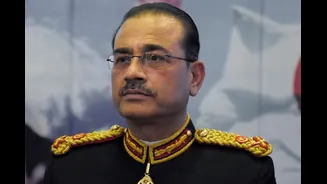






Pakistan is living through one of its bleakest democratic moments, and the source of this suffocation is no mystery. Power in the country has steadily migrated away from elected institutions and settled
firmly in the hands of Army Chief Gen Asim Munir. What remains of civilian rule exists largely for show, a thin constitutional curtain behind which the military calls the shots. Parliament debates, courts issue verdicts, and government leaders make speeches—but none of it matters unless it aligns with the will of the man in uniform. Under Gen Munir, this imbalance has hardened into something far more dangerous: a system built on fear, coercion and punishment. Dissent is no longer treated as disagreement; it is framed as treason. Criticism is rebranded as terrorism. And loyalty to jailed former Prime Minister Imran Khan has become the ultimate crime. The dismantling of civilian authority did not happen overnight. It has been methodical. First, political engineering ensured a weak government in Islamabad. Then the judiciary was tamed through pressure, selective accountability, and unmistakable signals about what kind of verdicts were acceptable. Today, few judges dare to pretend independence when cases touch the military or Imran Khan. Sentences have grown harsher and outcomes increasingly predictable. The result is a dysfunctional state that operates like a command structure with no accountability for the ruling elite that largely comprises the military.
When Journalism Becomes a Crime
The latest victims of this tightening grip are journalists, analysts, and former military officers who dared to speak publicly against the army’s dictatorship and political purge. In January 2026, an Anti-Terrorism Court sentenced seven Pakistanis to life imprisonment for what it called digital terrorism related to the protests of May 9, 2023. None of the accused were present in court. All live abroad. Several were never even informed that proceedings were underway. This was not justice; it was theatre of the absurd. This was a message crafted not for the defendants, but for those still inside Pakistan desperately trying to find a space for free expression. Among those sentenced are some of the most seasoned voices in Pakistani journalism.
Shaheen Sehbai, with nearly five decades of experience and former editor of The News International, has long criticised the military’s dominance over civilian life. His crime was intellectual honesty and an unwillingness to pretend that today’s generals possess any vision or restraint. At his age, sentencing him to life imprisonment is not just punitive—it is vindictive. Wajahat Saeed Khan, an investigative journalist respected for his work on security affairs, was reportedly never summoned or notified of any charges. His trial happened without his knowledge, underscoring how irrelevant Pakistan’s judicial process has become.
Sabir Shakir, a veteran broadcaster who left Pakistan after alleged threats from the previous army chief, now finds himself branded a terrorist for doing what journalists are meant to do: ask uncomfortable questions. Analyst Moeed Peerzada’s case adds an even darker edge. Living in the United States, he incurred the military’s wrath by citing international media reports that contradicted official Pakistani claims during a military episode. Days after his conviction, his home in the US mysteriously caught fire. While no direct accusations have been made, the symbolism is chilling. Critics of the army, it seems, are no longer safe even beyond Pakistan’s borders.
The remaining three—former army officers turned YouTubers—had already been court-martialled, stripped of rank, and sentenced to long prison terms for exposing internal misconduct. The Anti-Terrorism Court’s decision to pile life sentences on top of military punishment reveals Munir’s insecurity. An institution confident in its legitimacy does not fear YouTube channels speaking the truth. Together, these cases mark a decisive shift in Pakistan’s media space, as journalists are now equated with criminals. The purpose is not merely to silence specific individuals, but to terrify everyone else into submission. If respected journalists and commentators based in countries other than Pakistan can be condemned as terrorists without being heard, what hope remains for media persons inside Pakistan?
The Prisoner Who Still Threatens Power
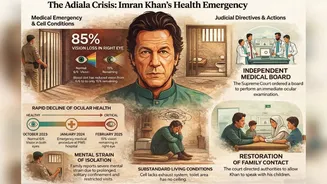
At the centre of this crackdown lies one man: Imran Khan. For General Munir, Khan is not just a political rival; he is an existential threat. Unlike other leaders who clashed with the military and then quietly left the country, Khan stayed. He faced arrest, imprisonment, humiliation—and refused to break. Despite being behind bars, Khan continues to shape Pakistan’s political landscape. His influence within his party—Pakistan Tehreek-e-Insaf (PTI)—remains intact. His word still determines the opposition strategy. His popularity, particularly in Punjab and Khyber Pakhtunkhwa, has survived relentless propaganda, mass arrests, party defections, and legal assaults. This endurance explains the severity of the response against anyone perceived as sympathetic to him.
Under Munir’s command, neutrality is no longer enough, and even silence can be suspicious. Any positive mention of Khan—by a journalist, analyst, or former officer—is treated as alignment with an enemy camp. The government’s occasional talk of “dialogue” with the opposition is widely understood as a cosmetic gesture with no serious intent. Prime Minister Shehbaz Sharif may speak of harmony and national unity, but no serious negotiation can proceed without the army’s consent. And there is one non-negotiable issue that ensures talks will never mature: Imran Khan’s freedom.
The ruling coalition knows that Munir will not permit Khan’s release under any circumstances. At the same time, the opposition cannot abandon its central demand without losing credibility. This guarantees stalemate. ‘Dialogue’ is more of a performance, not policy, as Khan continues to unsettle the system. His nomination of Mehmood Khan Achakzai as leader of the opposition in the National Assembly shows that his political instincts remain sharp. It also demonstrates that PTI, despite being battered, has not collapsed. For a military leadership obsessed with total control, this lingering defiance is intolerable.
A Country Held Hostage
Pakistan today is not merely experiencing a political crisis; it is experiencing a collective collapse of freedoms. The press is muzzled. Courts are coerced. Politicians are managed. Fear has replaced debate, and punishment has replaced persuasion.
Munir may currently hold all the levers of power, but history offers a sobering lesson: authority sustained through repression rarely sustains beyond a point. The journalists sentenced to life imprisonment may be physically absent from Pakistan, but their cases are now permanently etched into another dark chapter of its democratic decline. Imran Khan languishes in jail. Journalists face threats and punishment. And the military remains unchecked. For now, the silence may appear complete. But beneath it, resentment is growing as Pakistan waits to implode.
The writer is an author and columnist. His X handle is @ArunAnandLive. Views expressed are personal and solely those of the author, and do not necessarily reflect News18’s views.