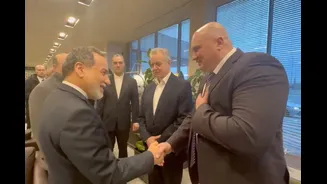








Iran’s Foreign Minister Abbas Araghchi on Monday blamed the United States for the collapse of recent negotiations, as diplomatic efforts to end the conflict remain stalled.
Speaking in Saint Petersburg
during a visit to Russia, Araghchi said excessive US demands derailed talks that had shown initial progress. “The US approaches caused the previous round of negotiations… to fail to reach its goals,” he said.
Araghchi is expected to meet Russian President Vladimir Putin as part of a whirlwind diplomatic tour that has also included stops in Pakistan and Oman—both key players in mediation efforts.
The latest setback comes after US President Donald Trump cancelled a planned visit by his envoys, Steve Witkoff and Jared Kushner, to Islamabad for renewed talks.
Despite the breakdown, backchannel communication appears to be ongoing. Iranian media reported that Tehran has sent written messages to Washington via Pakistan outlining its “red lines,” including positions on nuclear issues and the Strait of Hormuz.
Reports suggest Iran has floated a proposal centred on reopening the vital waterway and ending the US naval blockade, while postponing nuclear negotiations to a later stage.
Hormuz Blockade Sends Global Shockwaves
Although a ceasefire in the broader US-Israel conflict with Iran remains in place, tensions continue to ripple through global markets.
Iran’s blockade of the Strait of Hormuz—a key route for global oil, gas and fertiliser shipments—has disrupted supply chains and driven up prices, raising concerns over inflation and food security in developing economies.
In response, the US has imposed its own naval blockade targeting Iranian ports, escalating the economic standoff.
Araghchi emphasised the global importance of the waterway, saying, “Safe passage through the Strait of Hormuz is an important global issue,” particularly for Iran and Oman, which share its coastline.
Stalemate Persists Despite Diplomatic Push
Iran’s Islamic Revolutionary Guard Corps has signalled it has no intention of lifting the blockade, calling control over Hormuz a key deterrence strategy against the US.
Meanwhile, rising fuel prices have added domestic pressure on Trump ahead of upcoming elections, with polls indicating growing public concern over the conflict.
Oil prices edged higher again on Monday, though hopes of a potential deal have prevented sharper spikes.
With diplomacy continuing through multiple channels, analysts say any breakthrough will depend on whether both sides can bridge deep differences over sanctions, nuclear policy and control of strategic waterways.