








As air quality deteriorates across several Indian cities, conversations around respiratory health, everyday nutrition and wellness have become increasingly important. While no single food can protect the
body from air pollution, a balanced diet rich in fibre, healthy fats and antioxidant-containing foods plays an important role in overall health.
This is where everyday pantry staples such as pumpkin, sunflower, chia, flax and sesame seeds deserve a closer look. Packed with nutrients, they are easy to incorporate into familiar meals without requiring a complete dietary overhaul.
The trick is not to treat seeds as a separate health food or expect them to counter the effects of pollution. Instead, use them where they naturally fit into the meals you already make. From breakfast bowls and smoothies to rotis, salads and chutneys, here are seven simple ways to make seeds part of your everyday diet this pollution season.
1. Start With Breakfast
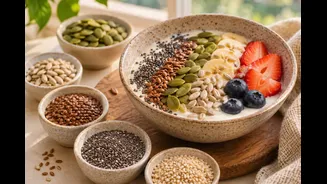
Your morning bowl is probably the easiest place to begin. Add pumpkin or sunflower seeds to oats, muesli or yoghurt, or sprinkle chia or flax seeds over fruit and smoothie bowls. Chia seeds are particularly versatile and can also be soaked overnight or added to porridge.
Pumpkin and sunflower seeds provide healthy fats, plant-based protein and minerals, while chia and flax offer fibre and plant-based omega-3 fatty acid ALA.
Even a spoonful can add some texture and make a familiar breakfast a little more interesting.
2. Give Salads A Little More Crunch
If salads tend to feel repetitive, seeds can change the texture without needing a complicated dressing. Toss pumpkin, sunflower or a mixed-seed blend through salads made with vegetables, greens, sprouts or grains.
Try lightly roasting the seeds first for a deeper, nuttier flavour. They also bring healthy fats and other nutrients to an otherwise simple bowl of vegetables.
3. Put Them Into Your Everyday Atta
Seeds do not have to mean another dish or recipe. Mix some pumpkin, sunflower, sesame or flax seeds into atta when making rotis or parathas.
For flax seeds, grinding them before eating can help the body access more of their nutrients. They are also a source of fibre and plant-based omega-3 fatty acid ALA.
It is a small addition to something most Indian households already prepare regularly, making it one of the easiest ways to increase dietary variety.
4. Finish Dal, Khichdi And Rice With A Seed Topping
Think of seeds as a finishing ingredient rather than something that needs to be cooked from scratch. A sprinkle of roasted seeds over dal, khichdi, pulao or a rice bowl adds a little crunch to softer dishes.
Pumpkin, sunflower and sesame seeds work particularly well here. It is a useful trick for meals that already have plenty of flavour but could use some additional texture and nutritional variety.
5. Blend Them Into Smoothies
Chia and ground flax can be blended into fruit, milk or yoghurt-based smoothies. You can also add a mixed-seed blend when you want more variety.
Chia seeds are naturally rich in fibre, omega-3 ALA and plant-based protein, making them a nutrient-dense addition to a smoothie or breakfast bowl.
Pair them with fruits such as berries, oranges or guava for a combination that also brings vitamin C and other beneficial plant compounds into your diet.
6. Keep A Seed Mix Ready For Snack Time
A jar of mixed seeds can make snacking a little more convenient. Combine pumpkin and sunflower seeds with nuts or dried fruit for a homemade trail mix, or simply keep a ready-to-eat seed mix on hand.
True Elements’ 7-in-1 Seeds Mix, for instance, combines pumpkin, sunflower, flax, chia, watermelon, sesame and soy seeds. It can be eaten on its own or sprinkled over yoghurt, oats, salads and smoothies.
Having a ready-made mix in the pantry also makes it easier to add different seeds to your meals without having to buy and prepare each variety separately.
7. Bring Seeds Into Chutneys And Dips
Seeds can also work beyond toppings. Sesame seeds are already a familiar ingredient in Indian cooking and can be used in chutneys, while other seeds can be blended into dips, dressings or sauces.
You could experiment with sesame-based chutneys, add ground sunflower seeds to homemade dips or use a little flaxseed powder to give dressings more body.
This makes them particularly easy to incorporate for people who may not enjoy eating seeds on their own.
Make Seeds Part Of The Meal, Not Another Task
Seeds are an easy way to add variety to everyday meals without making food preparation more complicated. Rather than looking at them as a separate health food, they can simply become part of meals we already eat. Using different seeds across the day can also help bring a wider mix of fibre, plant-based protein, healthy fats and micronutrients into the diet.
As pollution levels fluctuate, it is worth remembering that nutrition is just one part of looking after your health. A varied, balanced diet can support overall well-being, but seeds are not a substitute for measures such as checking local AQI levels, reducing exposure to polluted air and following appropriate public-health guidance.