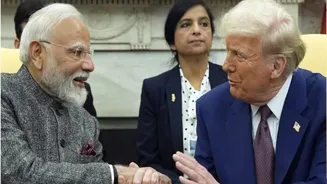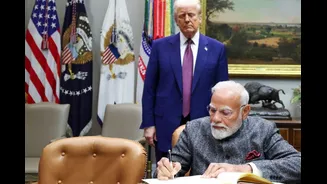

The announcement by US President Donald Trump to cut its reciprocal tariff on Indian goods to 18% marks a meaningful shift in India’s export competitiveness. For several Indian export categories, the India-US
trade deal is expected to provide a major relief.
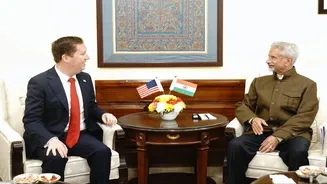
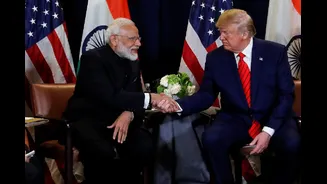
US Ambassador Sergio Gor, in an exclusive interview with CNN-News18, described the recently announced India-US trade deal, cutting India’s tariffs from 50% to 18%, as marking a “new era of India-US relations”. He added that “both US President Donald Trump and Prime Minister Narendra Modi are great leaders”.
US Tariffs On Indian Goods Cut From 18%
At a basic level, the reduction in the US tariffs on Indian goods changes the price paid by US importers. For an Indian export with a free-on-board (FOB) value of $100, a 25% tariff raises the landed cost to $125. At an 18% tariff, the same shipment lands at $118.
The $7 difference per $100 of goods can be decisive in sectors where operating margins are low. Exporters may either retain the benefit to improve margins or pass on part of the savings to buyers.
Textiles and Apparel: Immediate Price Advantage
Textiles and apparel are among the most price-sensitive segments of India’s exports to the US. Products such as cotton garments, home textiles and made-ups compete directly with suppliers from Bangladesh, Vietnam and other low-cost manufacturing hubs.
A cut in tariff narrows the pricing gap for Indian exporters. The benefit helps large exporters supplying US retailers in mid-value categories.
Engineering Goods
Engineering goods form the largest share of India’s merchandise exports to the US, covering auto components, industrial machinery, electrical equipment and capital goods. These exports typically operate on single-digit margins, making tariff changes immediately relevant.
The reduction improves India’s relative competitiveness against East Asian suppliers, particularly in contract renewals and incremental orders. While volumes may not rise overnight, exporters gain pricing flexibility and improved negotiating power in long-term supply arrangements.
Chemicals Sector
In chemicals, especially speciality chemicals and intermediates, exports are governed by long-term contracts and stringent compliance requirements. Demand in this segment is less sensitive to short-term price movements, but tariffs directly affect net realisations.
The lower tariff strengthens India’s position in US supply chains that are seeking diversification under China-plus-one strategies.
Gems and Jewellery: Cost Relief
Gems and jewellery exports, including cut and polished diamonds and gold jewellery, are high-value but highly competitive. Tariffs impact retail pricing and inventory costs for US wholesalers and retailers.
The cut in tariffs from 25% to 18% lowers the landed cost of Indian jewellery exports, easing pressure on margins.
IT Sector
The Indian IT sector also stands to benefit from the India-US trade deal due to improved sentiments and relationship with its biggest market America, though the lower tariffs does not affect software exports directly as they are covered under the services trade.
In July 2025, Trump announced 25 per cent tariffs on Indian goods and an additional 25 per cent penalty, significantly raising the effective cost of Indian exports to the US. The move was linked to India’s imports of Russian crude oil.