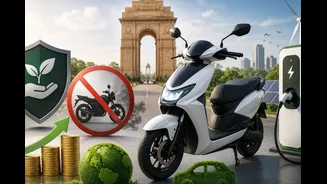










The Delhi government has approved the Delhi EV Policy 2026, marking a significant shift in the Capital’s electric mobility roadmap.
Building on the previous policy introduced in 2020, the new framework
doubles down on electrification by expanding purchase incentives for electric vehicles (EVs), introducing scrapping benefits, and setting timelines to phase out new registrations of certain petrol, diesel and CNG vehicles.
Unlike the earlier policy, however, the new version does not extend benefits to hybrid vehicles, signalling a clear preference for fully electric mobility.
What Is The New Policy?
The policy, cleared by the Delhi Cabinet on Monday, aims to accelerate EV adoption across vehicle categories while tackling the city’s persistent air pollution. According to the Delhi government, the long-term objective is to significantly increase the share of electric vehicles in new registrations and expand charging infrastructure across the city.
ALSO READ | Can Delhi’s New EV Policy 2.0 Drive Change In Other States Too? Explained
The policy proposes financial incentives for electric two-wheelers, three-wheelers, commercial vehicles and trucks, alongside scrapping incentives for owners replacing older polluting vehicles with EVs.
No Incentives For Hybrid Vehicles
Probably the greatest deviation from what has previously been discussed relates to the decision made by the government to leave out hybrids from receiving any kind of incentives.
While there had been speculation that strong hybrid cars could receive tax concessions similar to those announced by some other states, the Delhi government has opted for an EV-only approach. This means hybrids will not receive purchase incentives or tax benefits under the new policy.
Government officials have argued that the focus is on achieving zero tailpipe emissions rather than promoting transitional technologies.
Petrol Two-Wheelers To Be Phased Out
One of the most notable suggestions is that the government intends to phase out new petrol-powered two-wheelers.
ALSO READ | Not EVs, These Vehicles Have Overtaken Petrol Cars In Delhi Race | Numberspeak
As per the plan, the registrations of new petrol, diesel, and CNG two-wheelers would cease to exist from August 15, 2028, and only electric two-wheelers would remain eligible for registration going forward.
This suggestion is noteworthy because two-wheelers form the majority of the vehicle fleet in Delhi. As per The Indian Express, they comprise more than 65 per cent of the total vehicles registered in Delhi. Although each motorcycle and scooter produces lesser emission compared to the bigger automobiles, it is the sheer number that makes them responsible for pollution.
Purchase Incentives
The policy proposes subsidies across multiple vehicle categories.
For electric two-wheelers, eligible buyers could receive incentives linked to battery capacity, subject to an overall cap. Electric auto-rickshaws and e-rickshaws are also expected to receive purchase subsidies.
Commercial goods carriers, electric trucks and light commercial vehicles have been included as well, with larger financial support aimed at encouraging fleet electrification.
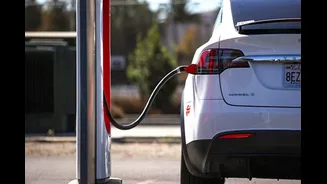
The government has also proposed incentives for installing private charging stations and expanding public charging infrastructure.
Scrapping Incentive
Another novel element of this policy is the scrapping scheme aimed at encouraging owners of aged vehicles to move to electric vehicles (EV).
Those applying for the policy who would scrap their aged internal combustion engine vehicles along with buying a new electric vehicle are eligible for further monetary support. The scheme may vary in amount ranging up to Rs 1 lakh, subject to certain conditions.
The purpose of this scheme is to speed up the process of replacing aged vehicles.
Three-Year Lock-In Period
The policy will have an additional element of three years lock-in period for subsidised vehicles.
Those who benefit from the government subsidy will not be able to sell or transfer the vehicle until the end of three years since purchasing it.
Why The Policy Matters
For decades now, Delhi has been one of the most polluted cities in the country, with transport emissions being an important cause of such air pollution in Delhi.
The Capital has also become one of the fastest growing markets for electric vehicles after the introduction of the policy of 2020. According to government figures, electric vehicles make up a significant portion of the newly registered vehicles in the city, especially in the two wheeler and three wheeler classes.
As a result of choosing vehicle classes with higher volumes, policymakers expect to achieve more substantial savings in terms of fuel usage and emissions compared to policies that target only passenger cars.
On the other hand, not allowing hybrid vehicles means choosing electric-only vehicles as a technology.
What Next?
While the Cabinet has approved the policy, several provisions, including subsidy implementation, registration restrictions and rollout timelines, will require detailed notifications before coming into force.
Vehicle buyers, manufacturers and dealerships will also be watching for operational guidelines on eligibility, documentation and implementation schedules.
For now, Delhi’s EV Policy 2026 signals the government’s clearest commitment yet to an all-electric future, combining financial incentives with regulatory measures aimed at reshaping the Capital’s vehicle fleet over the next few years.