
Former Bangladesh prime minister Sheikh Hasina has invoked the horrors of the 1971 Liberation War, warning how “attacks on minorities” under the Muhammad Yunus regime “echo the darkest chapter of the nation’s
history.” Hasina said attacks on minorities, growing insecurity for women and attempts to undermine Bangladesh’s liberation legacy are “disturbing echoes of 1971″, when atrocities were committed by the Pakistan Army during the war that led to Bangladesh’s independence.
During the Bangladesh Liberation War of 1971, the Pakistan Army, aided by local collaborator militias, committed widespread and systematic atrocities against the civilian population of East Pakistan (now Bangladesh). These actions are widely documented by historians, journalists, survivors, and international observers, and are regarded as crimes against humanity and, by many scholars, genocide.
Mass Killings and Genocide
The Bangladesh Liberation War opened with a brutal campaign of mass killings following Operation Searchlight on 25 March 1971. The Pakistan Army targeted students, political workers, and ordinary civilians across cities and villages. Entire neighbourhoods were sealed off, houses torched, and residents executed without distinction. Estimates of those killed vary widely: independent researchers suggest around 300,000 deaths, while Bangladesh officially maintains the toll was up to 3 million. Regardless of the exact figure, the scale of violence was extraordinary for a nine-month conflict.
Mass graves uncovered after the war testified to systematic killing rather than sporadic clashes. The violence aimed not merely at suppressing dissent but at crushing Bengali identity and resistance. The sustained and targeted nature of these killings has led many historians to classify the campaign as genocidal.
Rape as a Weapon of War
Sexual violence during the 1971 war occurred on a staggering scale and followed a deliberate pattern. Estimates indicate that 200,000 to 400,000 women were raped by Pakistani soldiers and their auxiliaries. Women were abducted from homes, villages, and refugee routes, and many were held in military-run detention centres where repeated assault was routine. Victims ranged from young teenagers to elderly women, cutting across class and geography. Rape was used to terrorise communities, humiliate families, and break social cohesion. Thousands of women became pregnant as a result, leading to the birth of what later came to be known as “war babies.”
After independence, Bangladesh officially recognised survivors as Birangonas or war heroines, yet many continued to suffer lifelong trauma and social stigma. The numbers underline the systematic use of rape as a weapon of war.
Targeting of Hindus
Hindus were singled out for violence during the conflict, driven by the Pakistani military’s perception that they were sympathetic to India and Bengali nationalism. Villages with significant Hindu populations were often attacked first, with homes marked for destruction. Large numbers were killed, though precise figures remain unknown. What is clear is the scale of displacement: an estimated 8 to 10 million people fled East Pakistan during the war, a significant proportion of them Hindus. Many crossed into Indian states such as West Bengal, Tripura, and Assam to escape killings, rape, and forced expulsions. Temples were desecrated, property confiscated, and families uprooted overnight.
This targeted persecution transformed the war into a humanitarian catastrophe and altered the region’s demographic landscape. The selective violence against Hindus highlights how religious identity became a factor in the broader campaign of repression.
Murder of Intellectuals
In the final days of the war, a calculated effort was made to eliminate Bangladesh’s intellectual class. Between 10 and 14 December 1971, hundreds of professors, doctors, journalists, engineers, and writers were abducted from their homes, mainly in Dhaka. Many were blindfolded, tortured, and executed, with bodies later found in mass graves at sites such as Rayerbazar and Mirpur. Estimates suggest several hundred intellectuals were killed in this brief but devastating phase.
The objective was strategic: to deprive the soon-to-be independent nation of its thinkers, professionals, and future leaders. This targeted annihilation left an enduring vacuum in post-war Bangladesh. The killings are commemorated every year on 14 December, serving as a reminder that the violence of 1971 was aimed not only at defeating a rebellion, but at crippling a nation’s future.
Torture, Detentions, and Repression
Beyond open massacres, repression operated through widespread arrests and torture. Thousands of civilians were detained without charge throughout 1971, often on the basis of suspicion or denunciation. Makeshift detention centres functioned in cities such as Dhaka, Chittagong, and Khulna. Prisoners were subjected to beatings, electric shocks, water torture, and psychological abuse. Many detainees disappeared permanently, their families never receiving confirmation of death or release.
While exact numbers remain unknown, survivor accounts suggest tens of thousands experienced detention or torture during the war. These practices created an atmosphere of constant fear, silencing even those with no political involvement. Torture was not used solely to extract information but to terrorise society at large. The scale of repression reinforced perceptions that the military campaign was rooted in collective punishment rather than law enforcement.
Local Groups
Groups such as the Razakars, Al-Badr, and Al-Shams worked alongside the Pakistan Army, providing intelligence and identifying targets. Their membership ran into the tens of thousands, drawing recruits from Islamist and pro-Pakistan factions. These militias helped locate activists, intellectuals, and minority families, making repression faster and more precise.
Al-Badr, in particular, played a major role in the December 1971 killing of intellectuals. Collaborators also participated directly in arrests, torture, and executions. Their involvement intensified the brutality and left deep social wounds, as violence often came at the hands of neighbours. After independence, collaboration became a major political and legal issue, with war crimes trials continuing decades later.
Refugee Crisis and Humanitarian Disaster
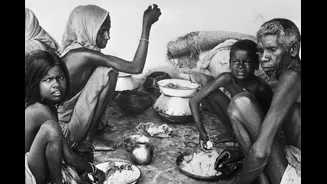
The atrocities triggered one of the largest refugee movements of the 20th century. By mid-1971, around 10 million people had fled East Pakistan into India. Refugee camps spread across West Bengal, Tripura, Assam, and Bihar, placing immense strain on food supplies, healthcare, and sanitation. Conditions were overcrowded and unsanitary, leading to outbreaks of cholera, dysentery, and malnutrition. Thousands died in camps from disease and exposure, though exact figures remain uncertain.
The refugee crisis also carried major political consequences, contributing directly to India’s decision to intervene militarily in December 1971. For refugees, displacement meant loss of homes, livelihoods, and family members. Even after Bangladesh’s independence, many struggled to return and rebuild. The sheer numbers reveal how the violence reshaped not only Bangladesh, but the entire region.