


The Bharatiya Janata Party is weighing a significant expansion of its top decision-making body, with the names of at least two of its most prominent Chief Ministers being actively considered for induction
into the BJP Parliamentary Board, sources have told News18.
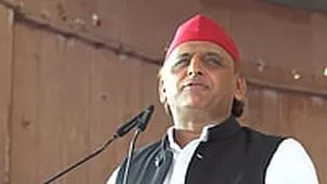
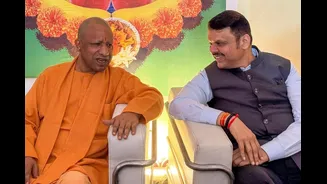
The two names being discussed are Uttar Pradesh Chief Minister Yogi Adityanath and Maharashtra Chief Minister Devendra Fadnavis, according to sources familiar with the discussions. Both leaders are in their fifties, have emerged as important faces of the BJP’s next generation and command political influence that extends well beyond the states they govern.
The possibility of their induction assumes added significance because the suggestion for both names is understood to have come from the BJP’s ideological mentor, the Rashtriya Swayamsevak Sangh.
Importantly, sources said, the suggestion did not originate at the recently concluded RSS-BJP coordination meeting in Visakhapatnam. The annual Akhil Bharatiya Samanvay Baithak was held from August 19 to 21 and brought together senior representatives of 32 Sangh-inspired organisations. The meeting was primarily positioned as a forum for coordination and discussion rather than a formal decision-making exercise.
The RSS suggestion regarding the two Chief Ministers, sources said, was made months ago.
That makes the current discussion within the BJP particularly significant. Sources indicate that a majority of the party’s top leadership is broadly aligned with the idea, although at least one senior BJP leader has raised objections.
The proposal, however, appears to have found considerable receptivity within the party.
“The party is very much open to the idea as of today,” a BJP source said.
The possible induction of Yogi and Fadnavis, if at all, would represent more than a routine reshuffle of the Parliamentary Board. It would send a carefully calibrated signal about the BJP’s Gen next.
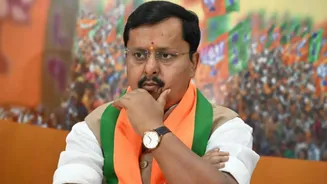
The Parliamentary Board is the BJP’s highest decision-making body and currently comprises Prime Minister Narendra Modi, Defence Minister Rajnath Singh, Home Minister Amit Shah, BJP president Nitin Nabin, Health Minister JP Nadda, former Karnataka CM Yeddyurappa, Union Minister Sarbananda Sonowal, BJP’s General Secretary (Organisation) BL Santosh, BJP leaders like Dr K Laxman, Iqbal Singh Lalpura, Dr Sudha Yadav, and Dr Satyanarayan Jatiya. The party is considering changes to the body following Nabin’s recent organisational overhaul.
Why Yogi And Fadnavis Matter?
Yogi Adityanath occupies a unique position within the BJP. As Uttar Pradesh Chief Minister, he presides over the country’s most politically consequential state ahead of the 2027 Assembly election. But his political appeal and visibility have increasingly transcended Uttar Pradesh. Not just in the 2018 election in Chhattisgarh and Madhya Pradesh but even in states like West Bengal in 2026 and Tripura in 2018, he was one of the most sought-after BJP star campaigners.
For the BJP, his inclusion in the Parliamentary Board would formalise the national stature he has acquired over the past decade.
Fadnavis, meanwhile, represents a different but equally important strand of the BJP’s next-generation leadership. Maharashtra is one of India’s most economically significant states and among its most politically complex. Fadnavis has also been repeatedly positioned within the BJP’s future leadership matrix. Recently, US envoy to India Sergio Gor called him “great”.
The two leaders therefore bring different political assets to the table: Yogi represents mass political mobilisation and ideological resonance, while Fadnavis brings administrative experience, organisational credibility and the political weight of Maharashtra.
There is another striking political coincidence.
Both are broadly in the same age bracket as Congress leader Rahul Gandhi, who turned 56 in June this year.
Rahul Gandhi has increasingly sought to project himself as the politician most comfortable with younger India, particularly Gen Z, and has attempted to build a political vocabulary around the aspirations and frustrations of younger voters.
The BJP’s possible elevation of two Chief Ministers from the same broad generation could therefore acquire significance beyond organisational arithmetic.
A Message Beyond 2029?
The timing is also important.
BJP president Nitin Nabin has just unveiled a substantially revamped national team, with the party signalling a renewed emphasis on organisational expansion and preparations for the electoral battles ahead. The reshuffle has been widely interpreted as part of the BJP’s preparations for the 2027 Assembly elections and the 2029 Lok Sabha contest.
Against that backdrop, bringing powerful Chief Ministers into the Parliamentary Board would broaden the political representation of the party’s most important decision-making forum.
More importantly, it would bring two leaders with substantial electoral mandates and independent political identities closer to the BJP’s central decision-making structure.
The RSS’s role in suggesting their names adds another layer.
“The Sangh and BJP have traditionally maintained a distinction between organisational roles and governmental responsibilities, even as the two remain closely connected. A recommendation from the RSS for the country’s two prominent Chief Ministers to enter the BJP’s apex decision-making body would therefore underline the Sangh’s assessment of where the party’s leadership bench should be headed,” said a BJP insider.
For now, however, no final decision has been taken.