





Brent crude, the global benchmark for oil prices, surged towards $100 a barrel as fresh attacks on energy infrastructure in Saudi Arabia and escalating tensions involving the US and Iran raised fears of
further disruptions to global oil supplies. Brent touched around $99 on Tuesday, while US West Texas Intermediate crude climbed above $94.
Oil is traded in a global market, where prices are constantly influenced by the balance between supply and demand, expectations about future production and consumption, inventories, geopolitical risks and financial trading. Here’s how it works:
Who Actually Sets Price Of Oil?
There is no global oil authority that announces a price every morning. Instead, crude oil is bought and sold in international markets and prices move as buyers and sellers react to how much oil they expect to be available and how much they expect the world to need. Two prices are particularly important: Brent crude and West Texas Intermediate, or WTI.
Brent is the most widely used global benchmark and is used to price a large share of the world’s crude oil. WTI is the main US benchmark. Other types of crude are generally priced in relation to these benchmarks, with adjustments for quality, transportation costs and local market conditions.
Why Is Brent So Important?
Brent is not simply “the price of all oil”. It is a benchmark- essentially a reference price that helps buyers and sellers determine what different types of crude oil should cost. A crude producer may sell oil at a price linked to Brent, with a discount or premium depending on the quality of its oil and the cost of getting it to a buyer. That is why a movement in Brent can affect oil prices far beyond the North Sea, where the crude streams underlying the benchmark are produced.
Where Does OPEC Come Into The Picture?
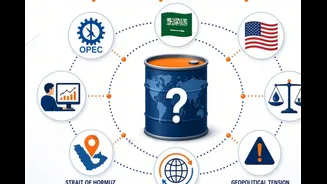
This is where things get interesting. The Organisation of the Petroleum Exporting Countries, or OPEC, does not simply decide that oil will cost $80, $100 or $120. What OPEC can do is influence how much oil reaches the global market. OPEC countries set production targets for their members. If major producers cut production, the amount of oil available globally can fall, potentially pushing prices higher. If production rises, additional supply can put downward pressure on prices. OPEC’s influence is significant because its members collectively account for a large share of global crude production and international oil exports. But even OPEC cannot completely dictate the final price.
Why Can’t Saudi Arabia Or OPEC Just Set Any Price They Want?
Because the rest of the world is producing and consuming oil too. If OPEC tries to push prices too high by restricting supply, consumers may use less oil, companies may invest in alternative energy sources and producers outside OPEC may increase their output. The US, Canada, Guyana, Brazil, Norway and other non-OPEC producers all contribute to global supply. In fact, countries outside OPEC accounted for about 65% of global crude production in 2024, according to the US Energy Information Administration. This makes it extremely difficult for any one producer to control the entire market.
Why Does A War Make Oil More Expensive?
Because oil markets are not only reacting to the oil that is being produced today. They are also reacting to what traders think could happen tomorrow. The current surge towards $100 is a good example. The latest fighting has raised concerns about energy infrastructure and shipping routes in West Asia. The Strait of Hormuz is particularly important because it is a major route for oil exports from the Persian Gulf. Even if every oil facility in the region continues operating, the possibility that supplies could be disrupted can be enough to push prices higher. Oil prices are highly sensitive to such risks because both supply and demand are relatively difficult to change quickly.
So Is The Price Based On Supply Or Demand?
Both. If global demand rises while supply stays tight, prices generally rise. If supply grows faster than demand, prices generally fall.
Economic growth matters enormously because a stronger global economy usually means more transportation, manufacturing and industrial activity and therefore more energy consumption. But the relationship isn’t always straightforward. Inventories, spare production capacity and expectations about future demand can change how the market responds.
Why Can Oil Prices Change So Quickly?
Because the world cannot instantly produce or consume dramatically more or less oil. If a major supply route is suddenly threatened, there may be no immediate replacement for those barrels. This makes the market particularly sensitive to unexpected events.
A war, hurricane, refinery shutdown, sanctions announcement or attack on an oil facility can therefore move prices within minutes as traders reassess the outlook.
Who Has The Most Power Over Oil Prices?
There isn’t one answer. OPEC has power because it can influence production. Saudi Arabia has enormous influence because it is a major producer and has historically held significant spare capacity. The US has influence because it is one of the world’s biggest oil producers and consumers. Russia and other major producers influence global supply.
China and other major consumers influence global demand. Traders and financial markets influence how quickly expectations are reflected in prices and geopolitical events can suddenly change the calculations of all of them.