




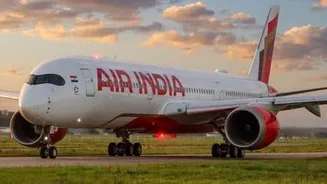
An Air India flight operating from Phuket to New Delhi experienced severe mid-air turbulence on Tuesday morning, leading to a sudden and rapid altitude drop of approximately 300 feet. The incident left
several passengers and cabin crew members injured, prompting an emergency medical response upon landing at Indira Gandhi International Airport.
The Directorate General of Civil Aviation (DGCA) launched a formal investigation into the incident.
What Happened Mid-Air
Flight AI 2379, operated by an Airbus A320 aircraft (Registration: VT-EXO), took off from Phuket at 8:25 AM local time. Between 9:30 AM and 10:00 AM, while cruising at high altitude, the aircraft encountered a sharp and unexpected atmospheric disturbance, causing it to roll and lose nearly 300 feet of altitude within seconds.
A senior DGCA official confirmed that the Pilot-in-Command (PIC) reported a severe injury to one cabin crew member, injuries to another crew member, and minor injuries to 11 passengers onboard.
Medical teams and ambulances were stationed at the bay in Delhi prior to the plane’s landing at 11:00 AM. The injured crew members and passengers were immediately evaluated, with those requiring further care shifted to nearby medical facilities.
An Air India spokesperson confirmed the turbulence-related event during the cruise phase, emphasizing that the plane landed safely and all passengers disembarked normally:
“Flight AI2379 experienced a brief in-flight turbulence-related event during cruise, resulting in a momentary change in altitude. The aircraft landed safely in Delhi. A small number of passengers and crew members with minor injuries were taken to a medical facility for precautionary examination. The safety and well-being of our passengers remain our highest priority.”
What Happens When A Plane Suddenly Drops 300 Feet?
Commercial aircraft typically cruise at altitudes of around 35,000 feet, where flights are generally smooth and stable. However, unexpected atmospheric conditions such as clear-air turbulence or powerful downdrafts can cause an aircraft to lose altitude briefly, resulting in a sudden drop of a few hundred feet.
1. Passengers May Feel Weightless
When an aircraft descends abruptly, it can create a sensation of temporary weightlessness. Many passengers describe it as a sudden “stomach-dropping” feeling similar to the sensation experienced on a roller coaster.
2. Unsecured People and Objects Can Be Thrown Around
The greatest danger during sudden turbulence is often inside the cabin. Passengers who are not wearing seat belts, along with loose items such as bags, phones, food trays and service carts, can be lifted from their seats and thrown around the cabin, leading to injuries.
3. Changes in Air Pressure May Be Felt
As the aircraft moves into denser layers of air, passengers may experience pressure changes in their ears, commonly felt as ear popping or temporary discomfort. Modern aircraft systems are designed to regulate cabin pressure, helping minimise these effects.
4. Aircraft Are Built to Withstand Severe Turbulence
Modern commercial airliners, including aircraft such as the Airbus A320 and Boeing 737, are engineered and tested to endure turbulence far more severe than a 300-foot altitude drop. Such events are generally not a threat to the structural integrity of the aircraft.
5. The Main Risk Is Injury Inside the Cabin
While a sudden drop can be alarming, aviation experts note that the primary risk comes from passengers and objects striking cabin surfaces during turbulence. This is why airlines strongly advise keeping seat belts fastened whenever seated, even when the seat belt sign is switched off.
In most cases, a 300-foot altitude loss is brief and well within the aircraft’s operating limits. Although it may feel dramatic to those on board, commercial aircraft are designed to safely handle such turbulence-related altitude changes.