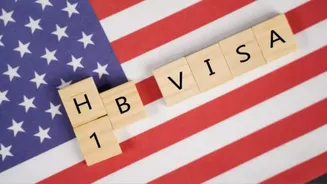

India has formally taken up concerns related to delays in H-1B visa processing with the United States, the Ministry of External Affairs (MEA) said on Friday, acknowledging the difficulties faced by Indian
nationals due to appointment backlogs and procedural issues.
Responding to queries on the matter, the MEA said the government has received multiple representations from Indian citizens encountering visa-related problems, particularly prolonged delays in securing appointments.
“These issues have been flagged with the US authorities both in New Delhi and in Washington DC,” the MEA said, adding that several applicants were left stranded, resulting in significant personal and professional hardships.
The ministry noted that the US side has taken steps to ease the situation.
From December 15, appointment scheduling capacity has been expanded to help address the backlog. “The government of India remains actively engaged with the US side to ensure smoother visa processing for Indian nationals,” the MEA said.
The developments come at a time when H-1B applicants are facing increased scrutiny and uncertainty.
The US Embassy in India recently announced that it has begun conducting online presence reviews of all H-1B and H-4 visa applicants as part of efforts to prevent misuse of the programme.
At the same time, policy proposals under consideration in the US could further tighten the H-1B regime.
The US Department of Labor has proposed changes to wage protection rules that experts say could significantly raise prevailing wage requirements for H-1B workers, potentially discouraging companies from sponsoring visas.
Additionally, a proposal by the Department of Homeland Security to prioritise higher-paid applicants in the H-1B lottery process is reportedly nearing final approval.
Analysts have warned that such measures could limit access to the programme for recent graduates and early-career professionals, even in critical and emerging sectors.
Any major changes are also expected to disproportionately affect Indian professionals, who account for more than 70 per cent of H-1B visa recipients in recent years.