








The Centre has asked telecom companies and subsea cable operators to assess India’s exposure to potential disruptions in undersea data infrastructure and draw up contingency plans, as geopolitical tensions
escalate in West Asia, according to a report by The Economic Times.
Govt seeks contingency plans amid rising risks
The Department of Telecommunications (DoT) has held discussions with industry stakeholders to evaluate risks arising from possible damage to subsea cables, particularly in light of Iran’s threats targeting critical maritime infrastructure.
Officials noted that the Strait of Hormuz serves as a key route for nearly a third of India’s westbound data traffic to the US and Europe. While some traffic can be rerouted via Singapore, the capacity is limited and comes at significantly higher costs, especially as hyperscalers like Amazon Web Services continue to absorb large chunks of global bandwidth.
Alternative routes, such as those via the Pacific, are longer and could lead to higher latency and slower data processing speeds, industry experts said.
What are subsea cables?
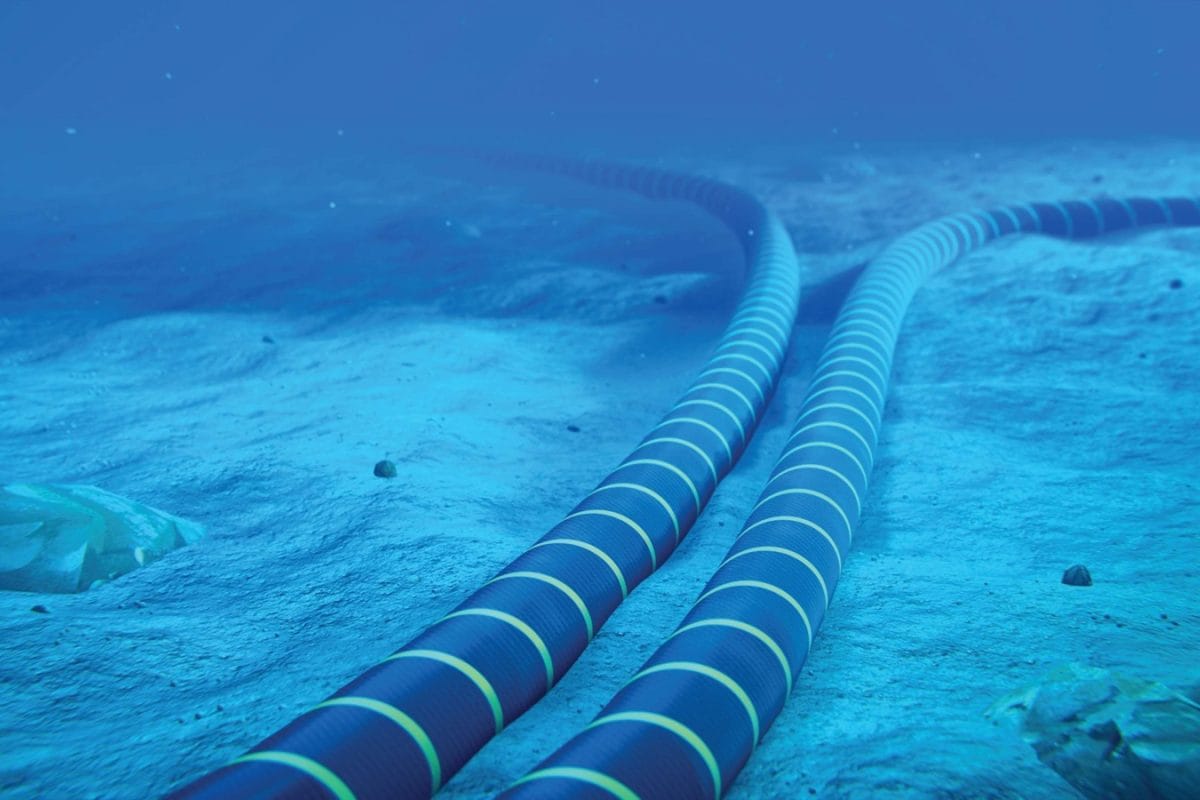
Subsea (or undersea) cables are fibre-optic cables laid along the ocean floor that carry over 95% of global internet traffic, including financial transactions, cloud data, emails, and streaming services. These cables form the backbone of global digital connectivity, linking continents and enabling real-time communication.
For countries like India, subsea cables are critical for supporting IT services, global capability centres (GCCs), financial systems and digital platforms. Any disruption can have far-reaching consequences, from payment failures and e-commerce outages to broader disruptions in enterprise operations.
Industry flags potential impact
“The government is actively engaging with stakeholders to assess risks arising from India’s dependence on subsea cables through the Strait of Hormuz and the Red Sea,” said Harsha Ram, head of network business at Sify Technologies.
He added that any disruption or cable damage could impact financial transactions, social media, e-commerce and IT operations, though a complete blackout remains unlikely due to built-in network redundancies.
An executive at a subsea cable firm told ET that while companies typically maintain buffer capacity to handle routine faults, the current situation is unprecedented. “No one planned for a full-scale war scenario,” the person said.
Repair disruptions, infrastructure at risk
Cable maintenance in the region has also been hit. ET had earlier reported that repair ships have halted operations due to security risks, affecting key systems such as Airtel’s SEA-ME-WE 4 and I-ME-WE, as well as Flag Telecom’s FALCON cables, which were damaged near Jeddah.
Other networks, including Tata Communications’ TGN-Gulf and Airtel’s Africa Pearls systems, also face potential risks. Several new cables under construction—such as those by Reliance Jio and global tech firms—run along the same corridor, increasing the urgency to safeguard infrastructure.
Data centre ambitions may face delays
Prolonged disruption could also impact India’s $270 billion data centre expansion plans, which rely heavily on robust subsea connectivity. Major global projects, including those backed by Meta Platforms and Google, are expected to land in India in the coming years.
Industry executives have urged the government to engage diplomatically with Iran to ensure the safety of subsea infrastructure. There is cautious optimism, as some India-bound vessels have reportedly been allowed to pass through the Strait of Hormuz despite the ongoing tensions.