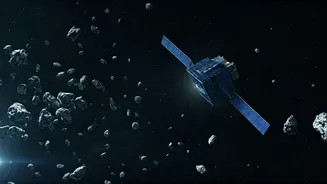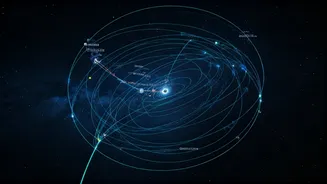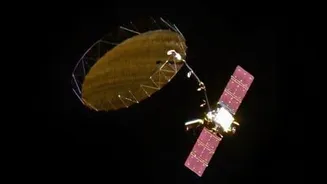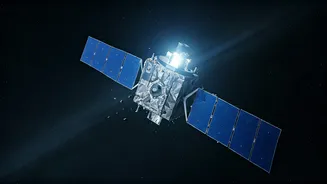








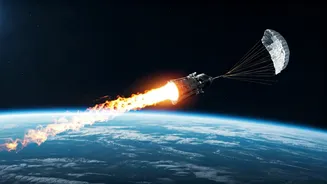
Earth’s orbit is becoming a high-speed traffic grid, with over 1.5 lakh close-approach alerts issued for Indian space assets in 2025, which are likely to expose the satellites to heightened collision risks.
According to data from the Indian Space Situational Assessment Report 2025, about 1.6 lakh alerts have been issued globally, many generated by the US Space Command’s Combined Space Operations Centre.
Each alert highlights a potential risk of how congested the orbital paths have become.
ISRO Keeping An Eye On Satellites
The Indian Space and Research Organisation (ISRO) has constantly kept a watch over the country’s satellites revolving around the Earth. According to a report by Times of India, Indian missions carried out 18 collision avoidance manoeuvres (CAM) during the year — 14 in low Earth orbit and four in geosynchronous orbit — to avoid danger.
“All manoeuvre plans, including CAMs, were subjected to close-approach risk analysis to rule out potential close approach with neighbouring space objects within a few days of the manoeuvres; 82 manoeuvre plans were revised to avoid post-manoeuvre close approaches with other space objects for LEO satellites, and two were revised to avoid post-manoeuvre conjunctions for GEO satellites,” the report suggested, as quoted by the outlet.
Globally, 315 successful launches in 2025 placed 4,651 objects into orbit, a sharp jump from 254 launches in 2024 and 212 the year before. Of these, 4,198 are operational satellites.
Even though 1,911 objects re-entered the atmosphere, the balance is unmistakable — Earth’s orbital environment is getting busier, faster, and more crowded.