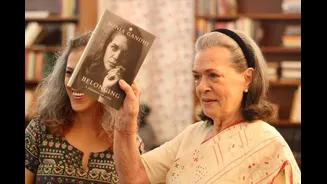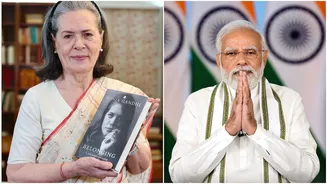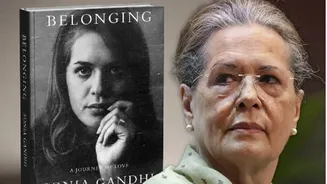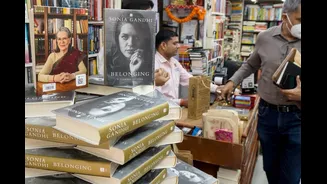




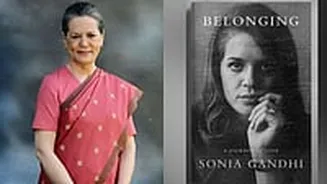
In her memoir, Belonging: A Journey of Love, former Congress president Sonia Gandhi described the 1975 Emergency as a “mistake” but refused to pin the blame entirely on Sanjay Gandhi. While she acknowledged
the need for keeping Sanjay Gandhi “in check”, she clarified that he was not solely responsible in her book and her interviews with The Guardian and The Hindu. Sonia Gandhi explicitly noted that Sanjay Gandhi could have been handled differently, writing: “Keeping Sanjay in check could have prevented much of the damage that followed.” When asked if Sanjay Gandhi was the sole individual responsible for the heavy-handed execution of the period, she clarified that others in the government pushed for it as well: “It was not only Sanjay, though in the public mind he is often seen as synonymous with the Emergency. There was a lot of pressure from some of her senior colleagues…”
DINNER TABLE ARGUMENT
She recalled a specific dinner table argument where her husband Rajiv and his brother Sanjay clashed intensely over whether Indira Gandhi should declare the Emergency:
He advised his mother to “wait until the next election.” He aggressively insisted that the political opposition “would destroy her and had to be stopped.”
Sonia noted that the disagreement “created tensions within the family, as Rajiv tried to confront his mother but she refused to listen”.
INDIRA GANDHI’S THOUGHTS
Sonia Gandhi defended Indira Gandhi’s internal democratic nature, telling The Guardian: “I always feel that Mrs (Indira) Gandhi was a democrat at heart. I know that many would laugh at this, but I believe she was never comfortable in the course of the emergency. I think it was sitting heavy on her.”
In an interview with The Guardian ahead of the book’s release, Sonia Gandhi recounted that former Prime Minister Indira Gandhi was deeply distressed by the devastation of Operation Blue Star, noting that “tears rolled down her face” when shown the images.
There’s bound to be some tamasha when this book comes out. After all, others have spent decades telling my “story”, now it’s my turn. https://t.co/jDy5vBI8ey
— Sonia Gandhi (@SoniaGandhi) October 27, 2026
Regarding the military action at the Golden Temple that ultimately led to the tragedy, she notes how heavily the decision and the subsequent destruction weighed on Indira Gandhi. “When my mother-in-law was shown images of the devastation, tears rolled down her face.”
Sonia Gandhi detailed how Indira Gandhi, facing mounting threats after the military operation, was actively preparing for her death and instructing the family, including a young Rahul Gandhi, on what to do and how to remain brave. She described the moments on October 31, 1984, when Indira Gandhi was assassinated. Sonia initially mistook the gunshots for leftover Diwali firecrackers before rushing out to hold her mother-in-law’s bloodied body.
Sonia Gandhi describes the terrifying drive back from the hospital to collect clothes for Indira Gandhi’s body, noting the immediate brewing unrest. “On the way, a group of men tried to stop our car, banging on its windows. They were angry, shouting something I couldn’t understand.”
OPPN REACTION
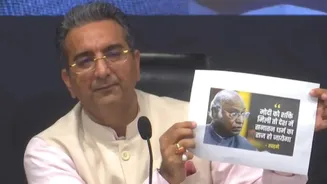
Following the book’s release, the ruling Bharatiya Janata Party (BJP) heavily criticised her statements. BJP national spokesperson C.R. Kesavan accused Sonia Gandhi of trying to “whitewash”, “sugar-coat”, and “justify” a notorious period that suspended fundamental rights and damaged Indian democracy.