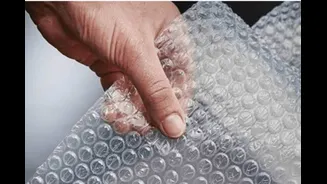








Pop! Pop! Pop! The irresistible sound of bursting bubble wrap is oddly satisfying, and let’s admit it, almost everyone has done it at some point. Whether it comes wrapped around a fragile item or inside
a package, those tiny air-filled bubbles are hard to resist. But what many people don’t realise is that bubble wrap wasn’t originally created to protect packages at all.
Recently, a user shared a detailed post on X (formerly Twitter) which explained the unusual story behind how bubble wrap was invented.
THE STORY BEHIND THIS THING WILL SHOCK YOU! 👇🏽👇🏽👇🏽
How many of you know what this is called?
Most of you will say bubble wrap. Some will call it stress relief. But if you asked the two engineers who invented it in 1957, they would have told you: “It’s a failure.”
Alfred and… https://t.co/J7YiqZLk1K
— INALEGWU (@tchaloyi) March 10, 2026
Bubble Wrap Invention That Wasn’t Meant To Be
Bubble wrap was invented in 1957 by engineers Alfred Fielding and Marc Chavannes. It should be noted that they were not trying to create any kind of packaging material. Instead, they were trying to create a textured, three-dimensional wallpaper that would appeal to the artistic “Beat Generation.” The concept was supposed to bring a futuristic and stylish look to walls.
While working in a garage in Hawthorne, New Jersey, the two engineers experimented with materials to create this unique design. They sealed two plastic shower curtains together using a heat-sealing machine. During this process, something unexpected happened: small pockets of air became trapped between the layers of plastic, which formed the bubble-like texture.
Although Fielding and Chavannes believed the bubbly design looked futuristic and innovative, the market reacted very differently. Homeowners showed little interest in decorating their walls with plastic sheets covered in air bubbles, and the idea failed.
Attempts That Didn’t Work
After the wallpaper concept failed, the inventors tried to find other uses for the material they had created. One of their early attempts was to market it as insulation for greenhouses.
They believed the trapped air bubbles could help regulate temperature and protect plants from cold weather. But this idea also struggled to gain acceptance. Compared to existing insulation materials, the bubble-filled plastic sheets proved ineffective and failed to attract buyers.
For a while, the invention seemed like another unsuccessful experiment.
The Breakthrough That Changed Everything
The turning point came a few years later when the inventors’ company, Sealed Air Corporation, was founded in 1960. The product was initially called “Air Cap”, but it still hadn’t found a clear purpose.
Around that time, IBM was preparing to launch its new 1401 mainframe computer between 1959 and 1961. These machines were extremely expensive and delicate, which made transporting them safely a major challenge.
Recognising an opportunity, the team at Sealed Air pitched their bubble-filled material to IBM as a protective packaging solution. Unlike the standard shipping materials of the time (such as balled-up newspaper, sawdust, or horsehair), the plastic bubbles provided excellent cushioning and shock absorption without creating a mess of ink, dust or debris.
IBM decided to use the material to protect its computers during transport. The decision proved to be a huge success and marked the moment when bubble wrap finally found its true purpose.
From Failed Wallpaper To Global Packaging Material
It started as a failed home décor experiment buteventually transformed into a global packaging innovation. The success with IBM helped launch an entirely new industry focused on protective packaging.
Today, Sealed Air Corporation has grown into a Fortune 500 company. Although “Bubble Wrap” is technically a registered trademark, the name has become so widely used that people around the world now use it as a generic term for the familiar bubble-filled plastic used to protect fragile items.