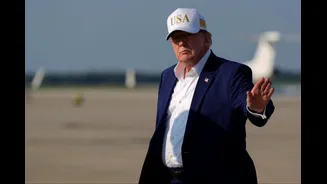


US President Donald Trump on Wednesday said he was not trying to force Iran back to the negotiating table, asserting that he preferred Washington’s current position amid escalating hostilities and claiming
the US had “almost total control” of the strategically vital Strait of Hormuz.
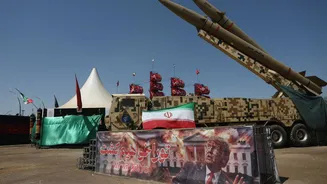
Trump’s remarks came hours after the US launched a fresh wave of airstrikes against Iran, drawing retaliatory attacks from Tehran on US assets across the Middle East.
“I’m not trying to force Iran to the bargaining table,” Trump said in a social media post, pushing back against a report by ABC News. “I couldn’t care less if they sign a worthless, to them, agreement.”
The US president said he preferred the current situation, claiming Washington had “almost total control” of the Strait of Hormuz while Iran’s economy was “totally collapsing”.
“They are just playing out the inevitable,” Trump said, before directly addressing the Iranian people. “When are the Iranian people going to rise up and fight?”
US-Iran Conflict Escalates
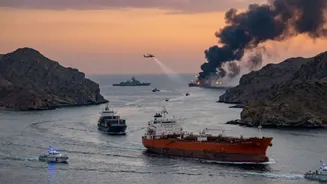
Trump’s comments came amid one of the most serious escalations in the conflict in recent weeks. The US launched a barrage of strikes on Iranian targets on Tuesday following a weekend exchange of fire and attacks on two tankers leaving the Strait of Hormuz.
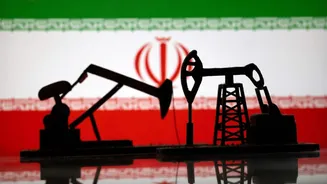
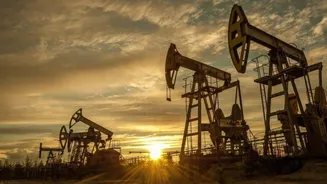
The waterway, a key global oil transit route, has been effectively closed to shipping amid the conflict. The disruption has pushed global oil prices higher, with prices rising more than $4 a barrel on Tuesday to settle at a five-week high.
The US military’s Central Command said its latest wave of strikes targeted facilities linked to Iran’s Islamic Revolutionary Guard Corps (IRGC), including air defence sites, radar systems, maritime assets, mine-laying capabilities and communications infrastructure.
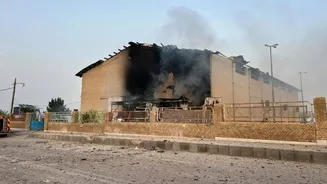
Iranian media reported explosions and strikes across several locations, including near Ahvaz, the civilian Jiroft airport, Chabahar, Bandar Abbas and Asaluyeh, a major gas hub on the Gulf coast. Explosions were also reported on Qeshm Island.
Iran Hits Back, Vows To Tighten Hormuz Blockade
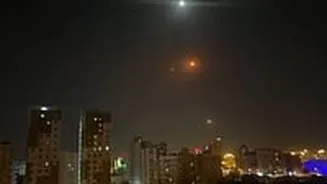
Iran responded with attacks targeting US facilities in Jordan, Bahrain and Iraq, while maintaining that it would prevent oil exports from the Gulf.
The IRGC said the latest US strikes would “tighten the lock” on the Strait of Hormuz. Iranian Parliament Speaker Mohammad Baqer Qalibaf was quoted by Iranian media as saying that if Iran was prevented from exporting oil from the Persian Gulf, no country would be able to do so.
The IRGC claimed to have launched a heavy ballistic missile attack on a US base in Jordan and said it had inflicted significant casualties. However, two US officials told Reuters that initial information showed no casualties from the Iranian attack on facilities in Jordan, though the situation remained fluid.
Iranian media also reported drone attacks targeting a US base in Bahrain. Bahrain said Iranian drones had been intercepted and destroyed, while Jordan’s armed forces said its air defence systems intercepted 10 of the 13 ballistic missiles that entered its airspace.
The IRGC further claimed its forces carried out missile and drone strikes on US bases in Erbil, northern Iraq, targeting military infrastructure including a repair facility and warehouses.
Trump had earlier warned Tehran against retaliating to the latest US strikes, threatening an even more severe assault.
The renewed confrontation follows a month of relative calm, during which Washington and Tehran largely avoided direct military exchanges despite continuing hostile rhetoric.