







When Lord Mountbatten announced on June 4, 1947, that British rule in India would end on August 15, the country finally had a date for freedom. But while political leaders prepared for the historic transfer
of power, astrologers across India reportedly looked at the same date through a very different lens. According to accounts cited in Freedom at Midnight, several astrologers considered August 15, 1947, an inauspicious day for the birth of a new nation.
Why Did Astrologers Object To August 15?
August 15 fell on a Friday, which astrologers cited in Freedom at Midnight regarded as an unfavourable day for such an important beginning. As news of the chosen date spread, astrologers in Calcutta, Banaras and parts of southern India began examining planetary positions and preparing charts for what they considered the “birth” of India. One of them, Swami Madananand of Calcutta, reportedly rushed to study his celestial charts after hearing Mountbatten’s announcement.
According to the account, Madananand was alarmed by what he found. He believed the planetary configuration pointed towards an uncertain future for the newly independent country and wrote to Mountbatten asking him to reconsider the date. His warning said that “If floods, drought, famine and massacres follow, it will be because free India was born on a day cursed by the stars.” This has been documented in Freedom at Midnight by Lapierre and Collins.
The Date Could Not Be Changed, But The Hour Could
By then, however, changing August 15 was hardly practical. Mountbatten had already announced it, and preparations for the transfer of power were underway. The answer, according to accounts of the period, was to look for a favourable muhurta, or auspicious moment, within the date itself. A feature by India Today explains how the discussion then moved to that of an ‘Abhijit Muhurta’, as described by astrologer KN Rao in The Nehru Dynasty: Astro-Political Portraits of Nehru, Indira, Sanjay and Rajiv.
Another factor cited in Rao’s account was Pushya Nakshatra, which is traditionally regarded as favourable for important beginnings. The discussion therefore shifted from whether August 15 should be abandoned to whether the exact timing of India’s independence could be chosen in a way considered more favourable according to the Hindu calendar.
How Nehru Found The Midnight Solution
Mountbatten had his own reason for choosing August 15. In Freedom at Midnight, he is quoted explaining that the date came to him because he wanted the transfer of power to happen soon. He eventually selected August 15 because it was the second anniversary of Japan’s surrender in World War II. With the date already fixed, Indian leaders had to work around it rather than replace it.
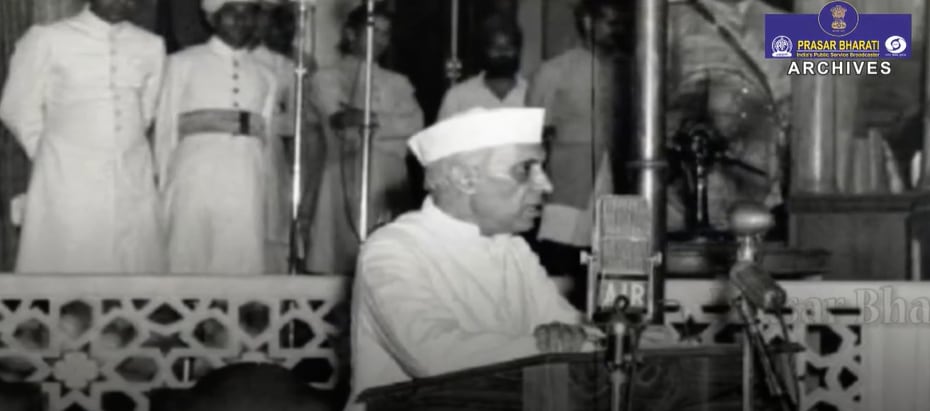
As per reports, Nehru arrived at what was described as an “interesting compromise”. The Constituent Assembly would meet on the afternoon of August 14 and continue its sitting until midnight. Rao writes, “Nehru then hit upon an interesting compromise. He called the Constituent Assembly in the afternoon of 14th August and continued its sitting till midnight when, according to Western practice, 15th August took birth and zero hour was within the auspicious period envisaged by the Hindu calendar.”
The Birth Of Independent India At Midnight
The arrangement meant that August 15 would remain India’s Independence Day, while the actual transfer of power would take place at the stroke of midnight. Freedom at Midnight records that astrologers ultimately considered August 14 a more favourable conjunction and that Mountbatten accepted the compromise.
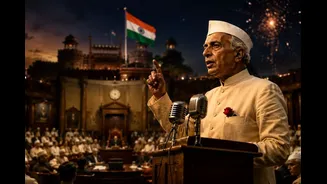
And so, as August 14 gave way to August 15, the Constituent Assembly remained in session and India entered a new chapter. At midnight, Nehru delivered the words that would become permanently associated with the country’s freedom: “At the stroke of the midnight hour, when the world sleeps, India will awake to life and freedom.”