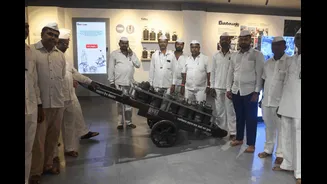








For 135 years, they have been ferrying thousands of home-cooked meals across India’s financial capital. Harvard studied them. King Charles met them. But now, Mumbai’s iconic dabbawalas are shrinking.
The
rise of work-from-home, hybrid offices and food delivery apps has sharply reduced demand, forcing many dabbawalas to leave the profession and look for other sources of income. Your convenience is speeding up their collapse.
According to a BBC report, the number of registered dabbawalas has fallen from around 4,500 in 2018 to roughly 1,500 now.
The System That Fed Whole Of Mumbai
The dabbawalas have been around since the late 19th century, when office workers in Bombay needed a reliable way to receive freshly cooked meals from their homes.
Over time, the service evolved into a highly organised network.
Lunchboxes, or dabbas, are collected from homes across Mumbai, sorted for deliveries using a coded system, transported using Mumbai’s local trains and delivered to offices just in time for lunch. The system is then reversed to return empty lunchboxes back to homes after lunch.
Over the years, the enterprise became a case study across B-schools for its supply chain and accuracy, despite no use of modern technology.
How Covid Ruined Everything
Unlike other service industries, the dabbawalas have struggled to recover from the disruption brought by the Covid-19 pandemic even years later.
When offices closed during the lockdown, customers no longer needed lunch deliveries, and the shift to remote work continued even after restrictions were lifted.
For a business model built around daily office attendance, fewer commuting workers meant fewer lunchboxes to deliver.
“Some people now go to the office only two or three times a week. This had a big impact on Mumbai’s dabbawalas,” BBC quoted Kiran Gavande, secretary of the Mumbai Tiffin Box Suppliers Association, as saying.
Food Delivery Apps Add More Pressure
The challenge is not limited to remote or hybrid work.
The growth of food delivery apps such as Swiggy and Zomato has given office-goers more options to choose from. Fancier meals, cloud kitchens and app discounts have changed how many urban office-goers think about lunch.
Another point to consider is that families are no longer traditional where one person, usually the wife or the matriarch of the family, cooked a full meal to be sent off with the dabbawala. Families now are more nuclear and unconventional, there is no designated cook, remote working is sometimes actually more taxing, and the concept of lunch is coming down to just a sandwich or salad.
Where dabbawalas once occupied a unique space by connecting homes to offices, they now compete with hundreds of food choices available through a smartphone.
Then there is additional competition from quick errand apps that ferry anything from dabbas to documents for you across the city.
Many Have Been Forced To Find Other Jobs
The shrinking customer base has had real consequences for workers.
Balu Bhagu Shinde, who spent two decades as a dabbawala, told BBC that he eventually left the profession after his customer numbers collapsed following the pandemic. “There are no customers, no money – what should we do?” he said.
According to the report, Shinde now works as an autorickshaw driver and earns less than he did as a dabbawala.
Others who remain in the profession are increasingly taking up second and even third jobs to support their families.
Uncertain Future
Veterans of the century-old trade worry that younger people may no longer see a future in the profession.
The Mumbai Tiffin Box Suppliers Association is reportedly exploring ways to allow workers to take up part-time jobs alongside their regular dabba delivery duties. But questions remain about whether the network can return to its former scale.