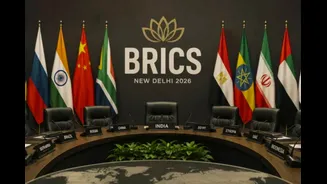




India will host the 18th BRICS Leaders’ Summit in New Delhi on September 12 and 13, bringing the expanded 11-member grouping together at a particularly consequential moment for the global economy and geopolitics.
The summit at Bharat Mandapam will also mark 20 years of BRICS, giving India’s 2026 chairship an added significance.
The grouping that began in 2006 with Brazil, Russia, India and China, and later added South Africa, has since expanded to include Egypt, Ethiopia, Iran, the UAE, Indonesia and Saudi Arabia. Indonesia became a full member in 2025.
Read More: Can India And China Really Be Friends Again? The BRICS Test For PM Modi And Xi Jinping
For New Delhi, however, the summit is about more than hosting a large gathering of emerging economies. India has spent the year trying to shape BRICS around a distinctly practical agenda, summed up in its chairship theme: “Building for Resilience, Innovation, Cooperation and Sustainability.” The broader approach is described by the government as “Humanity First” and people-centric.
Here are seven areas New Delhi is likely to push as leaders meet in Delhi.
1. Giving The Global South A Bigger Voice
One of India’s biggest objectives is to use BRICS as a platform for developing and emerging economies to have a greater say in global decision-making.
That means pushing for reforms in institutions such as the United Nations, International Monetary Fund and World Bank, whose structures still reflect an older distribution of economic and political power.
India does not necessarily want BRICS to become an anti-Western alliance. Instead, New Delhi has consistently presented it as a platform where countries with different political systems and foreign-policy priorities can cooperate on common developmental challenges.
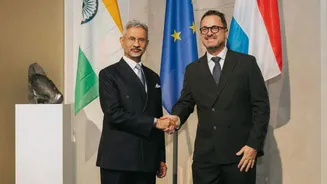
External Affairs Minister S Jaishankar said when India launched its BRICS chairship that the grouping remained important because it allows countries to respond to global challenges while taking into account their “national priorities and different stages of development.”
This balancing act will be important in Delhi, particularly because China and Russia have often favoured a more explicitly anti-Western interpretation of BRICS, while India has sought to keep the grouping focused on development and practical cooperation.
2. Resilient Trade And Supply Chains
Global trade has become increasingly vulnerable to wars, sanctions, protectionism and disruptions in critical supply chains. India wants BRICS countries to work towards more resilient and diversified global value chains.
At the BRICS Trade Ministers’ Meeting in Jaipur in August, members backed progress towards a BRICS Economic Partnership Strategy 2030, while India pushed for greater intra-BRICS trade, expanded trade in services and resilient supply chains.
The challenge, however, is balancing greater intra-BRICS trade with India’s own concerns over trade imbalances and excessive dependence on China.
For New Delhi, therefore, the objective is not simply to increase trade, but to make trade more predictable and diversify sources of critical goods, technology and raw materials.
3. Pushing Digital Payments And Financial Cooperation
Financial cooperation is another major item on India’s BRICS agenda.
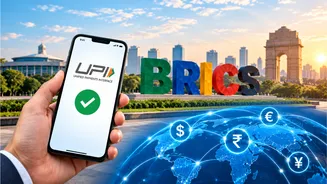
The bloc has discussed reducing dependence on traditional financial channels and encouraging greater use of national currencies. Cross-border payments, fintech and digital financial infrastructure are expected to feature prominently in the Delhi discussions.
But India has little interest in simply replacing the dollar with another dominant currency or creating an unrealistic common BRICS currency overnight. A more practical approach would involve making cross-border transactions easier and cheaper through interoperable payment systems and greater use of local currencies.
This is an area where India’s experience with UPI gives it considerable credibility.
4. Putting AI And Tech At The Centre
India also wants BRICS to become a vehicle for technological cooperation rather than merely another geopolitical forum.
AI, digital public infrastructure, research collaboration, innovation and knowledge-sharing have been prominent features of India’s chairship. The government has highlighted proposals including a BRICS startup innovation fund, an incubator network and a shared research repository.
At the BRICS science ministers’ meeting, India also pushed for stronger cooperation in research infrastructure, knowledge sharing and innovation, with the resulting Chennai Declaration placing young innovators and the Global South at the heart of the agenda.
For India, the larger objective is that emerging economies should not merely consume technologies developed elsewhere; they should participate in setting the rules and building the technologies.
5. Energy Security And Climate Resilience
Energy is another area where the interests of BRICS members overlap.
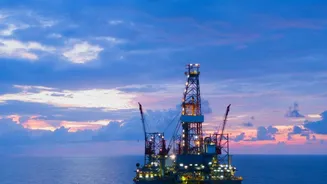
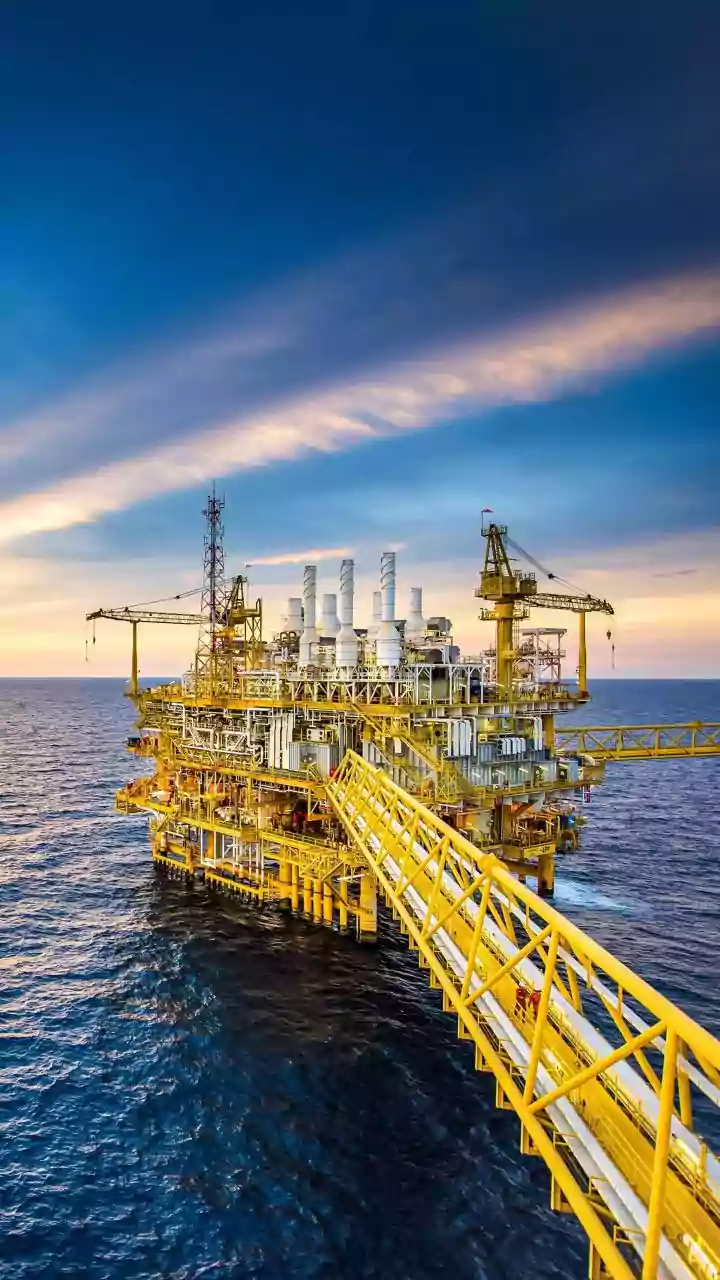
The grouping includes some of the world’s biggest oil and gas producers as well as major energy consumers. India wants the bloc to address energy security while simultaneously dealing with climate change and the transition towards cleaner energy.
Prime Minister Narendra Modi has highlighted India’s effort to put the Global South at the centre of a “secure, resilient, equitable and sustainable” global energy future. He has also stressed that resilient energy systems require stronger international partnerships, not just domestic policies.
For India, this is particularly important because affordable and reliable energy remains closely linked to economic growth and development.
6. Tackling Economic Crime And Fugitives
One of the less glamorous but highly practical proposals India is taking to the summit concerns economic offenders.
New Delhi plans to push for faster sharing of financial and investigative information among BRICS countries to help track economic fugitives and recover illicit assets. The proposed framework would include standardised information-sharing mechanisms, asset recovery cooperation and institutional linkages.
This matters to India because several major financial fraud and corruption cases have involved accused persons and assets spread across multiple jurisdictions.
A senior Indian official told The Economic Times that the existing process of tracking fugitives and pursuing extradition is “extremely time taking”. India wants BRICS enforcement agencies to establish quicker channels of cooperation before cases become bogged down in lengthy formal procedures.
7. Keeping BRICS Practical Despite Its Expansion
India’s biggest challenge is also its most important objective: making an expanded BRICS actually work.
With 11 full members and a wider group of partner countries, differences between members have inevitably increased. India, China, Russia, Saudi Arabia, Iran, Brazil and the UAE do not always see global issues in the same way.
That makes consensus difficult, but also makes India’s emphasis on practical cooperation significant.
India’s BRICS Sherpa Sudhakar Dalela recently said more than 400 meetings had been organised across nearly 30 Indian cities during the chairship, describing it as a “collective, whole-of-nation effort”.
The Delhi summit will ultimately test whether that extensive groundwork can translate into concrete outcomes.
For India, success may not mean turning BRICS into a rival to the G7 or creating a new global financial order overnight. It may instead mean establishing the grouping as a useful platform for trade, technology, energy, development and Global South cooperation, while allowing New Delhi to retain its strategic autonomy.