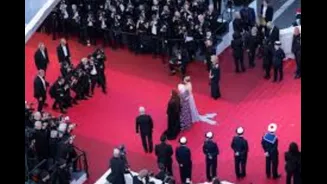





Cannes is getting ready to roll out the red carpet once again and this year, the vibe feels just a little different. Think fewer usual suspects, more surprises, and a lineup that’s quietly shaking things
up.
The organisers of the Cannes Film Festival have announced the official selection for its 2026 edition, which will run from May 12 to May 23. A total of 21 films will compete for the prestigious Palme d’Or, featuring a mix of established auteurs and emerging voices from across the globe.
Festival director Thierry Fremaux unveiled the line-up, highlighting strong representation from countries such as Spain and Japan. Among the notable contenders are Japanese filmmaker Hirokazu Kore-eda with Sheep in the Box, Romanian director Cristian Mungiu with Fjord, and Russian filmmaker Andrey Zvyagintsev, whose film Minotaur explores themes of wealth and conscription.
Spanish auteur Pedro Almodovar will return to Cannes competition for the seventh time with Amarga Navidad (Bitter Christmas), while Iranian Oscar-winning filmmaker Asghar Farhadi will present Histoires Paralleles (Parallel Tales).
Speaking about the selection, Fremaux suggested that many films this year lean towards emotional depth and reflection. He noted that several Western entries offer a form of escape from current global tensions, focusing on themes such as “gentleness, songs, nature”, while others aim at “bringing history into the present”. Introducing the French film Quelques Mots d’Amour (A Few Love Words) by Rudi Rosenberg, he remarked: “You see? We all need some love and gentleness.”
This year’s edition also reflects the continued strength of global cinema, with around 2,500 films submitted for consideration—an indication, Fremaux said, of the industry’s resilience despite the growing dominance of streaming platforms.
One of the most noticeable shifts, however, is the relatively reduced presence of major Hollywood studios. While American actors and filmmakers will still attend, the large-scale studio-backed premieres that have defined recent editions appear to be fewer this year. “The United States will be represented. The (Hollywood) studios a bit less,” Fremaux said, referencing past premieres like Top Gun: Maverick and the Mission: Impossible franchise.
Despite this, Hollywood names are not entirely absent. Actors Woody Harrelson and Kristen Stewart will feature in Full Phil, directed by Quentin Dupieux. Veteran star John Travolta is set to present his directorial debut Propeller One-Way Night Coach, while music and film icon Barbra Streisand will receive an Honorary Palme d’Or. New Zealand filmmaker Peter Jackson is also expected to attend, alongside American director Steven Soderbergh, who will showcase a documentary on John Lennon titled The Last Interview.
Outside the main competition, the festival will also feature an unexpected theme—football. Documentaries centred on figures like Eric Cantona and the iconic 1986 World Cup match involving Diego Maradona will be screened.
As with previous editions, conversations around politics and cinema are expected to continue. Last year’s festival saw intense debate over global conflicts, including reactions from prominent industry figures such as Ralph Fiennes and Richard Gere. Addressing the role of the festival, Fremaux said, “People often say that Cannes is political when the films are political, when the filmmakers are political,” adding that art is “very often political”. However, he maintained that the festival itself “does not take political positions”.
This year’s competition jury will be led by South Korean filmmaker Park Chan-wook. The previous edition awarded the Palme d’Or to Iranian director Jafar Panahi for his film It Was Just an Accident.
(With inputs from AFP)