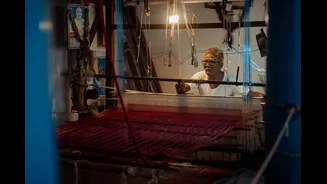


India’s handloom tradition has never really needed saving, it has always been there, running through weaving clusters from Chanderi to Bhagalpur, carried forward by artisans working the same techniques
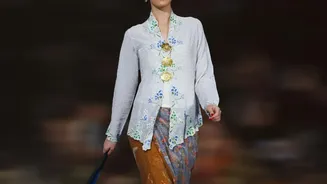
their families have for generations. What has changed is who’s translating that tradition for a modern wardrobe. A growing set of homegrown labels are doing exactly that, working directly with craftspeople to turn centuries-old textiles into clothes that feel current, not costume. Here are nine of them worth knowing.
Raw Mango
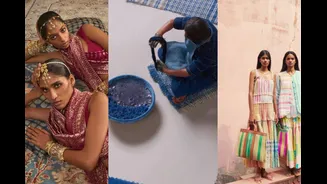
Raw Mango’s design language draws from India’s colours, philosophies, and cultures, using clothing to question place and perspective rather than simply decorate it. The label began over a decade ago with one clear mission, to revive and rejuvenate India’s handloom heritage. Its range spans Banarasi brocades, Chanderi silks, Tussar, and Mashru, but the brand has never treated these as just beautiful fabrics. Every piece is built to tell a story.
Péro
Péro takes its name from the Marwari word for “to wear,” a fitting starting point for a label built entirely around process. The brand interprets an international aesthetic through local materials and skills, drawing inspiration from its surroundings to create pieces that resonate wherever they land. What makes Péro distinctly Indian isn’t just its fabric choices but its textile process itself, where materials move from one craftsperson’s hands to another’s, keeping the country’s handcrafting tradition alive and ensuring every piece comes out genuinely one of a kind.
Anita Dongre
For Anita Dongre, fashion isn’t just clothing, it’s confidence. The label designs pieces meant to move fluidly across places and occasions, whether that’s a bridal lehenga, a sherwani, or a sharply cut jacket, always with the intention of creating something a customer will hold onto and wear for years, not seasons. The brand’s ensembles and handcrafted jewellery are both a tribute to India’s craftsmanship and a working philosophy, to build a more beautiful tomorrow for both the customer and the planet.
Payal Pratap
Payal Pratap works directly with weaving clusters across Banaras, Bhagalpur, West Bengal, and Bhagaiya, developing fabrics in small handwoven batches rather than mass runs. The label moves between cottons, linens, silks, and wools, finishing many of its pieces with patchwork, smocking, and embroidery, details that keep the handmade process visible in the final garment. For Payal, a graduate of NIFT, each collection is an exploration of India’s living traditions, reimagined for the modern woman who values grace in detail and meaning in the handmade.
Five Point Five
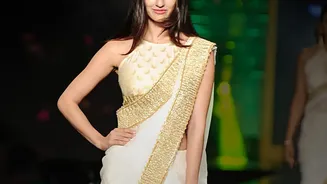
Five Point Five, started by Copreneurs Radhika Jain and Nitin Singla, works closely with clusters producing Maheshwari, Chanderi, and Banarasi handloom saris. Their focus is on promoting Indian textiles, handlooms, and craftsmanship that the karigars have preserved for generations.
Banarasi Baithak
For anyone chasing an authentic Banarasi brocade, Banarasi Baithak is the address. The label’s understanding of zari work and traditional weaving is continually shaped by master craftsmen from Banaras, who spend time sharing their deep knowledge of natural fibres, intricate weaving techniques and centuries-old patterns. This close collaboration allows the team to revive forgotten motifs while reimagining classic designs for today’s discerning buyer.
Eka
Eka’s palette rarely strays from black, white, and indigo, built around easy tunics paired with matching pants, casual saris, and breathable separates in handwoven cottons and linens. Every textile is sourced naturally from rural and skilled weaving clusters across West India, and the resulting collections read as a direct extension of the brand’s core values: sustainability, timelessness, and individuality.
11.11/eleven-eleven
Renowned for its use of indigenous cotton and 100% natural dyes, the label uses heritage techniques such as hand spinning, hand loom weaving, hand painting, miniature tie-dyeing, and quilting, often combining many within a single garment. A layering of techniques turns each piece into a small record of the hands that made it.