







Two back-to-back incidents of militant involvement have shattered months of relative calm in Jammu and Kashmir. A day after militants targeted security forces in Kulgam, injuring three CRPF personnel,
the bullet-riddled bodies of two special police officers, who had gone missing, were recovered in Kishtwar on Thursday.
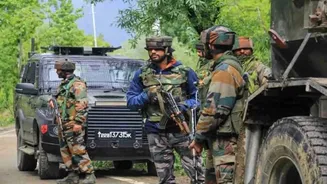
The Kulgam attack sent shockwaves across the Valley, once again exposing the fragile nature of peace in south Kashmir and triggered a massive security response across the Union Territory.
Jammu region has been placed on high alert with intensified patrolling and a renewed political debate over how to finish the remaining terror networks and its local support base.
SECURITY BEEFED UP
Within hours of the attack, a high alert was sounded across the Jammu region.
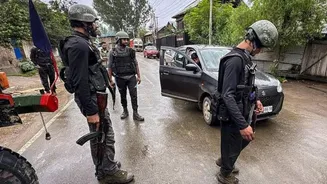
Police and security forces have intensified patrolling in all sensitive areas, markets, bus stands, railway stations, and around vital installations. Additional checkposts have been set up at the entry and exit points of Jammu city and on the Jammu-Srinagar national highway. Checking of vehicles, especially two-wheelers and suspicious vehicles, has been intensified.
Passengers are being frisked and identity cards verified at multiple checkpoints. Police teams are also conducting surprise checks in crowded areas and keeping a close watch on the movement of suspicious elements.
Officials said the measures are precautionary in nature and aimed at preventing any untoward incident in the wake of the Kulgam attack. People have been urged to cooperate with security personnel and immediately report any suspicious activity, unattended object, or unknown person to the nearest police station.
According to sources in the security establishment, the alert is not limited to Jammu city alone. Border areas, highway stretches, and districts adjoining the Pir Panjal range have also been put on heightened vigil. Night patrolling has been increased and area domination exercises are being carried out in vulnerable pockets.
Officials said the security grid has been asked to remain extra vigilant for the next few days, as terror groups often attempt a second strike or try to exploit the diversion created by the first attack.
‘KULGAM ATTACK A CONSPIRACY AGAINST KASHMIR’
Reacting sharply to the attack, senior BJP leader Ravinder Raina termed the Kulgam terror attack a conspiracy against Kashmir and accused Pakistan of attempting to destabilise peace and security in the Valley.
Raina said Pakistan has never reconciled to the return of peace, development and normalcy in Jammu and Kashmir. Whenever Kashmir moves towards tourism, jobs, investment and democratic participation, Pakistan-backed terror groups try to create fear through such cowardly attacks, he said.
“This is not just an attack on security personnel. This is a conspiracy against the people of Kashmir, against their livelihood, against their future,” Raina said.
He said the terrorists want to keep Kashmir in a state of fear so that tourists stop coming, businesses suffer, and the youth remain trapped in violence. But the people of Kashmir have now rejected this ideology and want peace and progress, he added.
The BJP leader praised the security forces for their courage and said the attackers will not be spared. He said the security grid is fully alert and a befitting reply will be given to those behind the attack.
He appealed to the people of Kashmir to isolate those who support terrorism and to stand with the security forces in the fight against Pakistan-sponsored terror. The people of Kashmir have suffered the most due to terrorism over the past three decades. Thousands of families have lost their loved ones, businesses have been destroyed, and an entire generation has grown up in fear, he added.
‘ELIMINATE TERRORISTS, LOCAL SUPPORT’
Former Jammu and Kashmir director general of police Dr SP Vaid strongly condemned the Kulgam attack and said there are still some terrorists operating in Kashmir who need to be eliminated.
Dr Vaid said it is not enough to neutralise only the gunmen, but the local support network that shelters them, provides them information, logistics and safe passage must also be dismantled completely. He said such attacks are a desperate attempt by Pakistan-backed terror groups to disturb peace in Jammu and Kashmir and to show their presence, especially when normalcy is returning and the security situation has improved significantly.
He said security forces have done commendable work in the past few years in breaking the backbone of terrorism, but the Kulgam incident is a reminder that the job is not yet finished. He urged the security agencies to intensify operations against remaining terrorists and their overground workers, and to ensure that those providing local support are brought to justice.
“The ecosystem that feeds terrorism has to be finished. Without local support, a terrorist cannot survive for even a day. That support has to be vanished,” Vaid said.
He said the fight against terrorism has to be fought on multiple fronts – operationally by the security forces, financially by choking terror funding, and socially by ensuring that the youth are not radicalised or misled by Pakistan’s propaganda.
The Kulgam attack has once again underlined a harsh reality: while the overall security situation in Jammu and Kashmir has dramatically improved in recent years, a small number of terrorists – backed by Pakistan and supported by a handful of overground workers – are still capable of carrying out hit-and-run attacks. Security experts said such attacks are aimed more at creating headlines and fear than at achieving any military objective.