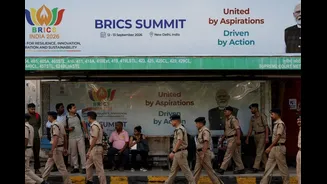







Delhi’s luxury hotel market is facing a sharp squeeze in room availability and a steep rise in tariffs as the city prepares to host the BRICS Summit on September 12-13.
Booking checks showed no availability
at Taj Mahal and The Oberoi, New Delhi, for September 11-12, while Taj Palace had no rooms for September 10-12. The Leela Palace, New Delhi, was also not accepting bookings for September 10-12.
At ITC Maurya, New Delhi, rooms available during September 10-13 were priced at more than Rs 2.3 lakh a night, underlining the premium being commanded by limited high-end inventory.
Summit demand squeezes room supply
The two-day summit is creating demand across several days as delegates, officials and other visitors arrive early and extend their stays. The pressure is particularly visible in central Delhi, where luxury hotel supply is concentrated around key diplomatic and business districts.
KB Kachru, President of the Hotel Association of India and Chairman, South Asia, Radisson Hotel Group, said the summit was highlighting a wider shortage in India’s branded hotel inventory.
India currently has only around 200,000-220,000 branded hotel rooms, he said, adding that this remains inadequate for a country seeking to expand its tourism and MICE business.
Hotels see higher rates, occupancy
Hotel groups are reporting stronger demand around the summit period. Nikhil Sharma, Managing Director and COO, South Asia, Radisson Hotel Group, said average room rates across its portfolio for September were pacing more than 25 per cent higher year-on-year.
Wyndham Hotels & Resorts said event-led demand was also spreading across Delhi-NCR. At Ramada Encore by Wyndham, Dwarka Expressway, occupancy for September 12-15 was tracking at 65 per cent, ahead of broader market demand.
The LaLiT New Delhi said it expects international delegates and representatives from countries including South Africa, Burundi and the UAE.
Travellers may face higher costs
The squeeze could leave tourists, business travellers and families with limited options, forcing them to pay a premium, shift dates, stay farther from central Delhi or choose lower-priced hotels.
The sharp tariffs should not be treated as fixed market rates, however. Hotel prices and availability can change quickly with bookings, cancellations and the release of additional inventory.
The BRICS Summit is also arriving at a time when Indian hotels are leaning more heavily on domestic travel and major events to support demand amid weaker international travel and continuing geopolitical uncertainty.
(With inputs from PTI)