






Mumbai’s air quality is again raising concerns, with the city ranking third among the world’s most polluted cities in a global snapshot. Delhi stands second, while Pakistan’s Lahore tops the list, putting
two of India’s biggest cities under scrutiny as pollution remains a growing challenge for residents and civic authorities.
According to IQAir’s latest list, Lahore recorded an Air Quality Index (AQI) of 291, followed by Delhi at 232 and Mumbai at 176. Jakarta ranked fourth at 173, while Dhaka and Kuala Lumpur recorded 169 each. Kolkata was seventh with an AQI of 166.
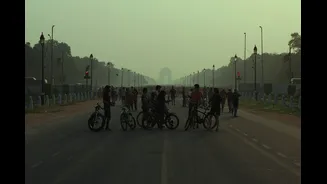
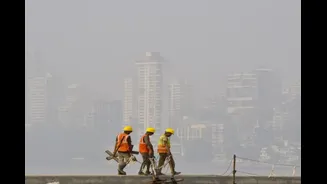
For Mumbai, the reading is a reminder that air quality can deteriorate even outside the severe pollution episodes commonly associated with Delhi. The city’s skyline has increasingly appeared hazy.
The concern is not limited to the citywide figure. Monitoring stations across Mumbai have reported varying levels of pollution, with some locations recording significantly higher readings than others.
On October 20, reports based on Central Pollution Control Board (CPCB) data put Mumbai’s overall AQI at 114. Among the monitoring stations, Navy Nagar in Colaba recorded 158, Bandra-Kurla Complex 156, Andheri East 145, Siddharth Nagar in Worli 143 and Malad 138.
These readings show how pollution levels can differ across neighbourhoods. The CPCB figures and the global ranking, however, come from different monitoring systems and should not be treated as directly interchangeable.
What Is Driving Mumbai’s Pollution?
Vehicle emissions, dust from construction and redevelopment, industrial activity and waste burning are among the sources that can contribute to poor air quality.
Weather conditions also influence how quickly pollutants disperse. With the monsoon retreating, the coming weeks will show whether the situation improves or worsens.
Fine particles such as PM2.5 are a particular concern because they can travel deep into the lungs. Prolonged exposure to polluted air can affect people with asthma and other respiratory or heart conditions.
Children and older people are also more vulnerable. The CPCB advises sensitive groups to take precautions when air quality deteriorates.
What Matters Beyond The Rankings?
Mumbai’s position in a global pollution list is significant, but the more pressing question is what happens on the ground. The Brihanmumbai Municipal Corporation needs sustained monitoring of pollution hotspots, tighter dust control at construction sites, regular road cleaning and effective action against open waste burning and polluting vehicles.
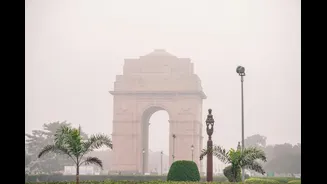
Delhi’s second-place ranking and Mumbai’s third-place position underline the scale of the challenge facing major Indian cities.
A single AQI reading cannot capture the full picture, but repeated periods of poor air quality should not be dismissed as a seasonal inconvenience.
For Mumbai’s residents, cleaner air will depend less on where the city stands in a global ranking and more on whether pollution sources are identified, rules are enforced and air quality improves consistently.