







World Health Organization (WHO) chief Tedros Adhanom Ghebreyesus has urged countries to prepare for more hantavirus cases after a deadly outbreak linked to the cruise ship MV Hondius spread across multiple
countries. WHO officials say additional infections are possible because of the virus’s long incubation period and the extensive interaction among passengers before the outbreak was identified.
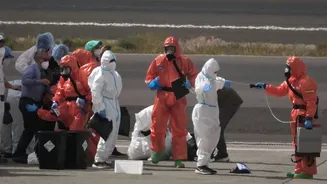
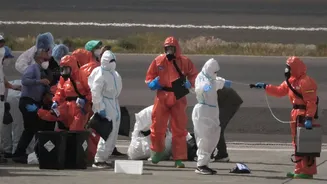
The outbreak has already resulted in multiple confirmed infections and at least three deaths, with passengers from several countries being quarantined, monitored or repatriated. The situation has inevitably triggered comparisons with the early days of Covid-19, particularly because the outbreak involved international travel and a cruise ship setting.
ALSO READ | Can House Mice Carry Hantavirus? Here’s All You Need To Know
However, according to The Guardian, health experts, virologists and WHO officials have repeatedly stressed that hantavirus is fundamentally different from Covid-19 and currently does not show signs of becoming a global pandemic.
What Is Hantavirus?
Hantaviruses are a family of viruses primarily carried by rodents. Humans are usually infected after coming into contact with rodent urine, droppings or saliva, especially in poorly ventilated areas where contaminated particles become airborne.
According to NDTV, different strains cause different illnesses. In the Americas, some strains can lead to Hantavirus Pulmonary Syndrome (HPS), a severe respiratory disease with a high fatality rate. The current concern centres around the Andes strain, found mainly in South America, which is unusual because it can occasionally spread between humans under very close-contact conditions.
Why Experts Say It Is Not ‘The Next Covid’
One of the biggest differences between Covid-19 and hantavirus is transmissibility. According to Al Jazeera, Covid-19 spreads efficiently through the air and can infect large numbers of people rapidly in indoor spaces. Hantavirus, by contrast, is primarily a zoonotic disease transmitted from rodents to humans.
Even the Andes strain, one of the few known hantaviruses capable of person-to-person transmission, requires prolonged, close physical contact for spread. WHO officials have compared the current outbreak to a contained cluster rather than the beginning of a pandemic, according to the Center for Infectious Disease Research and Policy at the University of Minnesota.
Experts quoted by Al Jazeera have pointed out that hantaviruses mutate much more slowly than SARS-CoV-2, the virus behind Covid-19. That reduces the chances of the virus suddenly evolving into a highly transmissible global threat.
Scientists also note that hantavirus outbreaks have historically remained localised despite decades of monitoring and previous outbreaks in South America and the United States.
Another major distinction is the incubation and transmission pattern. According to Times of India, Covid-19 spread rapidly and silently through asymptomatic transmission. Hantavirus infections generally involve identifiable exposure histories and slower transmission chains, giving health authorities more time to isolate contacts and trace infections.
Why The Cruise Ship Outbreak Drew Attention
The MV Hondius outbreak generated global attention partly because cruise ships evoke memories of the Covid-era Diamond Princess crisis. Several infected passengers travelled internationally before the outbreak was confirmed, leading to monitoring and quarantine operations in Europe and North America.
Health officials, however, say the similarities largely end there. Unlike Covid-19, there is no evidence that hantavirus can sustain widespread airborne community transmission. WHO officials have described the current situation as “an outbreak on a ship, not another Covid-19”.
Should People Be Worried?
Public health experts say vigilance is necessary, but panic is not. The current outbreak is being closely monitored because hantavirus infections can be severe and sometimes fatal. However, experts say the probability of it turning into a Covid-scale pandemic remains extremely low based on everything known so far about the virus.